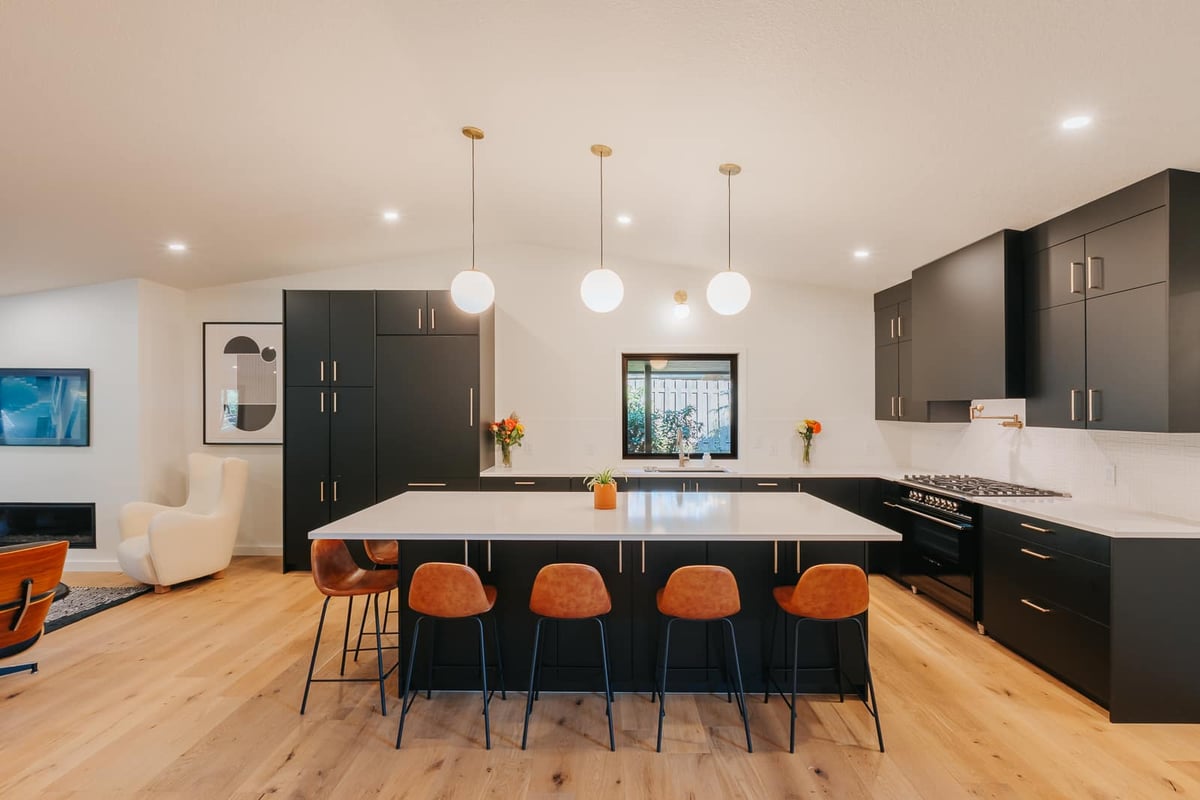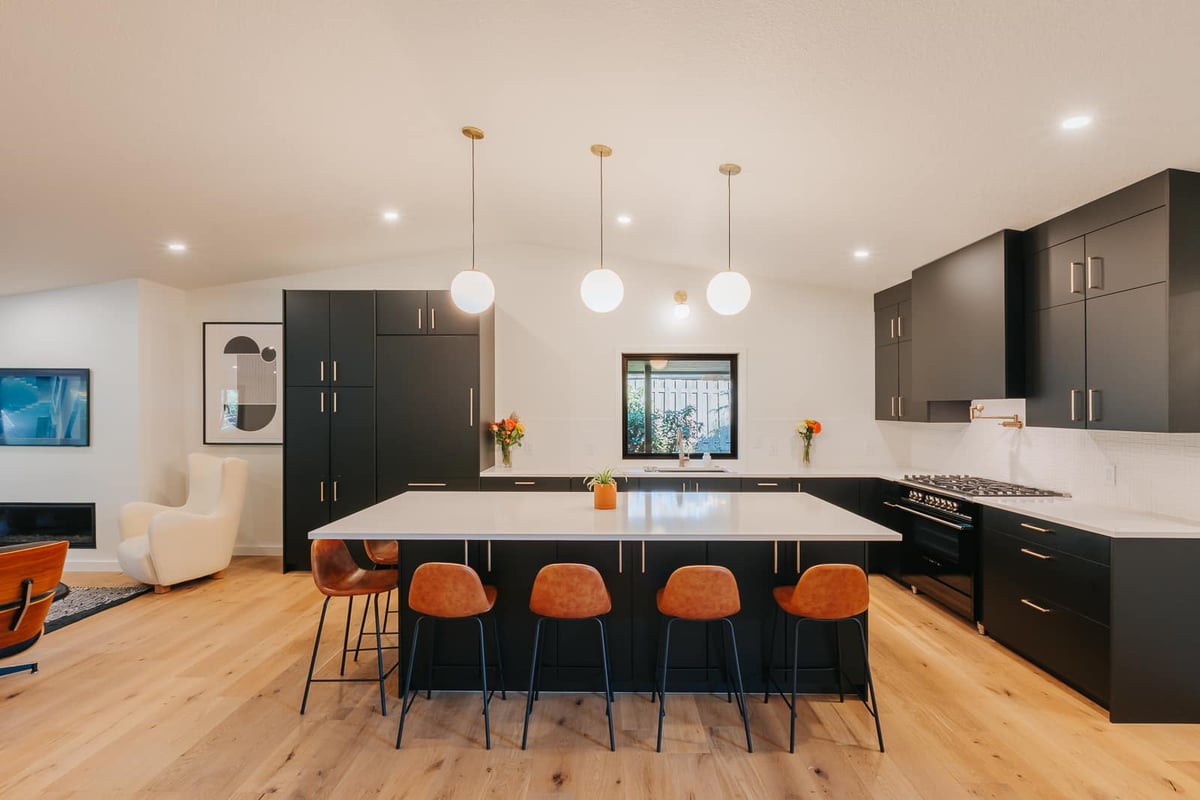
A kitchen remodel involves a series of carefully orchestrated steps that typically take 8-12 weeks from planning to completion. The process includes developing a budget, creating a design, removing the old kitchen, installing new plumbing and electrical, framing, drywall, flooring, cabinets, countertops, appliances, and lighting, followed by final details and cleanup.
Understanding the kitchen remodel process helps you prepare for each phase, manage expectations, and ensure your renovation stays on track and within budget. This comprehensive guide walks you through every step of the kitchen remodeling journey, from initial planning to final walkthrough.

This is the second chapter in our Kitchen Remodeling Guide that contains guidance to help you navigate the entire process.
Key Points
-
A kitchen remodel follows a specific 10-phase sequence that typically takes 8 to 12 weeks. Planning, permits, and material ordering happen before a single wall comes down, and following the correct order is what ensures code compliance, avoids costly rework, and keeps the project on schedule.
-
Permits and material lead times are the most common sources of delay. Portland permits alone can take 2 to 4 weeks to approve, and custom cabinets require 6 to 8 weeks of manufacturing time, meaning both need to be initiated early in the process or they will push back the entire construction timeline.
-
Preparation and communication make the remodel significantly more manageable. Setting up a temporary kitchen, establishing clear work hour agreements and check-in routines with your contractor, and budgeting a 20% contingency fund are the practical steps that separate a stressful remodel experience from a smooth one.
The Portland Kitchen Remodel Process
The kitchen remodel process follows a specific sequence designed to ensure quality workmanship, code compliance, and efficient completion. Each phase builds upon the previous one, making proper planning and sequencing essential for success.
Total Timeline: 12-15 weeks
- Pre-construction phases: 5-7 weeks
- Construction phases: 5-8 weeks
Key Process Steps:
- Define scope and create detailed plans
- Establish budget and secure financing
- Obtain necessary permits and approvals
- Select qualified contractor and sign contract
- Order materials with proper lead times
- Complete demolition and site preparation
- Install rough plumbing, electrical, and HVAC
- Pass inspections and ensure code compliance
- Install finish materials and appliances
- Complete final details and project walkthrough
Understanding this sequence helps you prepare for each phase and avoid costly delays or mistakes that can derail your project timeline and budget. A note that this process will look different based on how you approach your remodel. Learn more about Portland Kitchen Remodeling with Lamont Bros.
Phase 1: Planning & Design Development
Timeline: 2-3 weeks
You may have been thinking about remodeling your kitchen and how you'd like it to look for far longer than 2-3 weeks. If you haven't already, take stock of your current kitchen's strengths and weaknesses.
Assessing Your Current Kitchen
Document what works well and what needs improvement. Consider storage capacity, workspace efficiency, lighting quality, and traffic flow patterns. This assessment guides your renovation priorities and helps you communicate your needs to designers and contractors.
Chapter One of this guide is all about kitchen design.
Defining Project Scope
Clearly outline your remodeling objectives. Are you updating aesthetics, improving functionality, expanding space, or completing a full renovation? Prioritize your goals to guide decision-making throughout the process. Consider how you use your kitchen daily and what features would improve your cooking and entertaining experience.
Layout and Design Development
Work with a kitchen designer to develop detailed plans including final layout, elevations, material specifications, lighting plans, and plumbing requirements. Professional design ensures proper space planning, code compliance, and efficient workflow patterns.
Design deliverables include:
- Detailed floor plans with dimensions
- Elevation drawings showing cabinet heights and configurations
- Electrical plans with outlet and lighting locations
- Plumbing plans showing water supply and drainage
- Material specifications for all finishes
- 3D renderings for visualization
Must-Have Features Identification
Create a prioritized list of essential features versus nice-to-have elements. This helps make decisions when budget constraints require compromises. Consider storage needs, appliance requirements, seating areas, and special features like islands or pantries.
Planning a Home Renovation: 5 Key Questions to Ask
Phase 2: Budget Planning & Financing
Timeline: 1-2 weeks
Establishing a realistic budget early in the process prevents costly changes and ensures your project scope aligns with available resources. Kitchen remodel costs vary significantly based on size, materials, and complexity.
Chapter 3 of our guide is all about kitchen remodel costs.
Phase 3: Permits & Approvals
Timeline: 2-4 weeks in Portland
Most kitchen remodels require building permits to ensure work meets safety codes and local regulations. The permit process protects your investment and ensures proper installation of electrical, plumbing, and structural elements.
When Permits Are Required
Portland requires permits for:
- Moving or adding electrical circuits
- Relocating plumbing lines
- Removing or modifying walls
- Installing new windows or doors
- Adding or relocating gas lines
- Structural modifications
Permit Application Process
Your contractor typically handles permit applications, which include:
- Detailed construction drawings
- Material specifications
- Electrical and plumbing plans
- Structural calculations if walls are modified
- Application fees (typically $200-$800 depending on scope)
Inspection Schedule
Portland requires multiple inspections throughout the process:
- Demolition inspection: Before removing structural elements
- Rough inspection: After rough electrical and plumbing installation
- Insulation inspection: Before drywall installation
- Final inspection: Before project completion
Plan your construction schedule around required inspections to avoid delays. Failed inspections require corrections and re-inspection, which can add weeks to your timeline.

Phase 4: Contractor Selection
Timeline: 1-2 weeks
Selecting a qualified contractor is crucial for project success. Take time to research candidates thoroughly and verify their credentials, experience, and reputation.
Essential Contractor Qualifications
Look for contractors with:
- Valid Oregon contractor license (verify at oregon.gov/ccb)
- Current general liability and workers' compensation insurance
- Specialized kitchen remodeling experience (not just general construction)
- Local references from recent projects
- Better Business Bureau rating
Interview Process
Ask potential contractors:
- How many kitchen remodels do you complete annually?
- What's your typical timeline for a project like mine?
- How do you handle changes and unexpected issues?
- Can you provide references from the past six months?
- What's your payment schedule?
- How do you communicate progress and handle problems?
Contract Essentials
Ensure your contract includes:
- Detailed scope of work and materials list
- Specific timeline with milestones
- Change order procedures
- Payment schedule tied to completion milestones
- Warranty terms for workmanship and materials
- Cleanup and disposal responsibilities
Red Flags to Avoid
Be wary of contractors who:
- Demand large upfront payments
- Lack proper licensing or insurance
- Won't provide detailed written contracts
- Give verbal estimates without documentation
- Have significantly lower bids than competitors
- Pressure you to sign immediately
Phase 5: Material Ordering & Scheduling
Timeline: 6-8 weeks lead time for cabinets
Many kitchen materials require substantial lead times, making early ordering essential for staying on schedule. Create a procurement timeline that ensures everything arrives when needed during construction.
Cabinet Ordering
Custom and semi-custom cabinets typically require 6-8 weeks for manufacturing. Place cabinet orders immediately after finalizing design and securing permits. Delays in cabinet delivery can push back your entire project timeline.
Appliance Coordination
Order appliances 4-6 weeks before installation to ensure availability and proper sizing. Coordinate delivery timing with your contractor to avoid storage issues and potential damage.
Material Lead Times
Plan for these typical lead times:
- Custom cabinets: 6-8 weeks
- Semi-custom cabinets: 4-6 weeks
- Countertops: 2-3 weeks after template
- Appliances: 2-4 weeks
- Tile and flooring: 1-2 weeks
- Plumbing fixtures: 1-3 weeks
Delivery Coordination
Schedule deliveries to arrive just before installation to minimize storage needs and reduce damage risk. Your project manager should coordinate all deliveries with the construction schedule.
Phase 6: Demolition & Preparation
Timeline: 1-2 weeks
Demolition marks the beginning of active construction. Proper preparation and systematic removal prevent damage to surrounding areas and ensure safe working conditions.
Pre-Demolition Preparation
Before demolition begins:
- Pack and store kitchen items in a safe, accessible location
- Set up temporary kitchen in another room or garage
- Protect surrounding areas with plastic sheeting and floor protection
- Arrange for dumpster delivery and debris removal
- Disconnect utilities safely at main panels
Phase 7: Rough Construction
Timeline: 3-5 weeks
Rough construction installs the infrastructure that supports your finished kitchen. This phase requires careful coordination between electrical, plumbing, and HVAC trades.
Structural Work
Complete any structural modifications first:
- Wall framing: Frame new walls or openings
- Beam installation: Install support beams if walls were removed
- Floor reinforcement: Strengthen floors for heavy appliances or islands
- Window and door installation: Install new windows or doors
Electrical Rough-In
Electrical work includes:
- New circuits: Install dedicated circuits for appliances
- Outlet placement: Install outlets per code requirements (every 4 feet on countertops)
- Lighting circuits: Install recessed lights, pendant fixtures, and under-cabinet lighting
- Switch locations: Place switches for convenient operation
- GFCI protection: Install GFCI outlets near water sources
Plumbing Rough-In
Plumbing installation involves:
- Water supply lines: Install hot and cold water lines to all fixtures
- Drain lines: Install waste lines for sink and dishwasher
- Gas lines: Install gas lines for range, cooktop, or other gas appliances
- Ice maker lines: Install water lines for refrigerator ice makers
- Shut-off valves: Install accessible shut-offs for all fixtures
HVAC Considerations
Ensure proper ventilation:
- Range hood ducting: Install proper ventilation to exterior
- General ventilation: Maintain adequate air circulation
- Heating and cooling: Extend HVAC to new spaces if needed
Read more about how long kitchen remodels take
Phase 8: Inspections & Code Compliance
Timeline: 1-2 days for each inspection
Multiple inspections ensure your remodel meets Portland building codes and safety standards. Plan your construction schedule around required inspections to avoid delays.
Rough Inspection
The rough inspection occurs after electrical and plumbing installation but before insulation and drywall. Inspectors verify:
- Electrical installation: Proper wire sizing, outlet placement, and GFCI protection
- Plumbing installation: Correct pipe sizing, proper drainage, and leak testing
- Structural work: Proper framing and support for modifications
- Code compliance: Adherence to current building codes
Preparing for Inspections
Ensure inspection readiness:
- Clear access: Remove debris and provide clear access to all work
- Proper lighting: Ensure adequate lighting for inspector visibility
- Documentation: Have permits and approved plans available
- Contractor presence: Your contractor should be present during inspections
Phase 9: Finish Work Installation
Timeline: 3-4 weeks
Finish work transforms your kitchen from construction site to functional space. This phase requires careful sequencing to prevent damage and ensure quality installation.
- Insulation and Drywall
- Flooring Installation
- Cabinet Installation
- Countertop Installation
- Backsplash Installation
Phase 10: Final Details & Completion
Timeline: 1-2 weeks
Final details bring your kitchen to completion and ensure everything functions properly. This phase includes appliance installation, finish work, and project cleanup.
- Appliance Installation
- Finish Work Completion
- Final Cleanup
- Project Walkthrough
Managing Life During Your Remodel
A kitchen renovation temporarily disrupts your normal routine, but proper preparation makes this phase manageable. Planning ahead for the inconvenience reduces stress and helps your family adapt to temporary changes.
Setting Up a Temporary Kitchen
Create a functional temporary kitchen space:
- Essential appliances: Microwave, coffee maker, mini-fridge, and electric kettle
- Preparation space: Use a folding table for food preparation
- Storage solutions: Use plastic containers for dishes, utensils, and food
- Cleanup station: Set up dishwashing area in laundry room or bathroom
- Food storage: Plan for limited refrigerator and pantry space
Meal Planning Strategies
Adapt your meal planning to limited cooking facilities:
- Simple meals: Focus on meals requiring minimal preparation
- Meal prep: Prepare and freeze meals before construction begins
- Takeout budget: Budget for increased restaurant and takeout expenses
- Disposable items: Use disposable plates and utensils to minimize cleanup
- Cooking alternatives: Use outdoor grill, slow cooker, or electric skillet
Communication with Your Contractor
Establish clear communication protocols:
- Daily check-ins: Schedule regular progress updates
- Work hours: Agree on acceptable work hours and noise levels
- Access arrangements: Determine how workers access your home
- Change procedures: Establish how to handle changes or concerns
- Emergency contacts: Exchange contact information for urgent issues
Protecting Your Home
Minimize disruption to other areas:
- Dust containment: Use plastic sheeting to contain construction dust
- Floor protection: Protect pathways with cardboard or plastic
- Furniture covering: Cover nearby furniture and belongings
- Air filtration: Use air purifiers to manage dust in living areas
Common Challenges & Solutions
Even with perfect planning, kitchen remodels can encounter obstacles. Understanding potential challenges and their solutions helps you prepare mentally and logistically for your renovation.
Some of the most common kitchen remodeling challenges include delays change orders, materials not arriving on time, or contractors getting busy with other projects. At Lamont Bros. we pride ourselves on routinely completing projects within 2 days of their scheduled completion date.
Going over budget is another common frustration for homeowners. We avoid this by designing beautiful, but realistic, projects our build team will be able to complete within the budget you specify. By thoroughly vetting the entire scope of the project up front, we reduce the bad surprises that can come with remodeling.
Lastly, communication can be a challenge. Working with multiple contractors, and getting those contractors to talk to one another, is a headache. At Lamont Bros. every project has a dedicated superintendent who only works on that project. They're at your home everyday, working alongside a small team to complete your remodel.
Want to discuss your project timeline? Schedule a consultation with our team to plan your kitchen remodeling journey.
FAQ's: The Kitchen Remodeling Process
Our most frequently asked questions from homeowners about the kitchen remodeling process:
How long does a kitchen remodel take?
A typical kitchen remodel takes 8 to 12 weeks from start to finish, depending on the scope of work and complexity. Planning and permits generally take 2 to 4 weeks, followed by 1 to 2 weeks of demolition. Rough work including plumbing, electrical, and framing typically runs another 2 to 3 weeks, with finish work like cabinets, countertops, and appliances taking 3 to 4 weeks after that. Final details and cleanup round out the last week. Custom cabinet orders, permit delays, structural surprises, and material availability are the most common factors that can push a timeline out further.
What is the kitchen remodel process?
A kitchen remodel moves through five main phases in sequence. It starts with planning and design, where detailed plans are created, materials are selected, and the layout is finalized. From there, the necessary building permits and inspection approvals are obtained. Once permits are in hand, demolition begins and existing fixtures are removed to prepare the space for construction. The rough construction phase follows, covering new plumbing, electrical, and any structural work. Finally, finish work brings everything together with cabinet installation, countertops, flooring, appliances, and all the final details. Each phase builds on the last, and following this sequence is what ensures proper installation and code compliance throughout.
How much does a kitchen remodel cost in Portland?
Kitchen remodel costs in Portland typically range from $25,000 to $100,000 or more depending on the scope and materials involved. A basic remodel with new cabinets, countertops, and appliances generally falls between $25,000 and $40,000. Mid-range projects using semi-custom cabinets and quality materials typically land between $40,000 and $60,000. High-end remodels with custom cabinetry and premium finishes often start at $60,000 and climb well past $100,000. Regardless of where your project falls, it is smart to budget an additional 20% for unexpected expenses like plumbing relocations or electrical upgrades.
Do I need permits for a kitchen remodel?
Most kitchen remodels in Portland require permits, particularly if the project involves moving or adding electrical circuits, relocating plumbing lines, removing or modifying walls, or installing new windows or doors. Permit approval in the Portland area typically takes 2 to 4 weeks. Your contractor should handle the permit application process and make sure all work meets local building codes. If they are not bringing this up on their own, it is worth asking about directly.
How do I prepare for a kitchen remodel?
Good preparation makes a significant difference in how smoothly a remodel goes. Before construction starts, set up a temporary kitchen in another room, pack and store your kitchen items safely, and arrange alternative meal solutions for the duration of the project. Communicating the timeline clearly with everyone in the household helps set expectations early. Once construction is underway, keep clear pathways for workers, protect surrounding areas from dust, and schedule regular check-ins with your contractor. Staying flexible with your daily routines goes a long way during this period. On the financial side, secure any financing you need before the project begins, set aside a 20% contingency budget, and establish a clear payment schedule with your contractor upfront.
Can I live in my home during a kitchen remodel?
Yes, and most homeowners do. It requires some preparation and patience, but staying home saves on relocation costs and lets you keep an eye on progress every day. The key is setting up a functional temporary kitchen with the essentials, planning meals that require minimal cooking, and being realistic about the noise and dust that come with construction. Establishing quiet hours with your contractor at the start of the project is a small step that makes a noticeable difference in day-to-day comfort. The disruption is temporary, and most homeowners find it more manageable than they expected going in.
When is the best time to remodel a kitchen?
Spring and fall tend to be the best seasons for a kitchen remodel in Portland. Moderate weather makes it easier to work with windows and doors open for ventilation, material availability is generally better, and contractor schedules are more flexible. Summer is worth avoiding if you have the option. It is peak construction season, which means higher demand, longer wait times for contractors, and less scheduling flexibility overall.
How do I choose a kitchen remodeling contractor?
Start with the basics: verify that any contractor you are considering holds a valid Oregon contractor license and carries current insurance coverage. From there, ask for local references from recent kitchen projects specifically. Kitchen remodels have their own set of challenges, and experience with this type of work matters. A contractor who checks all three of those boxes and communicates clearly from the first conversation is generally a much safer bet than one with an impressive portfolio but spotty references or unclear credentials.
Contact us Today to Learn More About our Kitchen Remodeling Services
Now that you know what the kitchen remodel process looks like from start to finish, the next step is finding out what it looks like for your specific home. Every project is a little different, and the best way to get a clear picture of your timeline, budget, and design options is to sit down with someone who has done this hundreds of times. Our team will walk you through the entire process, answer your questions, and help you build a plan that fits your goals and your budget. There are no obligations and no pressure, just a straightforward conversation about your project.
Schedule a consultation with one of our kitchen remodeling experts today!
Where to Read Next:
- Need design inspiration first? Return to Chapter 1: Kitchen Design Ideas
- Wondering about the investment? Continue to Chapter 3: Kitchen Remodel Costs
- Ready to explore specific elements? Browse Chapter 4: Kitchen Cabinets, Chapter 5: Countertops, or Chapter 6: Appliances
-1.jpg)