Most homeowners who remodel their kitchen do so because the existing space no longer fits the way their household lives. The layout that made sense for a previous owner, or that worked five years ago, now feels like it works against you.
Fixing that starts with the layout. Before you choose cabinets, countertops, or appliances, the configuration of your kitchen determines everything else. It shapes how efficiently you can cook, how your family moves through the space, and how well the room serves the life you live. This guide walks through every major kitchen layout, what each one does well, and how to figure out which one belongs to your remodel.

Key Points
- The kitchen work triangle connects the sink, stove, and refrigerator. Each leg should measure between 4 and 9 feet, with a total perimeter of 12 to 26 feet.
- Island layouts require at least 42 to 48 inches of clearance on all working sides. In tighter spaces, a peninsula delivers most of the same benefits.
- Changing a kitchen layout by moving plumbing, gas lines, or walls can add a substantial amount of money to a remodel budget.
- U-shaped and island layouts perform best for large families and entertaining because they maximize prep space, storage, and traffic flow.
How to Choose the Best Kitchen Layout
The best layout for your remodel is the one that solves the problems your current kitchen has. Start by thinking honestly about how your household uses the space. Is the kitchen too small for the way your family cooks? Does it cut people off from the rest of the home when you are entertaining? Are you constantly running out of counter space or storage? Is there no good place for kids to sit and do homework while dinner gets made?
Your answers point directly to what your new layout needs to do. A family that cooks together every night needs multiple prep zones and enough room that two people are not constantly in each other's way. A household that entertains regularly needs a layout that keeps guests connected to the kitchen without putting them in the middle of the work zone. Once you know what you are solving for, the layout decision becomes much clearer, and so does the realistic budget required to get there, since moving plumbing, gas lines, or walls adds meaningful cost to any remodel.

The Most Popular Kitchen Layouts
Each has a distinct set of strengths and a specific type of home or household where it performs best. Understanding what each one does and does not do well is the starting point for making the right call on your remodel.
One-Wall Kitchen Layout
Everything runs along a single wall: cabinets, appliances, and countertops. It is the most compact option available and common in smaller homes, condominiums, and open-plan spaces where the kitchen shares square footage with living or dining areas. For a remodel, it works best when the goal is preserving open floor space and cooking needs are relatively straightforward. If your current one-wall kitchen feels limiting, adding a rolling island or extending a peninsula off one end can expand the workspace without a major structural change.
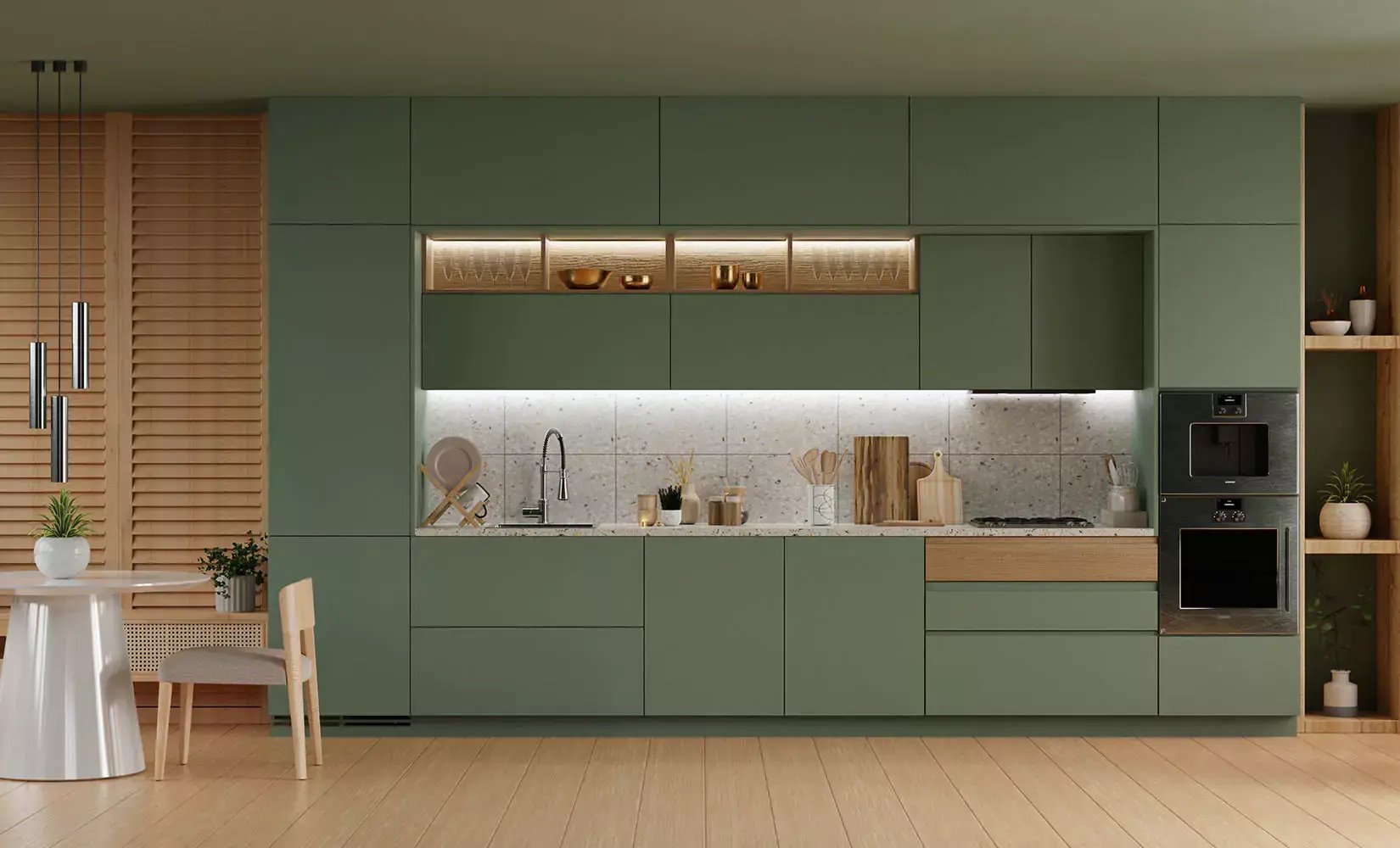
Photo Credit: Kitchen Cabinet Kings
Galley Kitchen Layout
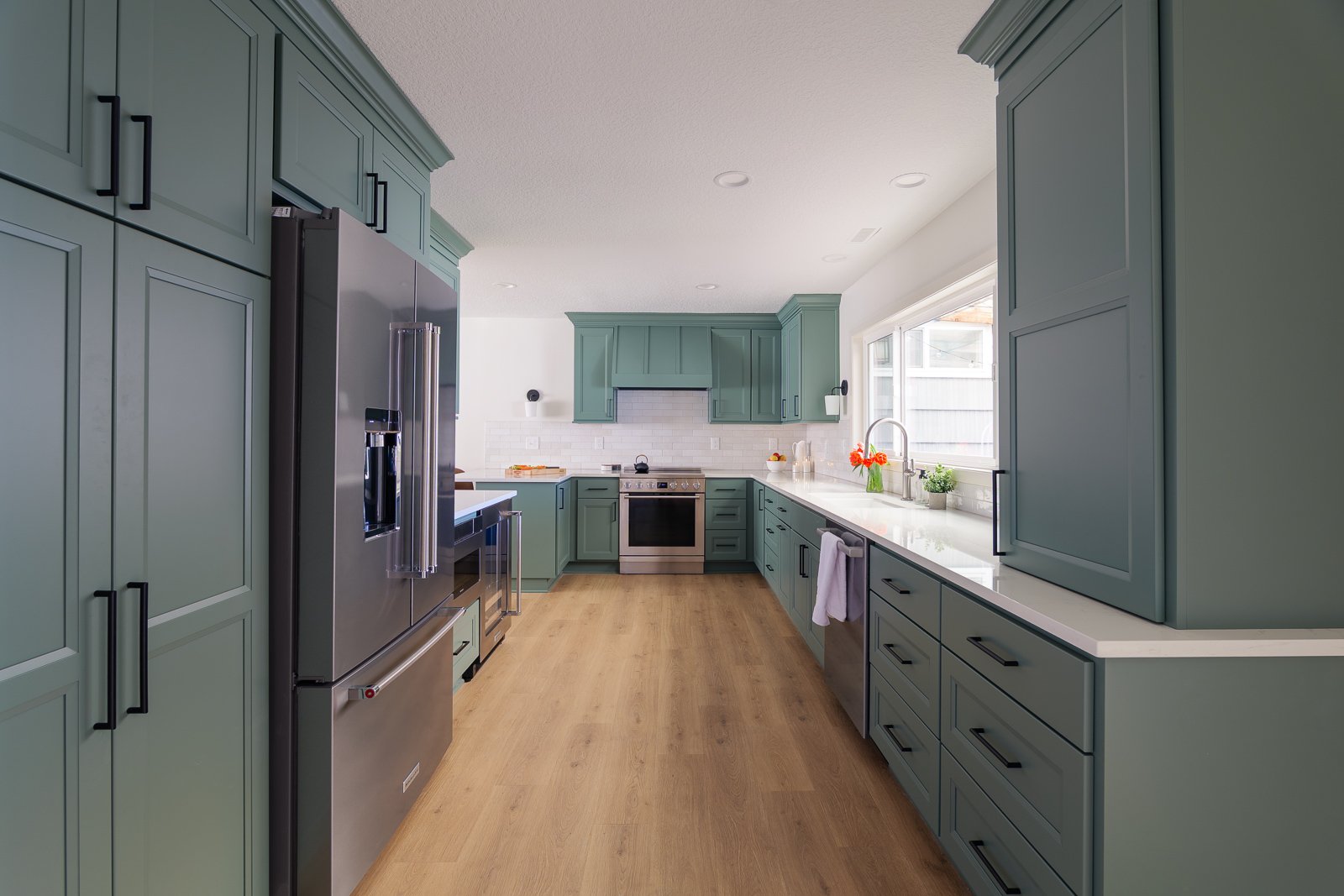
Two parallel cabinets run face each other with a walkway between them. The galley is purpose-built for efficiency. The sink, stove, and refrigerator fall naturally into a tight work triangle that minimizes wasted movement, and it works well in narrow kitchens and homes where focused, productive cooking matters more than social openness. The limitation is that galley kitchens feel tight for two cooks and do not lend themselves to entertaining, particularly if the layout routes foot traffic through the middle of the workspace. If those are the pain points driving your remodel, a different layout may be worth the added cost.
L-Shaped Kitchen Layout
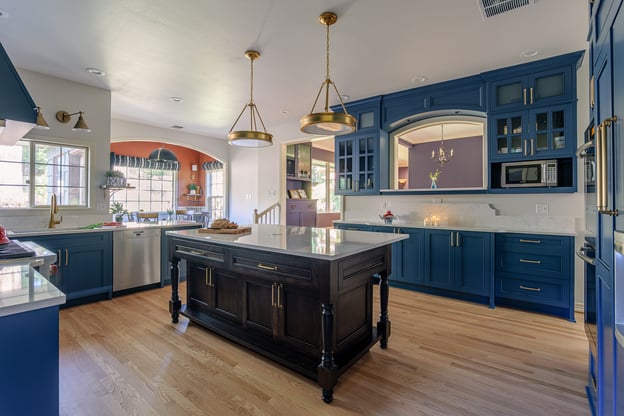
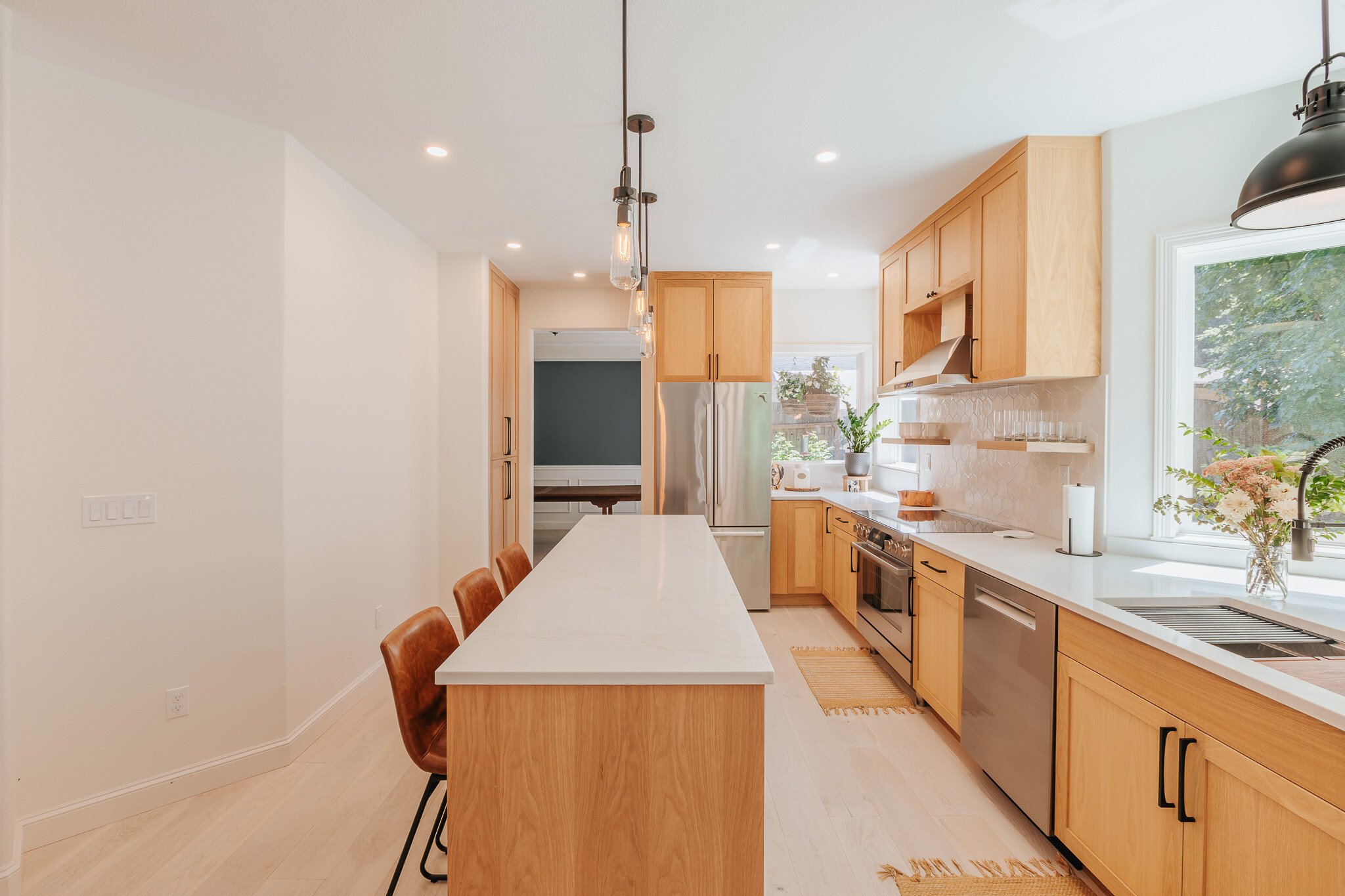
Cabinets run along two adjacent walls at a right angle, leaving the center of the room open. The L-shape is one of the most flexible layouts for a residential remodel because it works across a wide range of kitchen sizes and suits both dedicated kitchens and open-plan living spaces. It keeps traffic out of the work zone naturally, leaves room for a dining table or freestanding island and connects the kitchen to adjacent living areas without requiring a full structural overhaul. If your current kitchen feels closed off or cramped, reconfiguring to an L-shape is often one of the more cost-effective ways to change how the space feels. The inside corner is worth planning carefully, since without a lazy Susan or pull-out drawer system that space tends to become dead storage.
U-Shaped Kitchen Layout
Cabinets wrap three walls, creating the maximum storage and prep space of any layout. If your remodel is driven by a household that cooks seriously and frequently, with multiple people, big meals, and a lot of equipment, the U-shape is hard to beat. Zone separation happens naturally, with one wall for cleaning, one for cooking, and one for prep. Multiple cooks can work without crossing paths, and there is rarely a shortage of counter space. The trade-off is that it requires a meaningful footprint, at least 60 inches between the two parallel runs, and the enclosed design does not open up to the rest of the home the way an L-shape or island layout does. For families who want maximum kitchen function and are not prioritizing visual openness, it is the strongest option available.
G-Shaped Kitchen Layout
The G-shape takes the U-shaped layout and adds a partial fourth wall in the form of a peninsula extending from one of the existing cabinet runs. The result is one of the most functional layouts available for a residential kitchen, offering even more counter space and storage than a U-shape plus the social connection of a built-in seating area. For larger families or serious home cooks who also want a place for the household to gather, the G-shape delivers both without requiring a freestanding island. It needs a generous footprint to avoid feeling closed in, and the peninsula placement needs to leave adequate room on all sides for comfortable movement. In the right home, it is one of the best layouts available for a family-centered remodel.
Peninsula Kitchen Layout
A peninsula extends one cabinet run out into the room as an attached counter accessible from two or three sides. For homeowners who want the seating, prep space, and social connection of a kitchen island but do not have the floor space or budget for a freestanding one, a peninsula is often the right answer. It connects to existing cabinetry, requires no new plumbing rough-in to the center of the room, and creates a natural division between the kitchen and an adjacent dining or living area. In a remodel where the goal is opening the kitchen up and adding a gathering place for the family, a peninsula frequently delivers the most value for the least added cost.
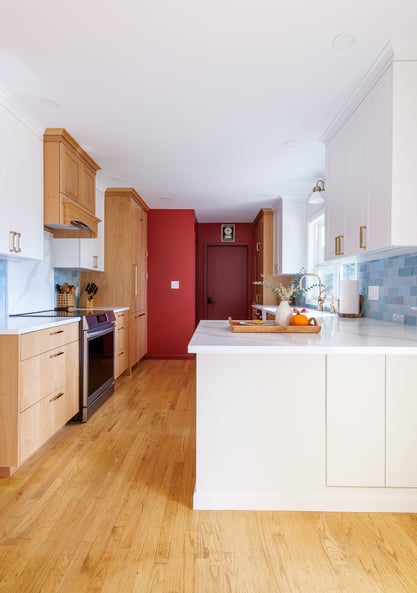
Island Kitchen Layout
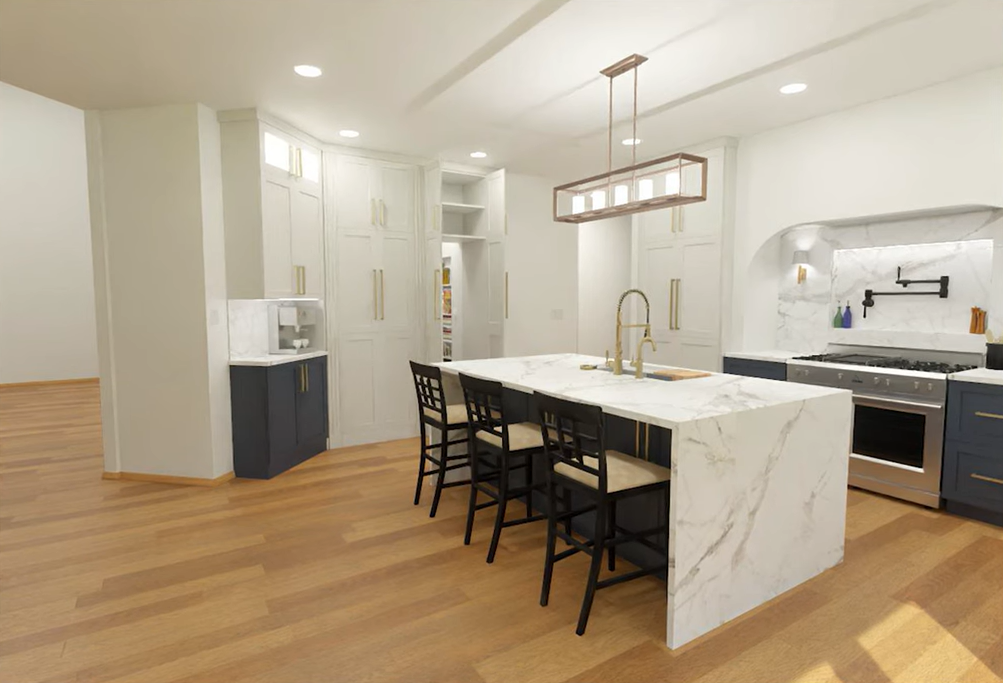
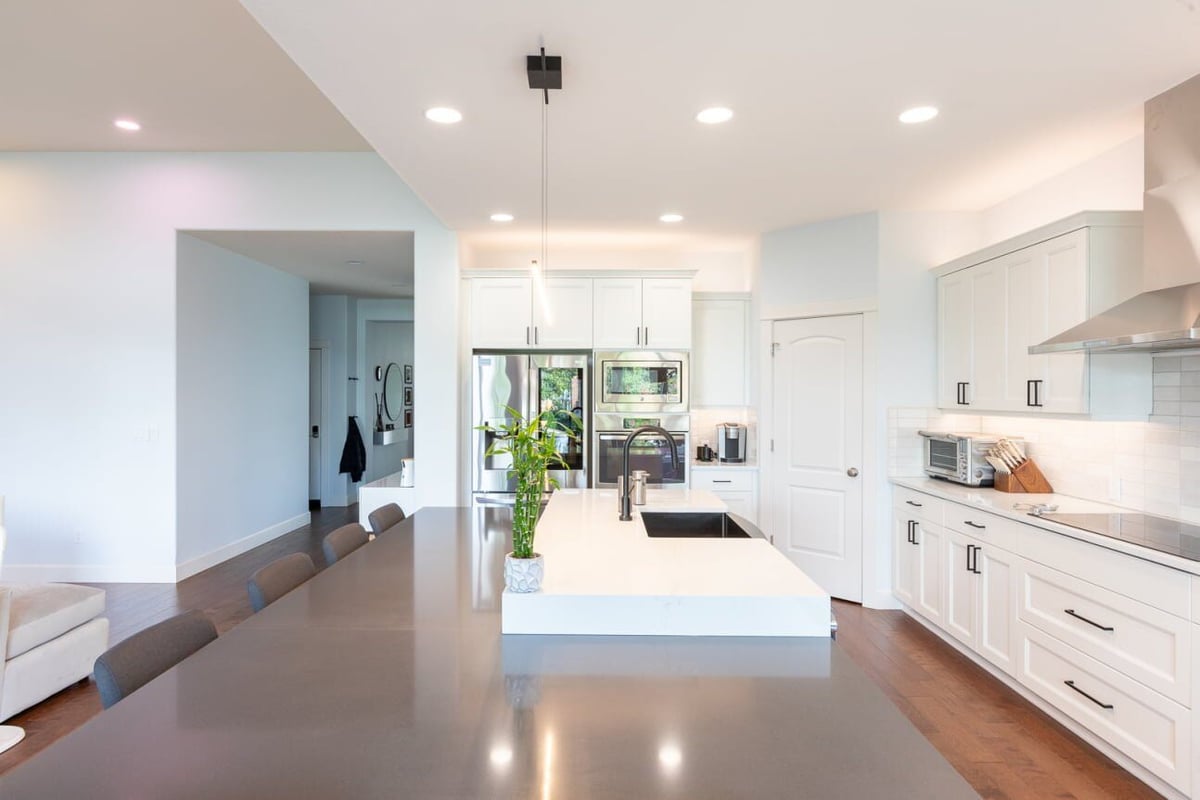
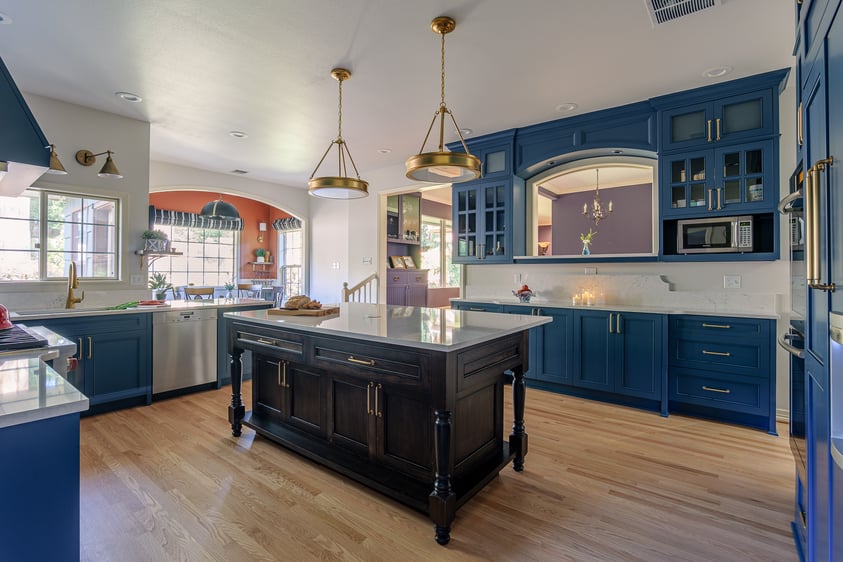
A freestanding counter sits in the center of the kitchen, accessible from all sides, adding prep space, seating, storage, and a central gathering place all in one element. It can be outfitted with a prep sink, cooktop, or built-in storage depending on scope and budget. The layouts that pair best with an island are L-shaped and U-shaped kitchens, since both leave the center of the room open and provide enough surrounding cabinetry that the island adds function rather than congestion. The walkway on all working sides needs to be 42 to 48 inches wide so two people can move comfortably and appliance doors can open without obstruction, and the refrigerator works best positioned at the outer edge of the work zone so family members can access it without walking through the active cooking area. If the kitchen cannot support that clearance, a peninsula will serve the household better.
Best Kitchen Layout for Large Family or Entertaining
Whether the driver is daily cooking for a large family, frequent hosting, or both, the right layout needs to handle high-volume use and keep people connected without putting them in the cook's way.
An open-plan kitchen with a central island handles that far better than any other configuration. The island gives the cook prep space and storage while offering seating on the opposite side for kids doing homework, a partner having a glass of wine, or guests who want to be part of the action. The open floor plan removes the wall between the kitchen and the rest of the home, so the cook is never isolated from the household while dinner is being made.
For households where daily cooking volume is the primary concern, a U-shaped or G-shaped kitchen provides the most prep and storage capacity. The G-shape is worth considering for larger families who want both high-output cooking space and a built-in gathering spot, since the peninsula adds seating and connection without requiring a separate island. The L-shaped kitchen with an island strikes the best balance when both function and openness are priorities. When the footprint rules out a full island, a peninsula is usually the most cost-effective path to the connected, family-centered kitchen that drives most remodels.
How Much Does It Cost to Remodel a Kitchen?
Kitchen remodel costs vary significantly depending on scope, materials, and how much of the existing layout changes. At Lamont Bros. Design & Construction, projects generally fall into one of three categories. A cosmetic refresh, which updates finishes like cabinet fronts, countertops, backsplash, and fixtures without touching the layout, typically runs $20,000 to $75,000. A pull-and-replace remodel removes everything and installs brand-new replacements in the same locations, with costs landing between $100,000 and $300,000. A full custom remodel that includes structural changes, layout redesigns, and premium materials throughout ranges from $150,000 to $400,000.
Layout changes are what push projects into higher cost territory. Moving a sink means relocating supply and drain lines. Relocating a range means rerouting gas. Adding an island with a sink runs new plumbing to the center of the room. Removing a wall often requires structural engineering, permits, and a load-bearing beam. Every time a plumber or electrician must move a line, the cost climbs. Keeping appliances and the sink in their existing locations is one of the most effective ways to manage budget without sacrificing a meaningful transformation. Whatever the scope, budgeting a contingency of 10 to 15 percent for unexpected discoveries once demolition begins is a standard and necessary practice.
See our kitchen remodel cost calculator to see how much your kitchen remodel could cost based on the cope and materials you choose.
FAQs: Best Kitchen Layouts
Some of our most frequently asked questions from homeowners looking to remodel their kitchen with a new layout:
What is the golden rule of kitchen layout design?
The kitchen work triangle is the foundational design principle for any layout. It refers to the relationship between the sink, the refrigerator, and the cooktop. Each leg of the triangle should measure between 4 and 9 feet, and the total distance across all three sides should fall between 12 and 26 feet. A triangle that is too tight makes the kitchen feel cramped. One that is too spread out means unnecessary steps every time you cook.
Which kitchen layout is the most efficient?
The L-shaped kitchen consistently ranks as the most efficient layout for the widest range of homes. It adapts well to most room sizes, keeps the work zone free of through traffic, and integrates naturally into open-concept floor plans. Pairing it with an island brings efficiency and function up another level for households that need more prep space and storage.
How much clearance do you need around a kitchen island?
A minimum of 36 inches is required for basic walkways, but 42 to 48 inches is the recommended target for most households. The wider the clearance, the easier it is for two people to work simultaneously, and the more room there is for appliance doors, drawers, and pull-outs to open fully. If the kitchen cannot support that spacing on all working sides, a peninsula is the better choice.
Where should the refrigerator be placed in a kitchen layout?
At the outer edge of the work zone, near the kitchen entry point. This allows family members to grab drinks or snacks without walking through the cooking area, reduces congestion around the stove and sink, and makes unloading groceries easier since the refrigerator is accessible without navigating around someone actively cooking.
Ready to Find the Right Kitchen Layout for Your Home?
If your kitchen no longer fits the way your family lives, a thoughtful remodel can change that. At Lamont Bros. Design & Construction, we have been helping Portland-area homeowners design kitchens that genuinely work for their households since 2008. Our design-build process covers everything from initial layout planning through finished construction, with no gaps between what you envisioned and what gets built.
Schedule a free design consultation with our team so that we can learn more about your next kitchen remodel project.
-1.jpg)