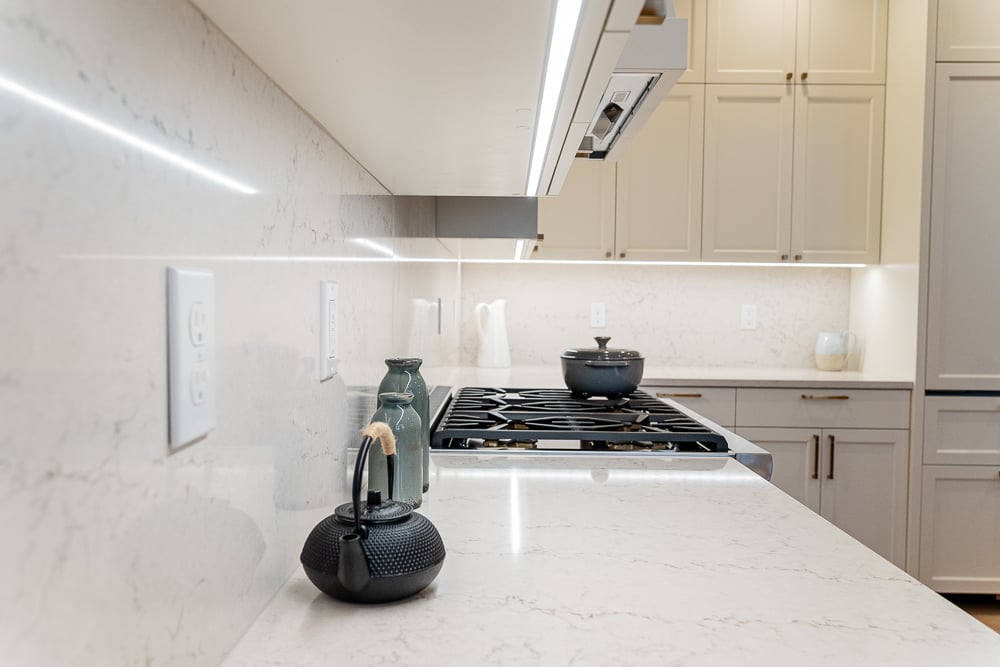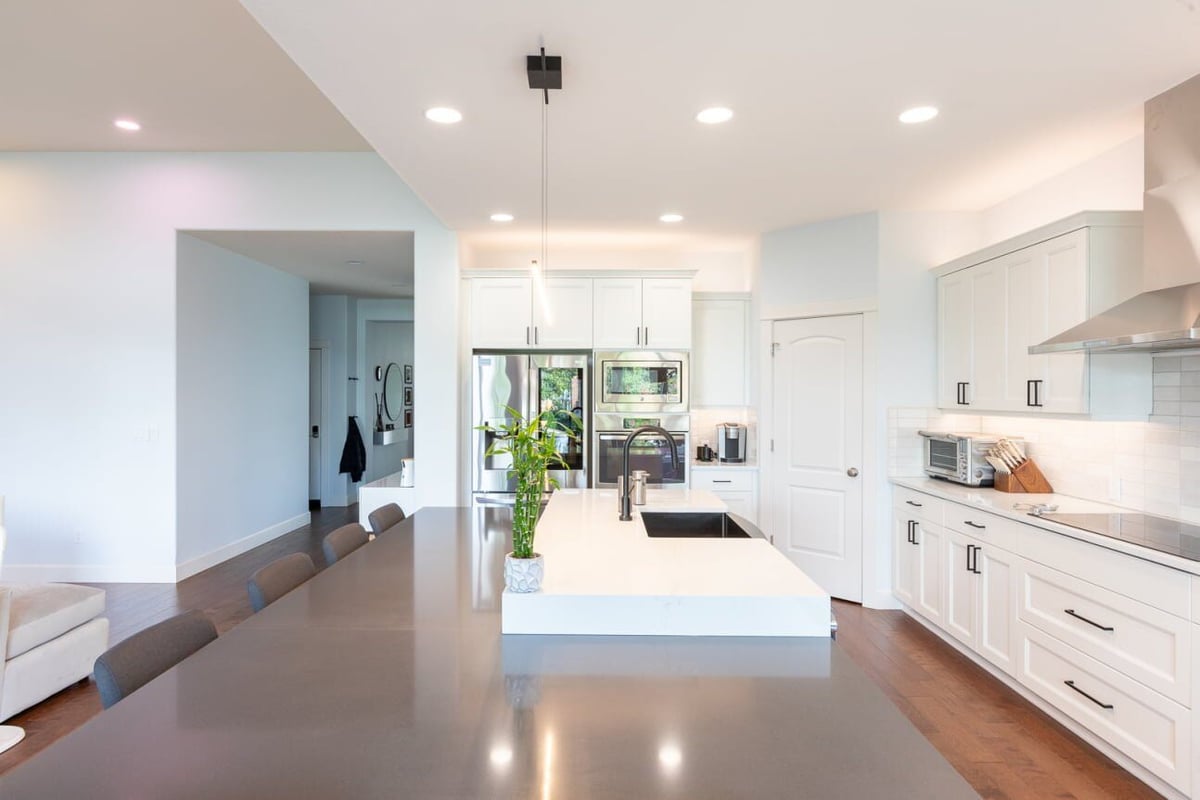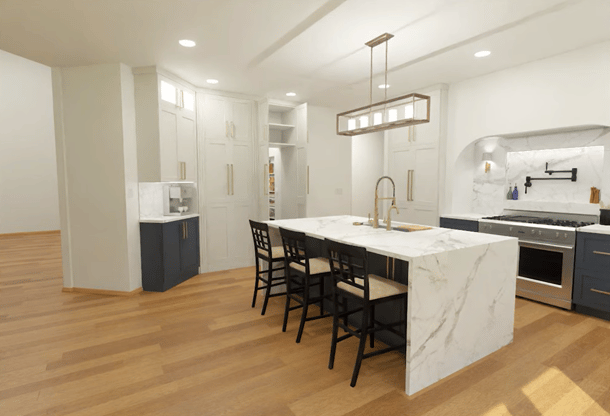
A waterfall island is a kitchen island where the countertop material does not stop at the edge of the cabinetry. Instead, it turns ninety degrees and continues straight down the side of the island until it reaches the floor, creating a continuous vertical panel of stone or quartz that mirrors the horizontal surface above.
A waterfall island does more than look good. Because the countertop and the side panel are cut from the same slab, the island looks like one solid piece instead of a counter sitting on top of a cabinet. It also shows off the stone you picked, since the pattern keeps going down the side. The side panels cover the cabinet ends, which usually take the most wear in a kitchen, and the whole island ends up looking more finished and built-in than a plain cabinet side.

Kitchen islands are the most common home for the design, and they are what most people picture when they hear the term, though the same treatment works beautifully on peninsula countertops, bathroom vanities, and home bars. You will most often spot it in modern kitchens, transitional spaces that blend traditional warmth with contemporary edges, and luxury homes where premium materials are part of the appeal. Waterfall islands will stay in style, but it is not the right fit for every floor plan or every budget.
Key Points
- A waterfall island features countertop material that extends vertically down one or both sides of the island to the floor, creating a seamless, sculptural effect.
- The design protects exposed cabinet ends, showcases premium stone and quartz, and serves as a strong focal point in open-concept kitchens.
- Waterfall islands cost more than traditional islands because they require additional slab material, precise vein matching, and more skilled fabrication and installation.
- Quartz, quartzite, marble, granite, and porcelain are the most common materials, with quartzite and porcelain gaining ground in 2026.
- The look remains in style, though it pairs best with contemporary, transitional, organic modern, and minimalist kitchens that have room to display it.

What Does a Waterfall Island Look Like?
The look shifts depending on how many sides the stone wraps and which material you choose, so here is what to expect in a real kitchen.
Single-Sided Waterfall Islands
A single-sided waterfall island has the countertop wrapping down just one end of the island. This is a common choice in budget-conscious remodels because it uses less material and requires fewer precise cuts while still delivering the signature look on the side that matters most.
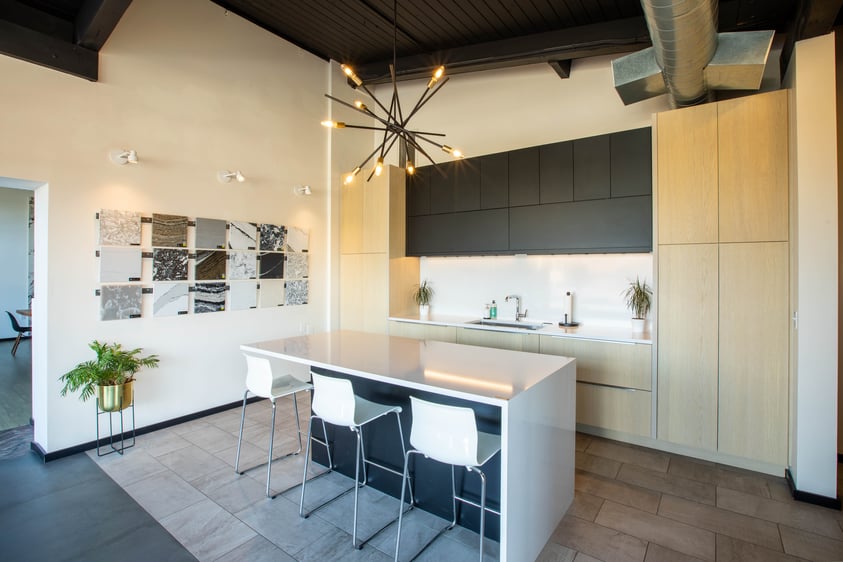
Single-sided designs often make sense when one end of the island faces the main living area, and the other sits against a wall or a run of cabinetry. You get the visual payoff exactly where guests will see it without paying for a second panel that no one notices.
Double-Sided Waterfall Islands
A double-sided waterfall island runs the countertop down both ends, so the island gets matching panels on each side. It makes a bigger statement than a single-sided version and tends to look more high-end.
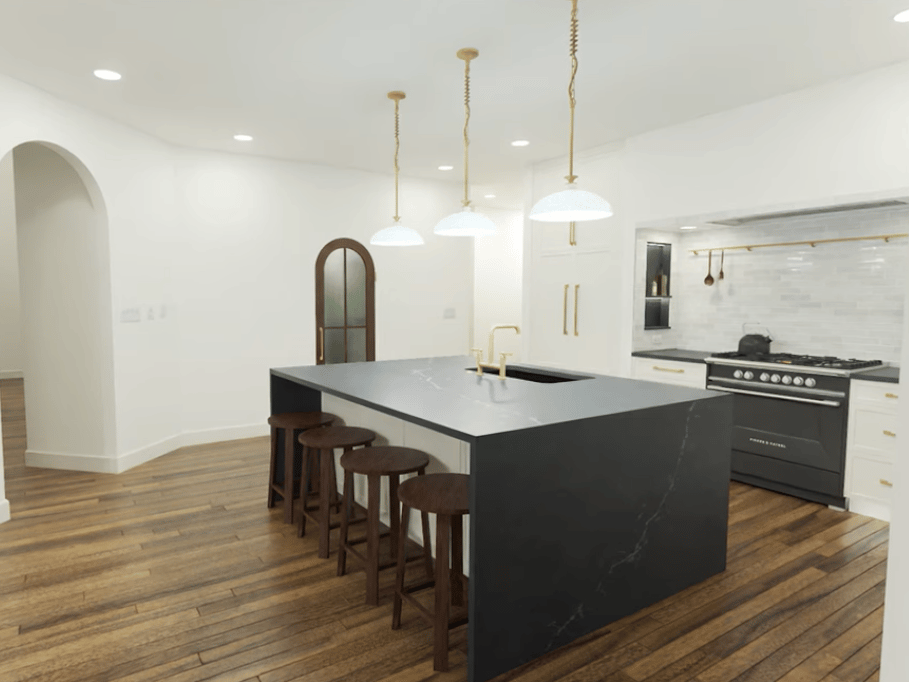
This setup works best in open kitchens where you can see the island from more than one side. Having both ends wrapped gives it a solid, built-in look, though it also takes twice the stone and fabrication.
Popular Materials for Waterfall Countertops
Almost any slab material can be used for a waterfall edge, but five show up the most, each bringing a different balance of durability, maintenance, and visual character. Quartz countertops, are a engineered material, is prized for its consistency, low maintenance and durablilty, and wide range of colors and patterns. Quartzite is a natural stone that pairs striking veining with excellent hardness and heat resistance. Marble remains the classic luxury option, loved for its soft veining and timeless appeal, though it asks for more careful upkeep. Granite offers bold, varied patterns and rugged durability that suit many design styles. Porcelain rounds out the group as a thin, ultra-durable slab that resists heat, scratches, and staining while mimicking the look of natural stone.
Design Styles That Pair Well with Waterfall Islands
The waterfall look complements clean, intentional design more than ornate, traditional spaces. It feels right at home in contemporary kitchens, where crisp lines and minimal ornamentation let the slab speak for itself. Transitional kitchens use it to balance warm cabinetry against a sleek edge, while organic modern spaces pair the natural stone veining with warm woods and soft, earthy palettes. Minimalist kitchens benefit too since a single uninterrupted slab reinforces the pared-back aesthetic.
Waterfall Countertop vs Regular Countertop
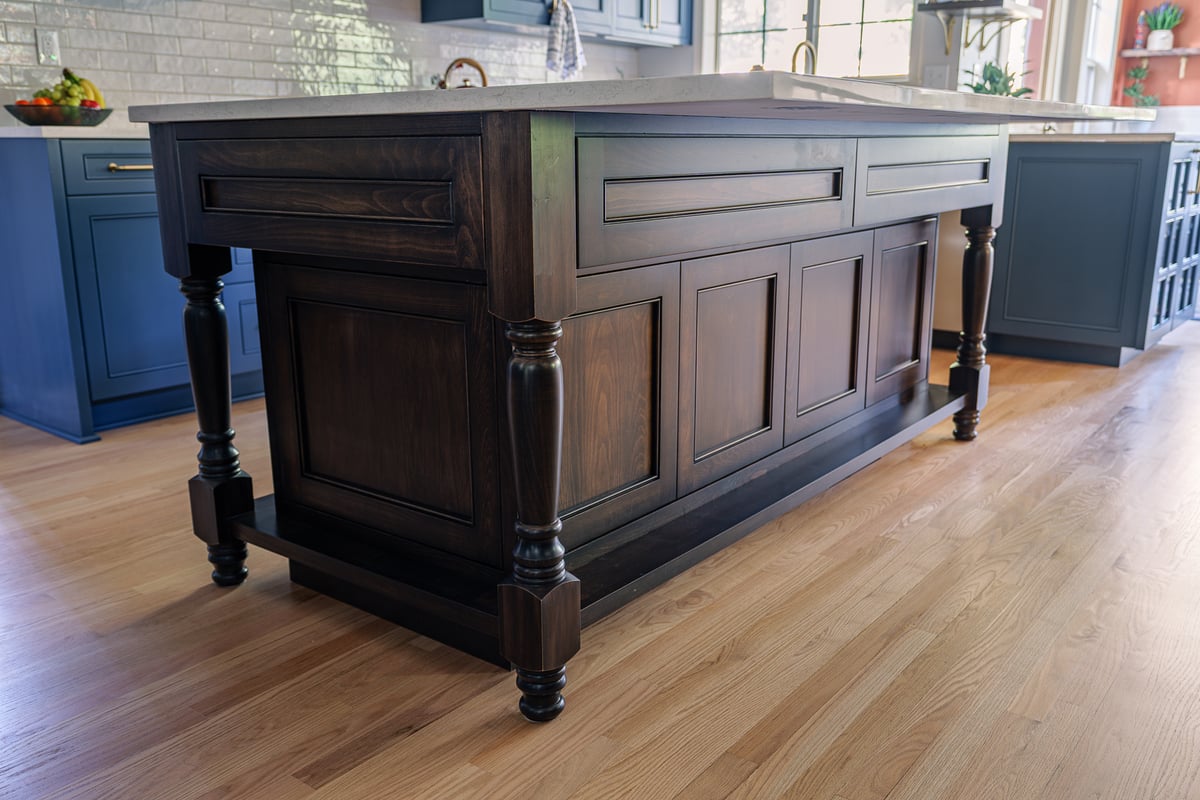
The core difference is what happens at the edge of the island. A traditional countertop stops at the cabinet, finishing with an exposed edge and an overhang. The cabinetry below remains visible and usually carries its own decorative end panel or finished side.
A waterfall countertop, by contrast, continues vertically to the floor. That single change ripples through both the visual impact and the construction. The waterfall version demands more material and a more involved fabrication and installation process, while the traditional version is simpler and faster to build.
Appearance and Design Impact
A waterfall island is a statement piece. The eye follows the stone over the edge and down to the floor, making the island the natural anchor of the room. A traditional island shifts that emphasis onto the cabinetry, the hardware, and any decorative paneling, which can be exactly what a more classic kitchen needs.
Modern, transitional, and minimalist styles tend to favor the waterfall edge because it reinforces clean geometry. Classic, traditional, and farmhouse kitchens often look better with a standard island, where furniture-style cabinetry and detailed millwork can take center stage.
Durability and Protection
Here the two designs diverge in a notable way. The stone panels of a waterfall island shield the cabinet ends far better than paint or veneer holds up in a high-traffic zone, so the island stays looking new longer. The tradeoff sits on the repair side since a chip or crack in a vertical stone panel is more visible and more costly to fix than a scuff on a cabinet end. Both designs reward routine sealing depending on the material and cleaning.
Which Option Is Right for Your Kitchen?
A waterfall island makes the most sense when the island is visible from surrounding rooms, you want a clear focal point, and you are already investing in premium stone. A traditional island is often the better call when the budget is tight, the kitchen leans towards a more classic or farmhouse style.
Benefits of a Waterfall Island
The design offers several practical and aesthetic advantages that explain its lasting appeal.
Creates a Luxury, Custom Appearance
A waterfall edge is one of those details that immediately makes a kitchen look custom. Because the slab runs in one piece over the edge, it looks intentional and high-end, and that lifts the feel of the whole room.
If you picked a slab with bold veining or rich color, the waterfall edge gives it a second surface to show off. The pattern carries over the corner and down the side, so the island becomes a display for the stone instead of hiding it on top.
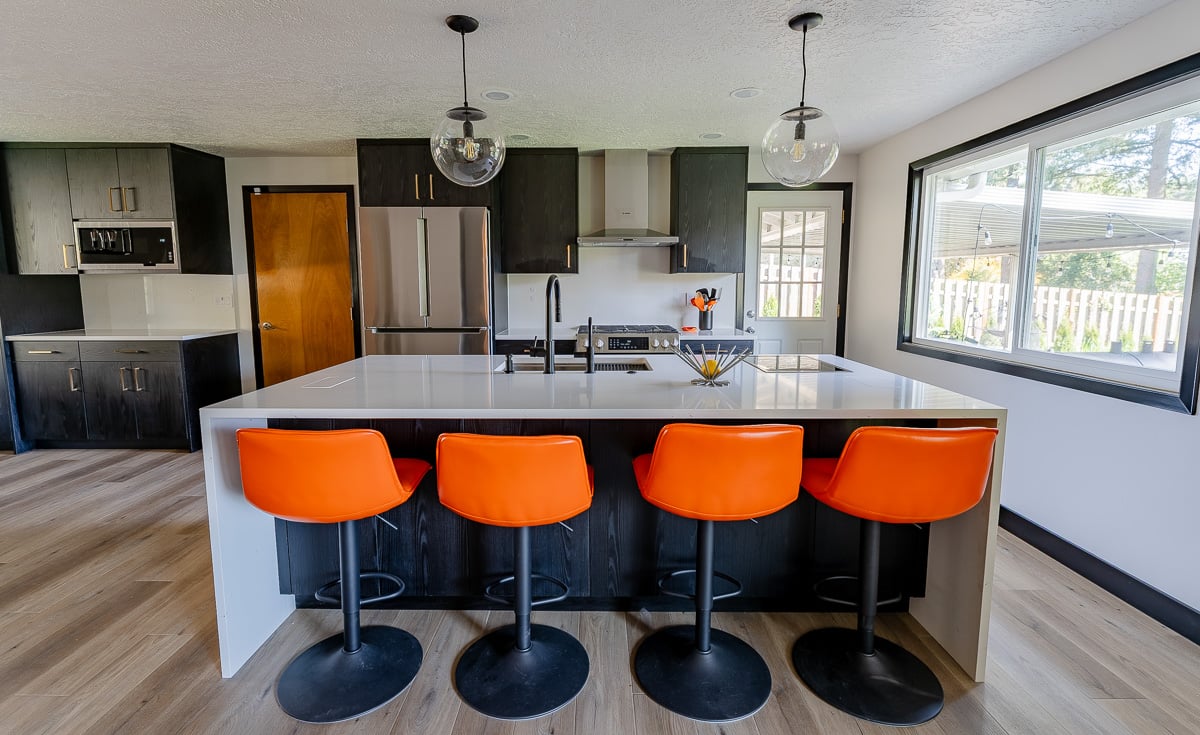
The sides of an island take a lot of bumps, knocks from cleaning gear, and the occasional spill. Covering them in stone protects the part of the cabinet that gets beat up the most and keeps the island looking new a lot longer.
In a busy house where the island gets used all day, a solid stone side holds up better than a finished cabinet face. It shrugs off wear and moisture, so it is a practical choice for active families and not just a good-looking one.
Creates a Strong Focal Point in Open-Concept Kitchens
In open layouts where the kitchen blends into living and dining areas, a waterfall island gives the eye a clear anchor. It defines the space and adds a polished, architectural element that ties the room together.
What Are the Disadvantages of a Waterfall Island?
The look comes with real tradeoffs that are worth understanding before you commit.
More Complex Fabrication and Installation
The mitered corners and heavy panels call for an experienced fabricator and a careful install, which narrows your pool of qualified shops and lengthens the timeline. A less skilled crew can leave visible seams or misaligned grain, so the design rewards hiring well.
Repairs Can Be More Expensive
Because the stone is the structural face of the island, a chip or crack in a waterfall panel is harder and pricier to fix than damage to a cabinet end. Repairs may involve matching and refabricating a section of stone rather than touching up paint.
May Not Suit Every Design Style
The sleek, modern character of a waterfall edge can clash with classic, traditional, or heavily detailed kitchens. In the wrong setting it can feel out of place rather than elevated.
Are Waterfall Islands More Expensive?
Yes. A waterfall island reliably costs more than a comparable standard island, and it helps to understand exactly why so you can plan your budget with realistic expectations.
Why Waterfall Countertops Cost More
Three factors drive the premium. The design needs additional slab material to clad the sides. It requires precision fabrication, including the careful miter cuts that make the corner look seamless. It also depends on vein matching, the painstaking process of aligning the pattern so the stone appears to flow continuously around the edge, which often means using more of the slab and accepting more waste.
Factors That Affect Waterfall Island Cost
No two projects price out the same way. The countertop material is the biggest lever, since marble and quartzite typically cost more than quartz or granite. Island size matters as well because a larger island needs more square footage of slab. A double-sided waterfall runs noticeably higher than a single-sided one, and a fabricator's experience can move the rate, since the precise cuts reward skilled shops that may charge accordingly. Regional labor costs round things out, varying widely by market and shaping the final installation price.
How Much More Does a Waterfall Island Cost?
A waterfall edge generally adds a meaningful premium over a standard island, often increasing the island countertop cost by a substantial margin once the extra material and labor are accounted for. The exact figure varies so much by material, size, and region that any single number would mislead more than it helps. The most reliable way to know your cost is to get a detailed quote based on your specific slab and layout.
For a fuller picture of how an island fits into your overall budget, see our kitchen remodeling cost guide.
Are Waterfall Countertops Out of Style in 2026?
It is a fair question for any feature that gained popularity quickly, so here is an honest assessment.
Waterfall countertops remain firmly in style in 2026. The look has matured from a bold trend into an established design choice that continues to appear in new builds, custom homes, and high-end remodels across the country.
Why Waterfall Islands Remain Popular
The design endures because it rests on timeless principles rather than a passing fad. It celebrates the natural beauty of stone, it relies on clean architectural lines that read as intentional in almost any era, and it continues to be a sought-after feature in custom homes. Those qualities are not going out of fashion any time soon.
Waterfall Island Trends for 2026
The look is evolving even as it stays popular. Quartzite islands are have gained in popularity, valued for their natural veining and exceptional durability, and porcelain slabs are gaining ground thanks to their thin profile and strong resistance to heat and scratches. Designers are increasingly pairing the cool stone with warm wood cabinetry to add natural texture, a hallmark of the organic modern style that blends earthy materials with clean, contemporary forms.
When a Waterfall Island Can Feel Dated
The design can look tired when it leans on stark, cold finishes with nothing to warm them. Poor material selection, such as a low-quality slab or a pattern that fights the rest of the room, undermines the effect. A waterfall island can also fall flat when it ignores the surrounding design, sitting in a kitchen that gives it no visual support or balance.
Is a Waterfall Island Worth It?
Value comes down to how much the design will be seen and enjoyed compared to what it adds to your budget.
When the Investment Makes Sense
The premium is easiest to justify when the island is seen and used constantly, because a feature on daily display earns its cost in a way a hidden one never will. If you are already committing to a statement slab, carrying it down the sides is a smaller incremental add than deciding to do it later would be.
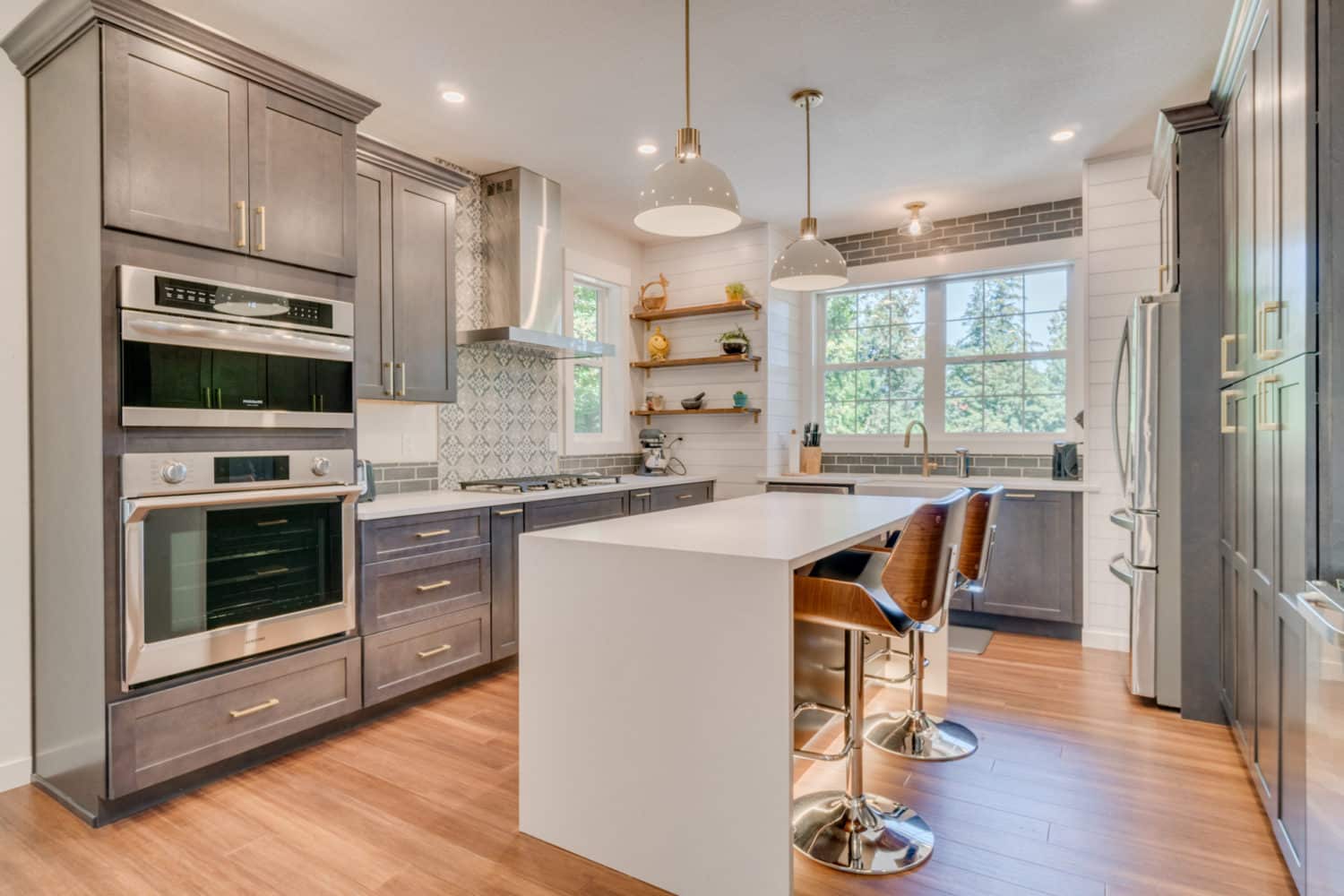
When a Standard Island May Offer Better Value
If the island sits against a wall, if your budget is better spent elsewhere, or if your kitchen style favors traditional cabinetry, a standard island often gives you more value for the money. You can put the savings toward appliances, lighting, or storage that you will use every day.
Frequently Asked Questions About Waterfall Islands
Here are some of our most frequently asked questions from homeowners looking to add a waterfall island to their home:
Do Waterfall Islands Increase Home Value?
A well-executed waterfall island can support a home's value by signaling a high-quality, custom kitchen, which is one of the features buyers weigh most heavily. The return depends on the rest of the kitchen and the local market, so the design works best as part of a cohesive remodel rather than a standalone upgrade.
Can Any Countertop Material Be Used for a Waterfall Edge?
Most slab materials can be fabricated into a waterfall edge, including quartz, quartzite, marble, granite, and porcelain. The best choice balances the look you want with durability and maintenance, and your fabricator can advise on which materials handle the precise miter cuts most reliably.
Should a Waterfall Island Have One Side or Two?
That depends on visibility and budget. A single-sided waterfall delivers the look at a lower cost and suits islands that face the room on one end. A double-sided waterfall creates a more dramatic, symmetrical statement and works best when the island is seen from multiple angles.
Are Waterfall Islands Only for Modern Kitchens?
No. While the design is most associated with modern kitchens, it also pairs beautifully with transitional, organic modern, and minimalist spaces. With the right material and warm complementary finishes, a waterfall island can feel at home in a range of styles beyond strictly contemporary design.
Ready to Plan a Kitchen That Fits the Way You Live?
A waterfall island can become a defining feature, but a successful kitchen depends on how the entire space works together. The layout, storage, lighting, materials, and construction details should support the way you cook, gather, and live every day.
Lamont Bros. brings design and construction together under one accountable team. Read about our kitchen remodel process to see how a project moves from initial planning through the final walkthrough, or visit our kitchen remodeling service page for more information about the kitchens we design and build.
Ready to discuss your kitchen? Request a quote or call (503) 713-5335 to speak with our team.
-1.jpg)