Yes, a gas stove can produce carbon monoxide. A dirty burner, improper flame adjustment, or insufficient kitchen ventilation can allow combustion byproducts to accumulate indoors. Carbon monoxide has no odor, no color, and no taste, so there is no physical way to detect it without an alarm.
Safety note: If a carbon monoxide alarm is sounding, or anyone in the home has symptoms that could indicate exposure, leave immediately and call 911. Do not re-enter until emergency responders confirm it is safe.
Key Points
- Carbon monoxide forms from incomplete combustion. Clogged burners, poor flame adjustment, and blocked airflow can all cause a gas stove to produce carbon monoxide instead of the carbon dioxide and water vapor that result from clean combustion.
- Ventilation determines how dangerous the buildup becomes. Even a stove with minor combustion issues poses limited risk in a well-ventilated kitchen. The hazard grows when there is nowhere for combustion byproducts to go.
- Carbon monoxide cannot be detected without an alarm. Unlike natural gas, which is treated with an odorant, carbon monoxide is completely odorless. A functioning carbon monoxide detector is the only reliable way to know it is present.
- Some situations carry significantly higher risk. Using a gas stove to heat the home, running an oven for extended periods in a poorly ventilated kitchen, and operating an aging or unmaintained appliance all increase the likelihood of dangerous exposure.
How Gas Stoves Can Produce Carbon Monoxide
Gas stoves burn natural gas or propane, and under normal conditions the primary combustion byproducts are carbon dioxide and water vapor. Carbon monoxide forms when the fuel does not fully oxidize, a condition known as incomplete combustion.

Several things can cause incomplete combustion: burner ports clogged with grease or food residue, flames set too high or adjusted unevenly, blocked airflow around the appliance, or an aging stove with an incorrect gas-to-air mixture. Any of these problems can push combustion away from a clean burn and toward carbon monoxide production. The risk compounds when ventilation is also poor, because even modest carbon monoxide output can accumulate in a space where there is no air exchange.
Can a Gas Stove Cause Carbon Monoxide Poisoning?
Yes. Carbon monoxide enters the bloodstream through the lungs and binds to hemoglobin with an affinity approximately 200 times greater than oxygen, which reduces the blood's ability to deliver oxygen to organs and tissues. Poisoning occurs when concentrations climb faster than ventilation can clear them.
Risk is higher in specific circumstances: using a gas oven or range to heat the home, running an oven for many hours in a kitchen with poor air circulation, or relying on an older appliance that has not been inspected in years. Young children, older adults, pregnant people, and those with existing heart or respiratory conditions are more vulnerable to harm at lower concentrations than healthy adults.
Can Leaving a Gas Stove On Cause Carbon Monoxide?
If a burner is left on with an active flame, it continues producing combustion byproducts. Extended operation in a poorly ventilated kitchen can allow carbon monoxide to build up, and if the burner is not combusting cleanly, that buildup happens faster.
If gas is flowing without a flame, combustion is not occurring and carbon monoxide is not being produced. The hazard in that scenario is unburned natural gas accumulation, which creates fire and explosion risk. Natural gas is treated with a mercaptan odorant so leaks are detectable by smell.
If you return home to find the stove was left on and there is no gas odor, turn it off. If you smell rotten eggs, do not operate switches, create sparks, or use your phone inside. Open windows and doors without flipping a light switch if possible, leave the house, and call your gas company and emergency services from outside.
Carbon Monoxide vs. Natural Gas: What Is the Difference?
Natural gas is primarily methane. Gas utilities add a sulfur compound called mercaptan that gives natural gas its distinctive rotten-egg smell, making leaks detectable before they reach dangerous concentrations.
Carbon monoxide is a combustion byproduct with no odor, no color, and no taste. It cannot be detected by smell or any other physical sense. A carbon monoxide alarm is the only reliable way to know it is present, which is why alarms are essential in any home with gas appliances.
Signs Your Gas Stove May Be Producing Too Much Carbon Monoxide
- Yellow or orange flames instead of a steady blue flame. Normal gas combustion produces a blue flame with a defined inner cone. Yellow or orange coloring indicates the fuel is not burning completely, and the appliance should be inspected.
- Soot, scorch marks, or dark staining around burner grates or nearby surfaces.
- A flame that is weak, uneven, or fluctuates erratically without adjusting the control.
- Unusual condensation or moisture on windows or walls near the stove.
- A carbon monoxide alarm activating.
- Symptoms such as headache, nausea, or fatigue that clear up after leaving the home.
Symptoms of Carbon Monoxide Poisoning
Symptoms vary with concentration and duration of exposure. Mild to moderate exposure typically causes headache, dizziness, weakness, nausea or vomiting, shortness of breath, confusion, and chest pain. Severe or prolonged exposure can cause loss of coordination, loss of consciousness, permanent neurological injury, or death.
Carbon monoxide symptoms resemble the flu but without fever. If multiple people in the same household feel ill at the same time, that pattern points more toward an environmental source than a virus and warrants immediate investigation.

What to Do If You Suspect Carbon Monoxide from a Gas Stove
- Leave the home immediately with everyone inside, including pets.
- Call 911 from outside. Give your address and describe your symptoms.
- Do not re-enter until responders have checked the space and confirmed it is safe.
- Seek medical attention if anyone has symptoms. Carbon monoxide poisoning is a medical emergency.
- Have the stove inspected by a qualified technician before using it again.
How to Reduce Carbon Monoxide Risk When Using a Gas Stove
- Use a range hood that vents outdoors. A recirculating hood removes particulates but not carbon monoxide. Only an outdoor-vented system removes combustion byproducts from the kitchen air.
- Open a window if outdoor ventilation is not available.
- Keep burner ports clean. Grease and food residue clog ports, disrupt the flame, and contribute to incomplete combustion.
- Never use a gas stove or oven as a heat source.
- Schedule a professional inspection if flames look unusual, the stove smells odd during use, or the appliance has not been serviced in several years.
- Install carbon monoxide alarms on every level of the home and near sleeping areas. Test them monthly and replace them on the schedule in the manufacturer's documentation.
Where Should Carbon Monoxide Detectors Be Placed?
Install a detector on each level of the home and near sleeping areas. Carbon monoxide is most dangerous during sleeping hours because early symptoms are easy to miss while asleep.
Do not place detectors directly beside the stove. Brief cooking can produce low-level byproducts that trigger nuisance alarms without indicating an actual hazard. Detectors have a service life of five to seven years and should be replaced according to the manufacturer's instructions regardless of whether they appear to be working.
When a Kitchen Remodel Can Improve Gas Stove Safety
Some carbon monoxide risks in a kitchen are not appliance problems. Poor ventilation design, an ineffective range hood, or a kitchen layout that makes proper exhaust impractical are structural issues that routine maintenance cannot fix.
Older kitchens frequently lack the ventilation capacity for modern cooking habits. A range hood sized for a lower-output appliance, deteriorated ductwork, or a kitchen never planned for outdoor exhaust can create elevated byproduct levels even when the stove itself is functioning correctly.
A kitchen remodel can address these conditions in several ways. The most direct improvement is upgrading to a properly sized outdoor-vented range hood. Sizing matters here: an undersized hood does not capture exhaust effectively regardless of how it is installed. In tightly built homes, a powerful exhaust hood can also depressurize the kitchen, so thoughtful remodels account for makeup air supply as part of the overall ventilation plan.
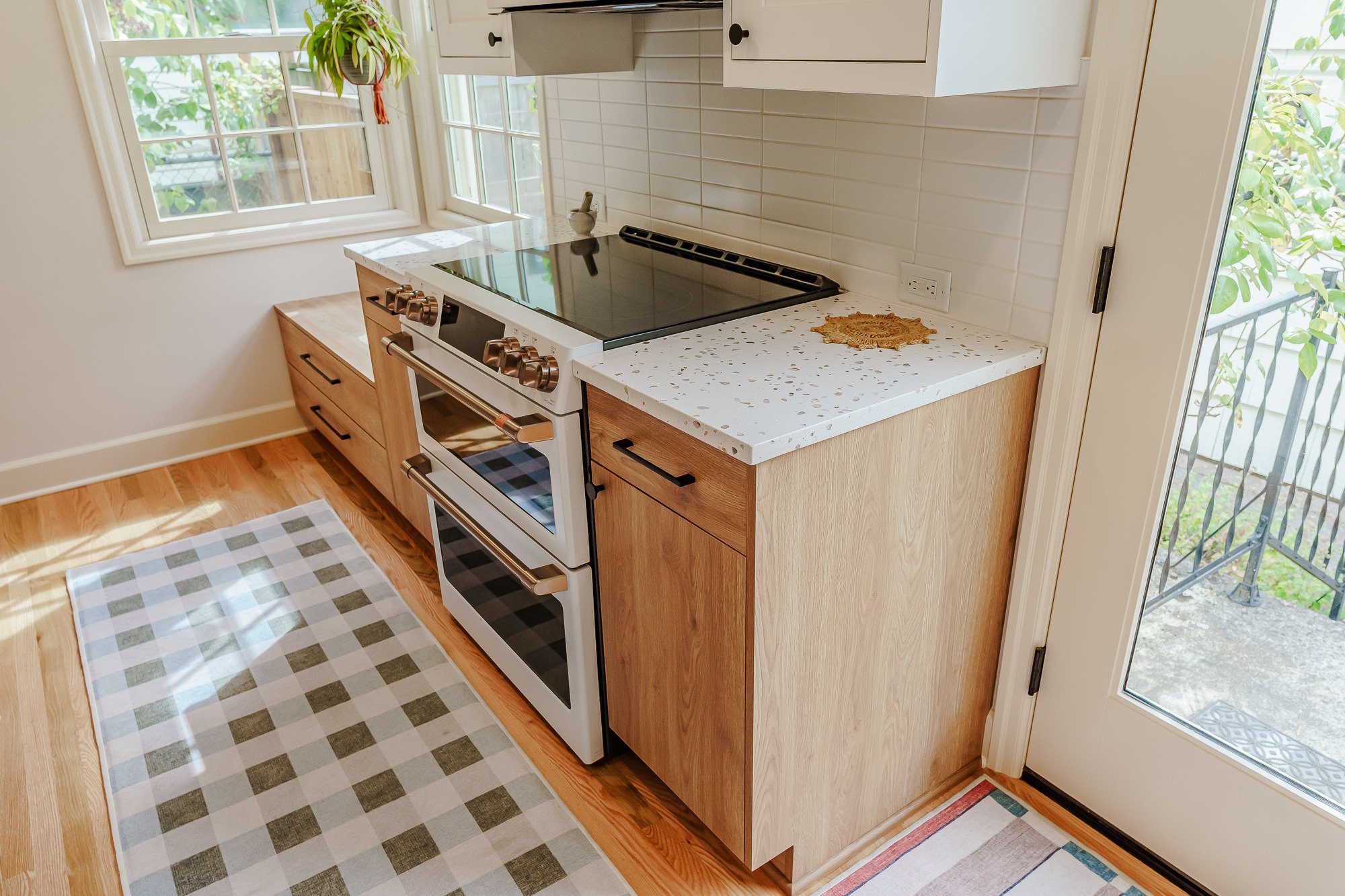
Layout decisions matter as well. A stove positioned on an exterior wall simplifies direct venting, and long or convoluted duct runs reduce exhaust efficiency in ways that cannot always be compensated for by a more powerful fan. If gas connections have not been updated in years, a remodel is also a practical time to replace older flexible connectors and fittings that have exceeded their useful service life.
For homeowners open to changing appliances entirely, switching to electric or induction eliminates combustion from the kitchen and removes the carbon monoxide risk at its source. Induction technology has improved substantially and is now available at a wide range of price points. And for those who plan to keep a gas stove for now, roughing in a 240-volt circuit during a remodel is a straightforward step that costs far less than retrofitting one later.
FAQs: Gas Stoves and Carbon Monoxide
How do you know if a gas stove is leaking carbon monoxide?
A carbon monoxide alarm is the only reliable way to know. Because carbon monoxide has no odor, color, or taste, there is no way to detect it through physical senses alone. That said, certain signs on the stove itself can suggest a combustion problem worth investigating before it becomes a safety issue: yellow or orange flames instead of blue, soot or dark staining around the burners, and unusual moisture on nearby windows or walls all point to incomplete combustion. Physical symptoms such as headache, nausea, or dizziness that improve after leaving the home are another indicator. The problem with relying on symptoms is that by the time they appear, exposure may already be significant. An alarm is the only tool that detects a problem before that point.
What happens if you breathe in gas from a gas stove?
The answer depends on what type of gas is present. If the stove is on and burning, the primary concern is carbon monoxide. When inhaled, carbon monoxide enters the bloodstream and binds to hemoglobin with an affinity approximately 200 times greater than oxygen, which reduces the blood's ability to deliver oxygen to tissues and organs. At lower concentrations, this causes headache, dizziness, nausea, and confusion. At higher concentrations or with prolonged exposure, it can cause loss of consciousness, permanent neurological injury, or death. If the stove is releasing unburned natural gas without a flame, the gas itself is not acutely toxic in small amounts, but it displaces oxygen in an enclosed space and creates serious fire and explosion risk. In either situation, getting fresh air immediately is the right first step.
Is it normal for a gas stove to give off carbon monoxide?
All gas combustion produces trace amounts of carbon monoxide as a byproduct of the burning process, so some carbon monoxide output is normal. In a properly ventilated kitchen with a well-maintained stove, those trace amounts dissipate before reaching harmful concentrations. The concern arises when output is elevated beyond what clean combustion produces, which typically points to a specific problem: clogged burners, incorrect flame adjustment, blocked airflow, or a stove that has not been serviced in years. The practical takeaway is that normal operation in a properly ventilated kitchen carries limited risk, but the same stove in a poorly ventilated kitchen, or one with a developing combustion problem, is a different situation. Working carbon monoxide alarms and adequate ventilation matter even when a stove appears to be functioning correctly.
What are the top sources of carbon monoxide in a home?
The most common sources are fuel-burning appliances and vehicles. Furnaces, boilers, and gas water heaters are among the most frequently cited residential sources because they operate continuously and any combustion problem compounds over time. Portable generators are consistently identified as the leading cause of carbon monoxide deaths by product category, which is why they should never be operated indoors or near open windows. Vehicles running in an attached garage are another well-documented source, even with the garage door open. Gas ranges and ovens contribute as well, particularly when used without adequate ventilation or for purposes they were not designed for, such as heating the home. Fireplaces, wood-burning stoves, and gas dryers round out the list. What these sources share is that any of them can produce dangerous carbon monoxide levels when they are malfunctioning, poorly maintained, or used in spaces without adequate air exchange.
Planning a Safer Kitchen Starts with the Right Team
A gas stove can be a safe part of a well-built kitchen when the appliance, ventilation, and layout all function together correctly. When ventilation is inadequate, the range setup is outdated, or you are considering a switch to induction, a remodel addresses those problems at the source. Lamont Bros. Design & Construction helps Portland-area homeowners plan kitchen remodels with better ventilation, smarter layouts, and appliance choices that fit the way they cook.
Schedule a free consultation with Lamont Bros. Design & Construction to start planning your next Portland kitchen remodel project.
-1.jpg)