Cabinet color is one of the most consequential decisions in any kitchen remodel. Unlike paint on a wall, which can be refreshed for a few hundred dollars, cabinet finishes represent a significant investment that most homeowners live with for 10 to 20 years. Choosing a color that looks dated within a few years can affect both your daily enjoyment of the space and your home's resale value.
That's the risk of chasing trends. The cabinet colors generating buzz right now may look exactly like a trend just a few years from now. The safer approach, and the one our design team at Lamont Bros. recommends most often, is to choose a color with a proven track record of longevity. Based on our experience with Portland-area kitchen remodels and the design principles we apply every day, the cabinet colors most likely to stand the test of time are white, warm white, natural wood, greige, soft gray, navy, black, and muted green.

Below, we'll explain what makes a kitchen cabinet color timeless, walk through each of these options in detail, and help you think through which one is right for your home.
Key Points
- Timeless cabinet colors work across multiple design styles, adapt as surrounding trends change, and appeal to a broad range of future buyers.
- White and warm white remain the safest choices, while natural wood, particularly white oak, has reclaimed a top spot in both homeowner and designer preference.
- Bold colors like navy, black, and muted green can be timeless when executed well, but require more careful planning than neutral options.
- Cabinet color alone does not make a kitchen timeless. Countertops, backsplash, flooring, hardware, and lighting all shape how a color reads and ages over time.
What Makes a Kitchen Cabinet Color Timeless?
Not every popular color is built to last. Timeless cabinet colors share a few specific qualities that set them apart from trends.
A color that only works in one style is inherently limited. A highly saturated cobalt, for example, only feels right in an ultra-modern kitchen. Timeless colors, by contrast, work across traditional, transitional, farmhouse, coastal, and contemporary kitchens. White, natural wood, and navy all appear repeatedly across wildly different kitchen aesthetics, which is a large part of what gives them staying power.
Neutral and near-neutral cabinet colors also function as a backdrop rather than the focal point. As hardware finishes shifting from chrome to brass to matte black and back again, as countertop materials evolve, and as backsplash styles change, timeless cabinets continue to work. You can refresh the accessories without replacing the cabinets.
If you plan to sell your home in the next decade, cabinet color matters to buyers. White, off-white, and neutral tones consistently attract the broadest pool of buyers. Natural wood tones follow closely behind. Bold colors like navy, deep green, and black can be executed beautifully, but they tend to appeal strongly to design-conscious buyers while potentially giving more traditional buyers pause.
Cabinet Color Is Only Part of the Equation
This is something most overlook, but it's crucial: cabinet color doesn't exist in isolation. A truly timeless kitchen depends on the interplay of multiple elements working together.
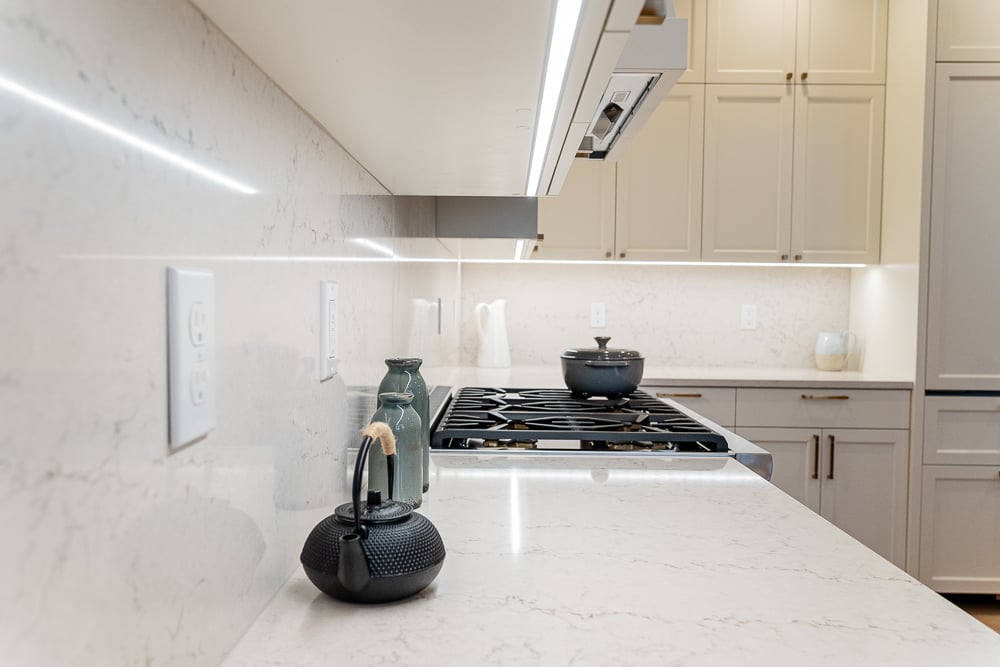
Countertops anchor the kitchen and should complement your cabinet color without competing with it. White marble, quartz with soft veining, butcher block, and honed stone are all materials that hold up well over time.
The backsplash is one of the more trend-sensitive elements in a kitchen. Classic subway tile, simple stone, and neutral mosaic patterns tend to age better than highly stylized or boldly patterned options. If you're investing in long-lasting cabinets, keeping the backsplash somewhat restrained is a smart move.
Flooring sets the warmth or coolness of the entire room. Medium-toned hardwood floors, natural stone, and large-format tile in neutral tones all pair well with timeless cabinet colors. Flooring that locks you into a specific era will work against even the most carefully chosen cabinets.
Hardware is the easiest element to update as tastes change. Brushed brass, matte black, and brushed nickel are all widely compatible with the cabinet colors discussed below. Since hardware can be swapped out for fairly inexpensively, it's worth treating it as the variable rather than the cabinets themselves.
Lighting has an enormous effect on how cabinet colors read in real life. The same white can look warm and creamy or cool and clinical depending on light temperature, the number of windows, and the direction a kitchen faces. Always test cabinet samples in your actual kitchen light before committing.

What Color Cabinets Are Timeless?
White and stained wood cabinets have consistently proven themselves as the most timeless choices in kitchen design, and for good reason. Both colors bring a versatility and staying power that few other options can’t match.
White Cabinets Are Still the Most Timeless Choice
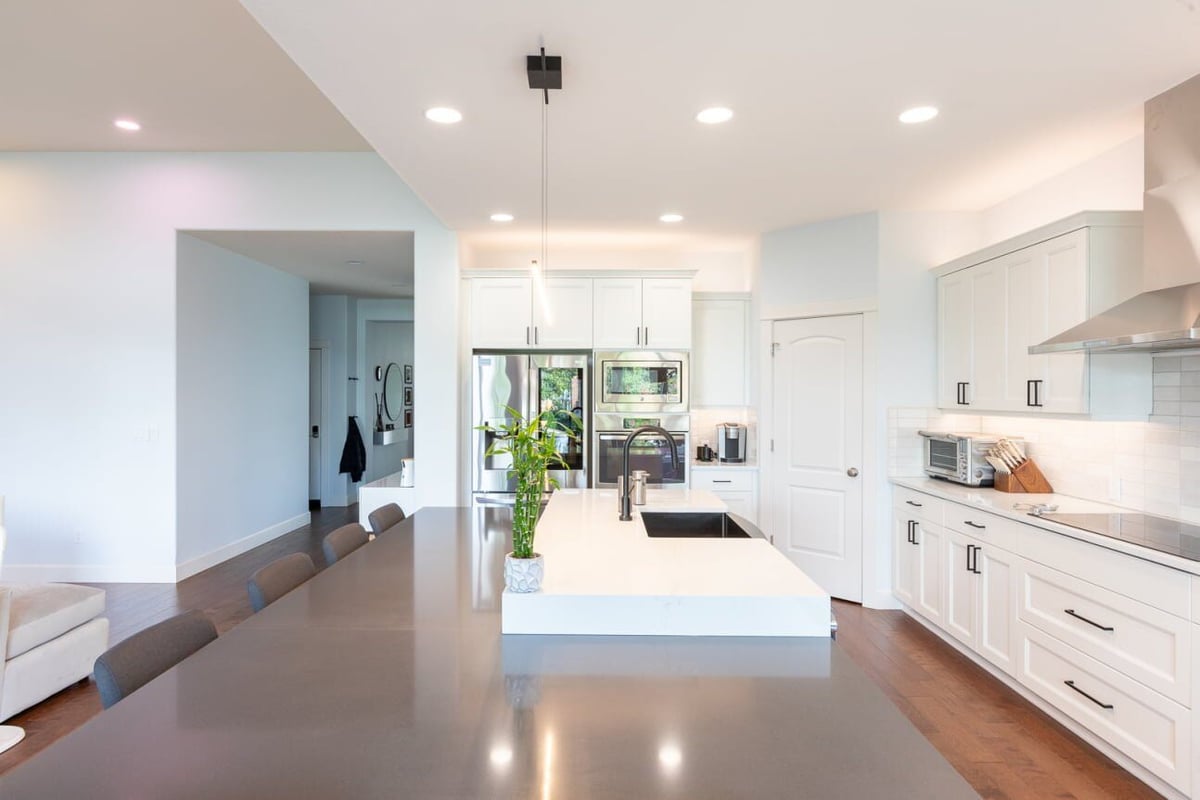
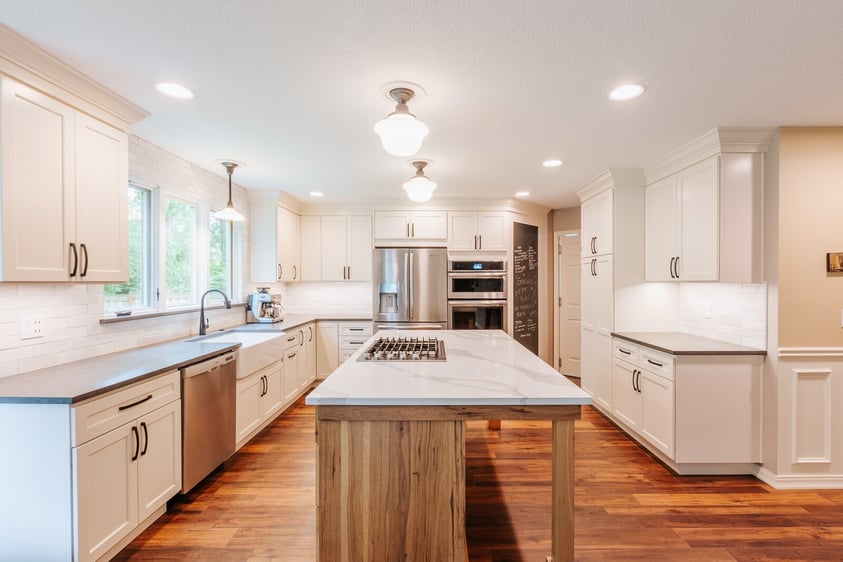
White has dominated kitchen design for decades, and while the conversation has grown more nuanced in recent years, it remains the single most universally safe cabinet color available. White cabinets have a high light reflectance value, meaning they bounce light throughout the kitchen and make smaller spaces feel substantially larger. They're also compatible with virtually every countertop material, hardware finish, flooring type, and backsplash style on the market.
Warm White vs. Cool White Kitchen Cabinets
Not all white cabinets are created equal, and this distinction matters for longevity. Design sensibilities have increasingly moved away from stark, blue-toned whites toward warmer, creamier options. Stark white can read as clinical or cold, and it's more likely to feel dated as the broader palette of kitchen design continues to shift toward warmth.
Warm whites such as Benjamin Moore White Dove, Sherwin-Williams Alabaster, or Farrow and Ball Shaded White have softer undertones that feel more livable and pair better with the natural wood accents, warm metals, and organic materials dominating current kitchen design. Designer Ali Henrie describes Farrow and Ball's Shaded White as a timeless, versatile white that works beautifully across a range of kitchen styles, creating a strong neutral foundation while allowing other elements to layer seamlessly.
If longevity is the goal, a warm white is a safer bet than a stark, blue-toned white in today's design environment.
When White Cabinets May Not Be the Best Fit
White cabinets can feel overly sterile or generic in homes with strong architectural character that calls for warmth or personality. In kitchens with low natural light, pure white can also feel flat or uninspiring. All-white kitchens, where every surface is white with no contrast, can begin to feel one-dimensional over time. Pairing white cabinets with a natural wood island or a contrasting countertop tends to be a smarter long-term move than going all-white throughout.
Natural Wood Cabinets Are Timeless for a Different Reason
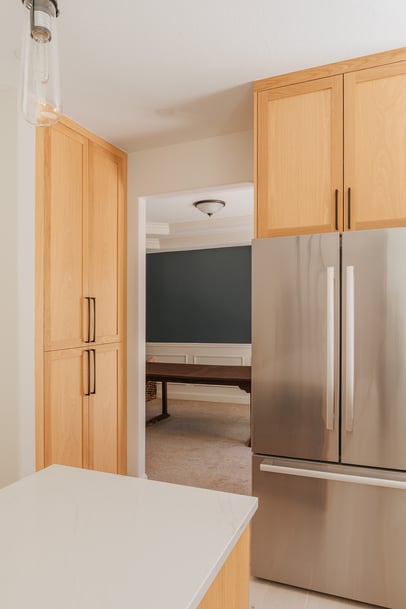
Wood is an organic material whose warmth and depth connect to something more enduring than color trends. Wood looks at home in farmhouse kitchens, contemporary spaces, transitional designs, and craftsman homes alike. Its appeal is cross-cultural and cross-generational. The current wave of interest in natural materials, sustainability, and biophilic design has accelerated wood's return, but it was never truly absent from high-end kitchen design.
The Most Timeless Wood Species and Finishes
White oak is a standout species right now. Its appeal stems from gray undertones rather than the red or orange of older oaks, a tight and consistent grain, and the ability to work in both modern and transitional kitchens without looking out of place in either. White oak resists becoming dated in a way that more trend-specific species simply don't.
Walnut is the premium choice for higher-end kitchens. Its deep color and natural grain variation create immediate character. Designer Theresa Ory calls walnut the next defining wood in kitchen design, noting that its warmth, depth, and softness make it a top choice right now. Walnut works best in kitchens with strong natural light. In low-light spaces, the darkness can feel heavy.
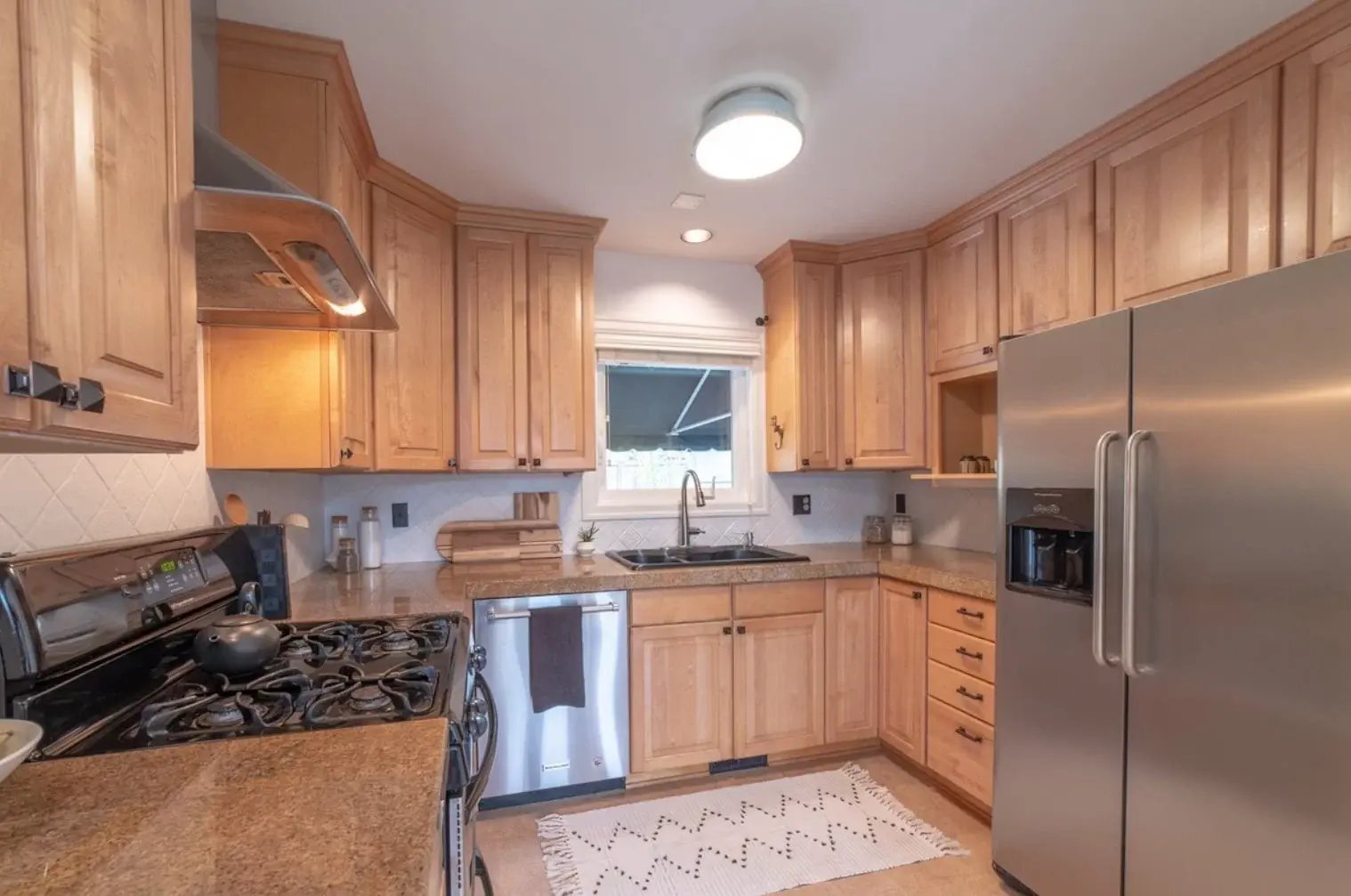
Medium-tone woods such as maple, alder, and light-stained cherry offer broad versatility and a more accessible price point than white oak or walnut.
Wood Finishes That Can Look Dated
Heavy orange undertones, characteristic of the honey oak and golden oak styles of the 1990s, are strongly associated with a specific era. Red-toned stains like cherry with significant reddish coloring tend to anchor a kitchen to the mid-2000s. Avoiding strong red or orange undertones is the single most important rule for choosing a wood finish that ages well. High-gloss lacquered wood finishes are broadly falling out of favor. Brushed and matte finishes now feel more current and refined.
Other Timeless Kitchen Cabinet Colors to Consider
White and natural wood are the undisputed leaders, but several other colors have proved real staying power across style cycles.
Off-White and Cream
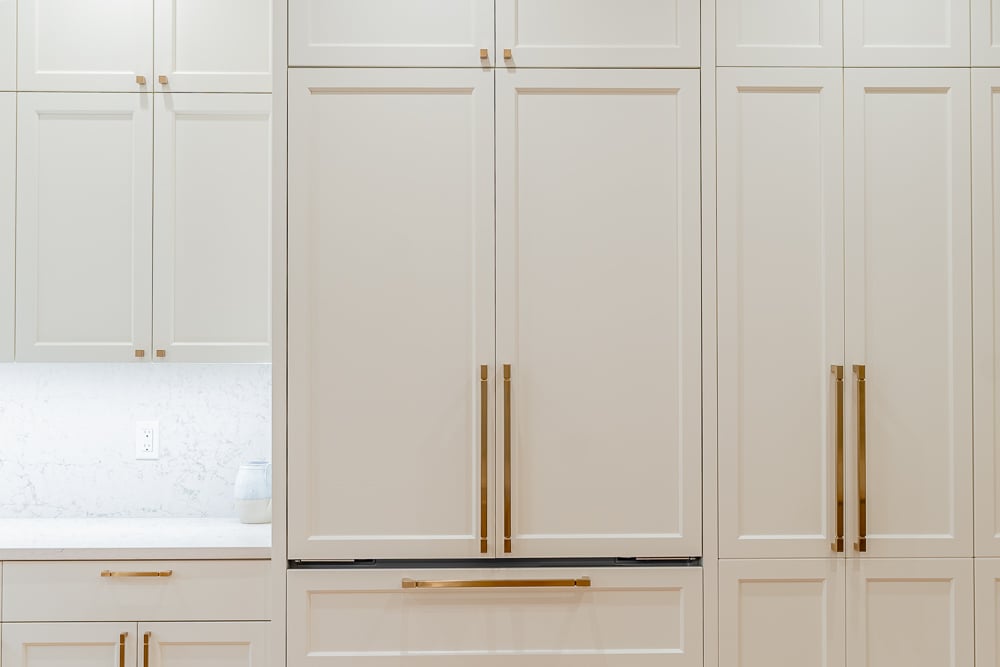
Off-white and cream occupy the comfortable middle ground between white and greige. They read as white in most contexts but add a softness and warmth that makes kitchens feel more inviting. Off-white is particularly effective with beveled or shaker cabinet profiles and pairs well with a wide range of countertop materials. For homeowners who want the brightness and neutrality of white without the clinical edge, off-white is often the better choice.
Greige
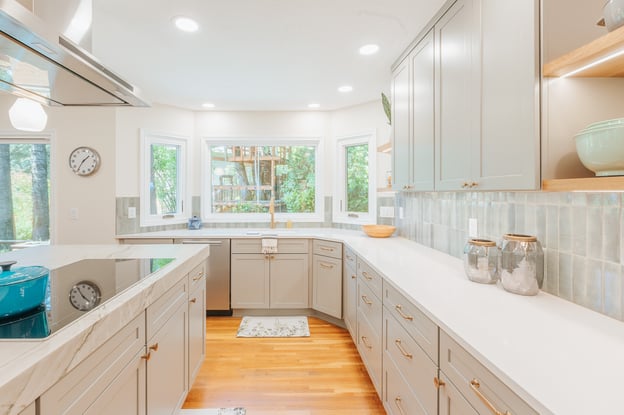
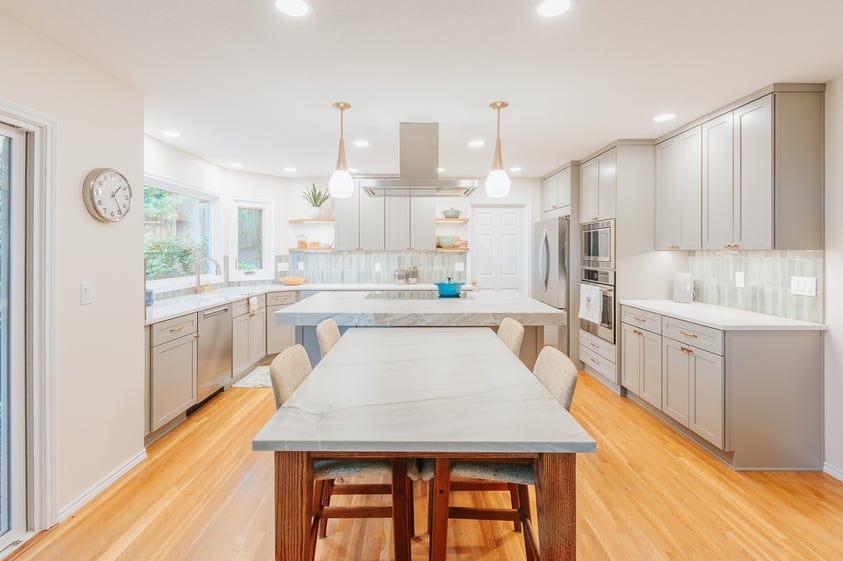
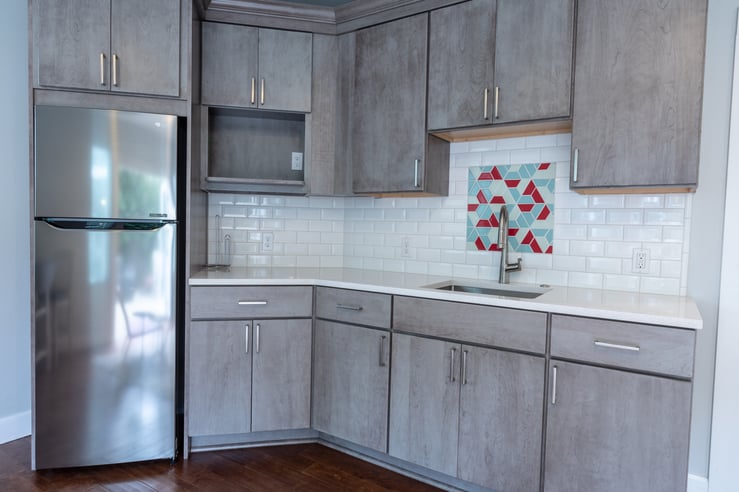
Greige, a blend of gray and beige, has earned its place on this list through sheer versatility. It works in both cool and warm-toned kitchens, pairs with stainless steel and brass hardware equally well, and reads as sophisticated without being stark. Greige also tends to perform well in Portland's famously overcast light, where a pure gray can feel dull, and a pure white can wash out.
Soft Gray
Gray had a long run as the dominant kitchen color and has drawn criticism under the label "millennial gray" in design circles, but the nuance matters here. Flat, medium grays with no clear undertone are the ones that have dated. Soft gray with warm undertones, or light dove gray, continues to perform well as a versatile neutral. Gray cabinets hide everyday wear better than white, making them a practical choice for busy households. The key is choosing gray with intention, picking a shade with a clear warm or cool personality rather than defaulting to gray simply because it feels safe.
Navy Blue
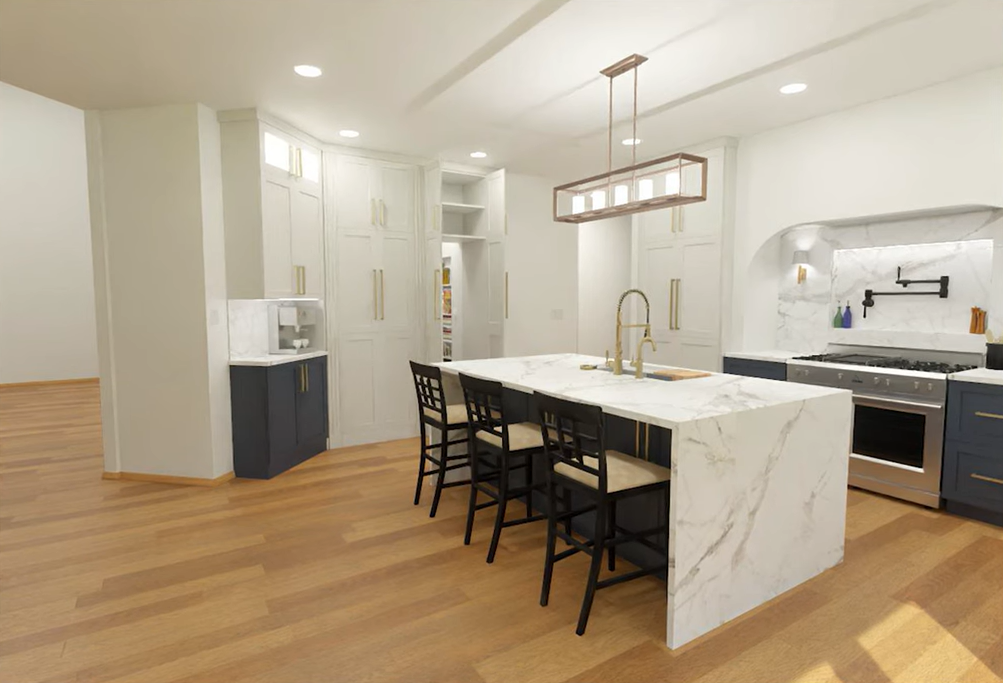
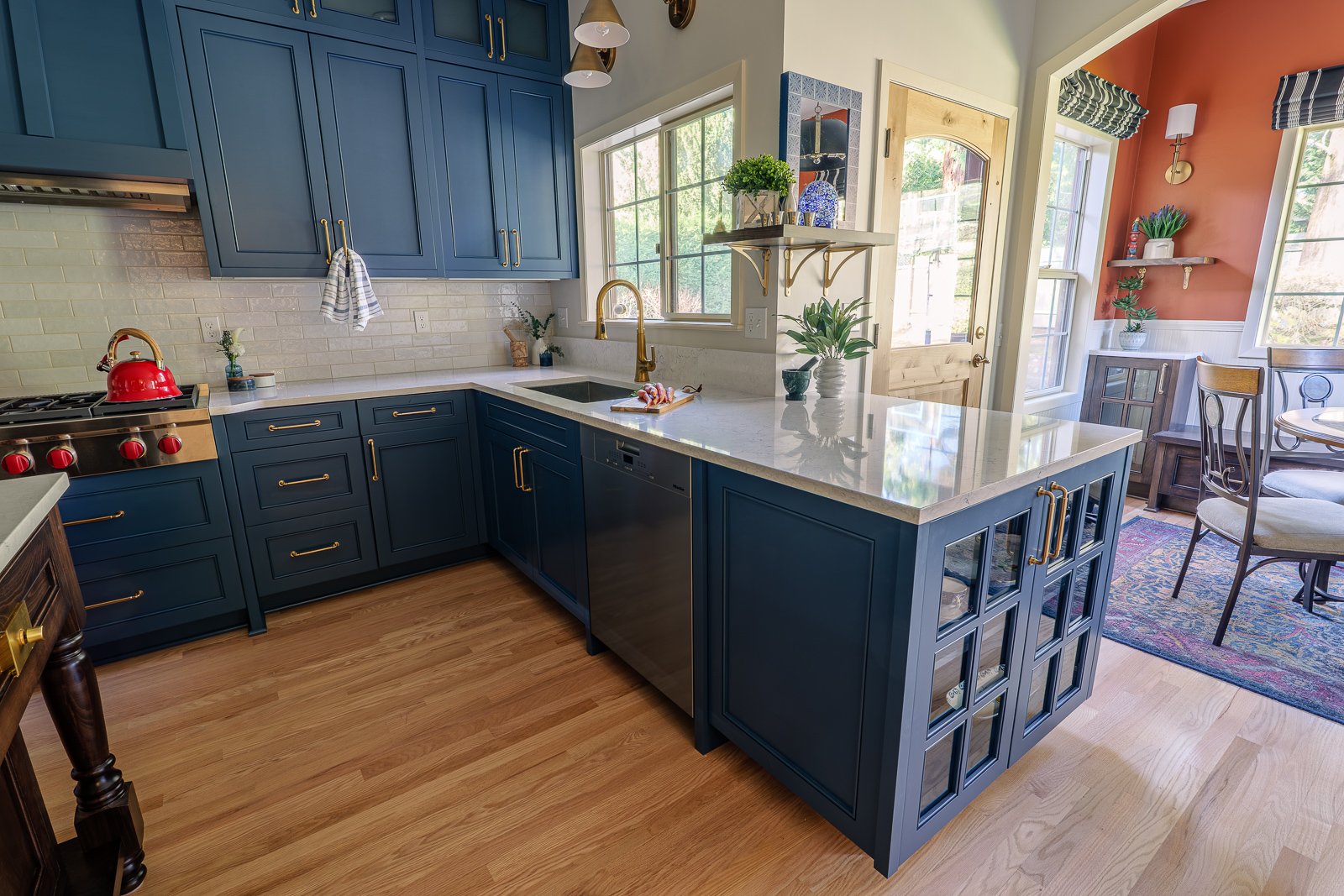
Navy is the most proven bold cabinet color available. It has appeared in high-end kitchen design for decades, consistently pairs well with white countertops, marble, brass hardware, and natural wood, and reads as sophisticated rather than trendy. Used throughout a well-lit kitchen, or as an island color against white or cream perimeter cabinets, navy creates a high impact look that photographs well five and ten years later.
Black
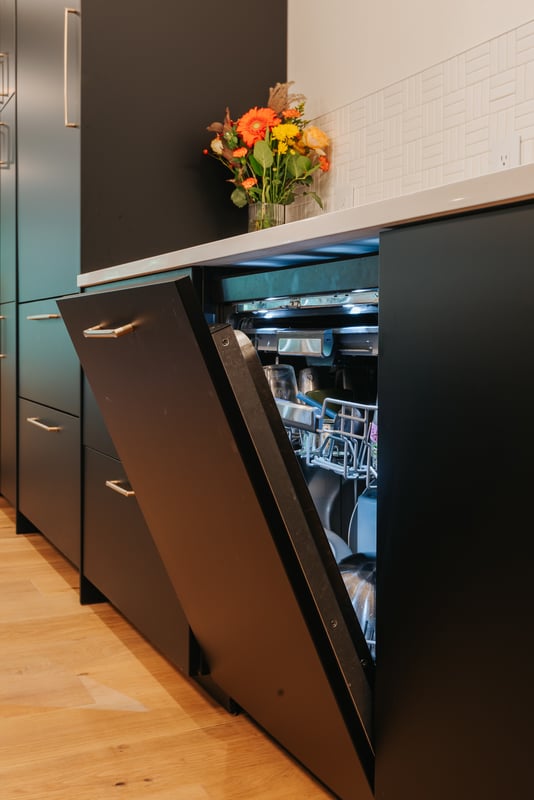
Black cabinets are a commitment, but when executed well, they're genuinely timeless. They work best in kitchens with significant natural light and are most successful when paired with lighter countertops such as white marble, light quartz, or pale stone to keep the space from feeling dark. Brass or gold hardware warms the look considerably. A slightly softer choice such as dark charcoal, like Sherwin-Williams Iron Ore, delivers a similar effect with marginally more flexibility.
Sage and Olive Green
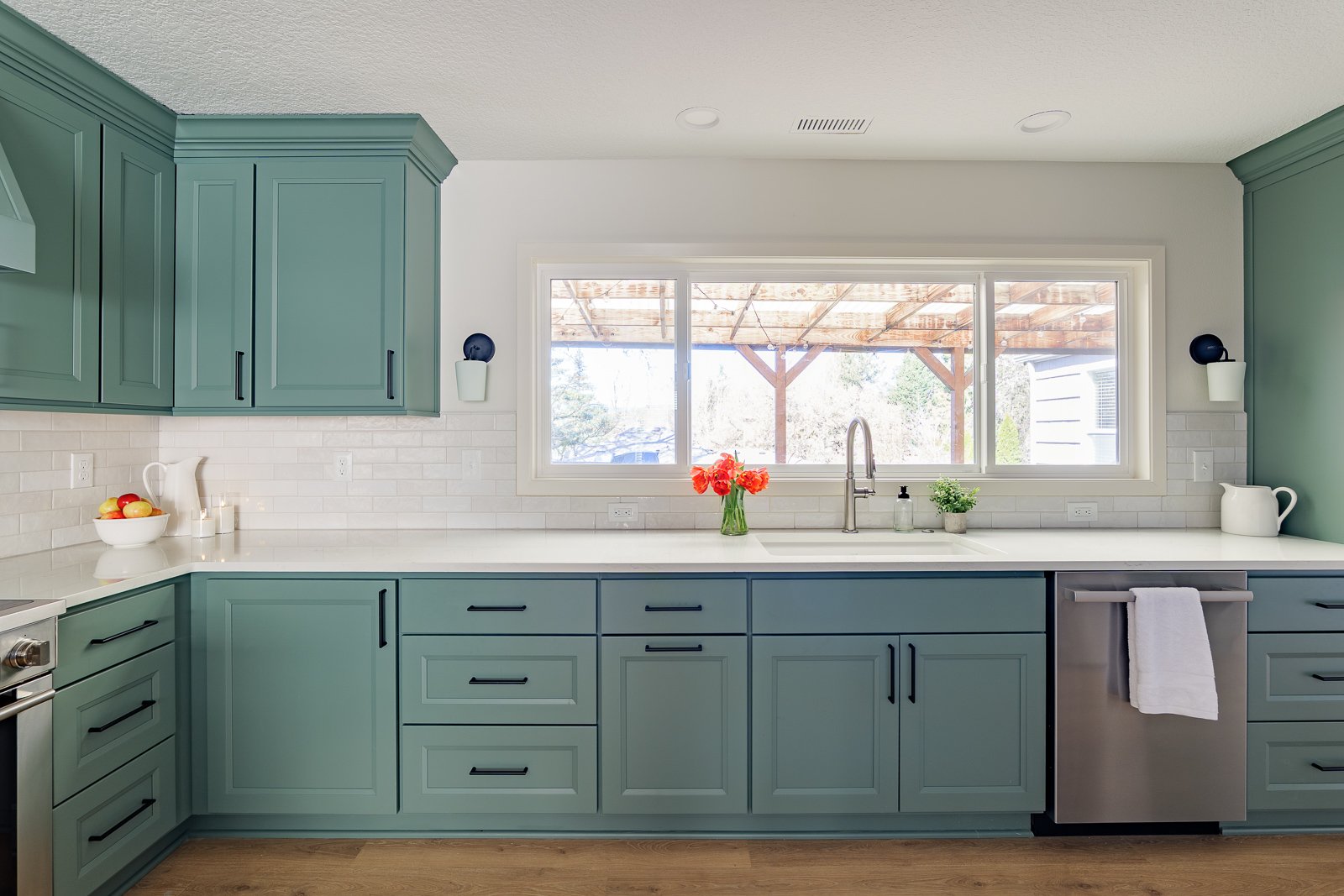
Muted greens have proven their staying power in a way that more saturated or lighter greens have not. The key is staying in muted territory. Pale or bright greens can read as trendy rather than timeless, while deeper greens like forest green and sage tend to age with more grace. Sage green pairs particularly well with butcher block or light wood countertops, terracotta or stone flooring, and warm metal hardware, creating a calming, nature-inspired aesthetic that feels current without being fragile.
What Our Portland Clients Are Actually Choosing
Beyond design principles, our own project data tells a clear story. Across recent Lamont Bros. Design & Construction kitchen remodels in the Portland area, the most popular cabinet colors reinforce what timeless design would predict.
Colored Cabinets
Alabaster leads by a meaningful margin, a warm, creamy white that reads as bright without feeling clinical. Simply White and Cotton White round out the white family, confirming that warm whites continue to dominate over stark or cool-toned options. Cloud Gray, a soft and versatile neutral, is the most popular non-white choice, followed by Edgecomb Gray, a greige that bridges warm and cool tones beautifully.
What's notable is the presence of color. Green Haze, Rosemary, and Hammock, all muted, nature-inspired tones, appear with enough frequency to suggest that Portland homeowners are increasingly comfortable introducing subdued color into their kitchens. Mineral, a soft blue gray, rounds out the list and speaks to the continued appeal of nuanced neutrals over flat, generic grays.
Taken together, the pattern is consistent: warm whites, soft neutrals, and muted greens. No stark whites, no trendy saturated colors, and no choices that are likely to feel dated in five years.
Wood-Stained Cabinets
The picture looks similar when it comes to stained wood cabinets that we’ve installed in Portland homes. White oak is the dominant species of choice by a clear margin, favored for its gray undertones, tight grain, and ability to work across both modern and transitional kitchens. Cherry follows as the next most common selection, though it appears in several different stain and finish treatments rather than one defining direction. Alder rounds out the most popular species, valued for its versatility and accessible price point relative to oak or walnut.
Across all species, the finish direction tells a consistent story: natural and clear-coat finishes dominate, reflecting a preference for the honest, unadorned quality of the wood itself over heavy stain. Dark or heavily colored stains are largely absent. Portland homeowners who choose wood are leaning into material authenticity rather than covering it up, a pattern that aligns with what designers are seeing nationally.
FAQ: What Color Cabinets Are Timeless?
Our most frequently asked questions from homeowners when picking out kitchen cabinets for their kitchen remodeling project:
What cabinet color has the best resale value?
White, off-white, and neutral tones consistently attract the broadest pool of buyers and perform most reliably at resale. Natural wood tones are close behind. Bold colors such as navy, deep green, and black can support strong resale in design-conscious markets but may narrow the overall buyer pool.
Are gray kitchen cabinets going out of style?
Flat, medium gray with no defined undertone has become associated with dated house flips and default apartment interiors. However, soft gray with warm undertones, light dove gray, and charcoal all remain practical and versatile choices. The issue is a specific version of gray, not the color family as a whole.
Are wood kitchen cabinets coming back?
Yes. Both industry professionals and homeowners are increasingly choosing wood, with white oak appearing as the preferred species. For the first time in nearly a decade, wood has overtaken painted finishes in overall preference.
What cabinet color makes a kitchen look expensive?
Deep, rich colors applied well such as navy, forest green, and black tend to read as high-end when paired with quality hardware and countertops. Natural walnut also reads as premium. Among lighter colors, a warm white with thoughtful hardware and countertop pairings can look very expensive, particularly when combined with unlacquered brass or aged bronze hardware.
What color cabinets are best for resale?
White and off-white remain the safest choices for maximum resale appeal and the broadest buyer reach. If you want to introduce a bolder color, using it strategically on an island or lower cabinets rather than throughout the entire kitchen gives you the best of both worlds.
Start Your Kitchen Remodel with a Team That Knows Portland Homes
A kitchen remodel involves dozens of decisions, and cabinet color is just one of them. From layout and lighting to countertops, tile, and finish carpentry, our design-build team guides Portland homeowners through every stage of the process, managing it all under one roof, so the experience is as smooth as the result.
We work with homeowners who are ready to invest in a kitchen remodel that reflects how they actually live, whether that means reconfiguring a layout that has never quite worked, replacing cabinetry and finishes that have run their course, or building something entirely new from the ground up.
Reach out to schedule a consultation and tell us about your next kitchen remodeling project.
-1.jpg)