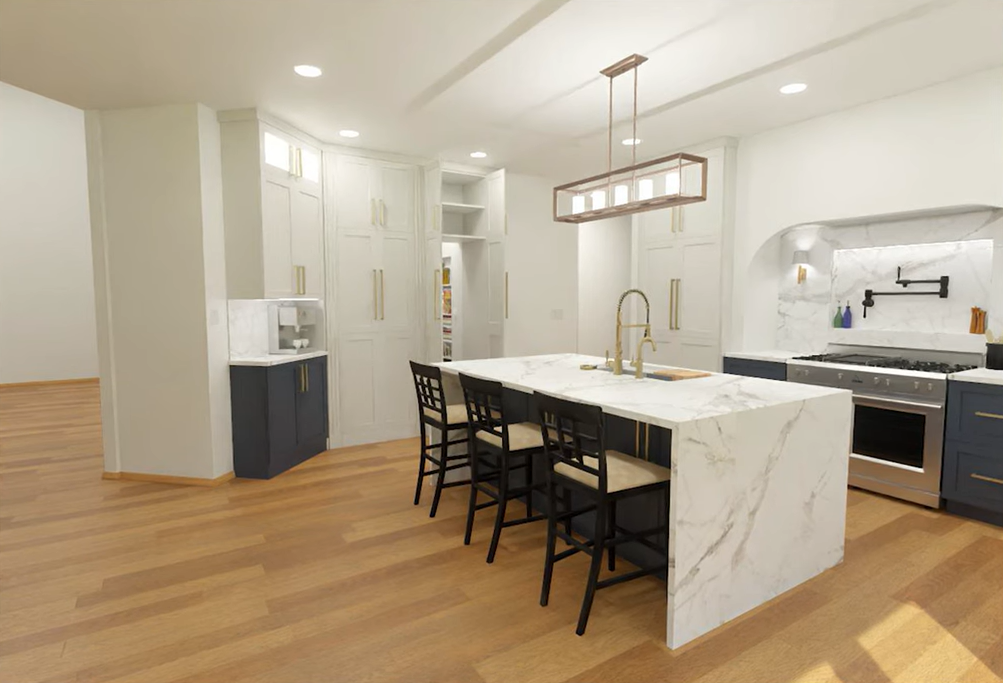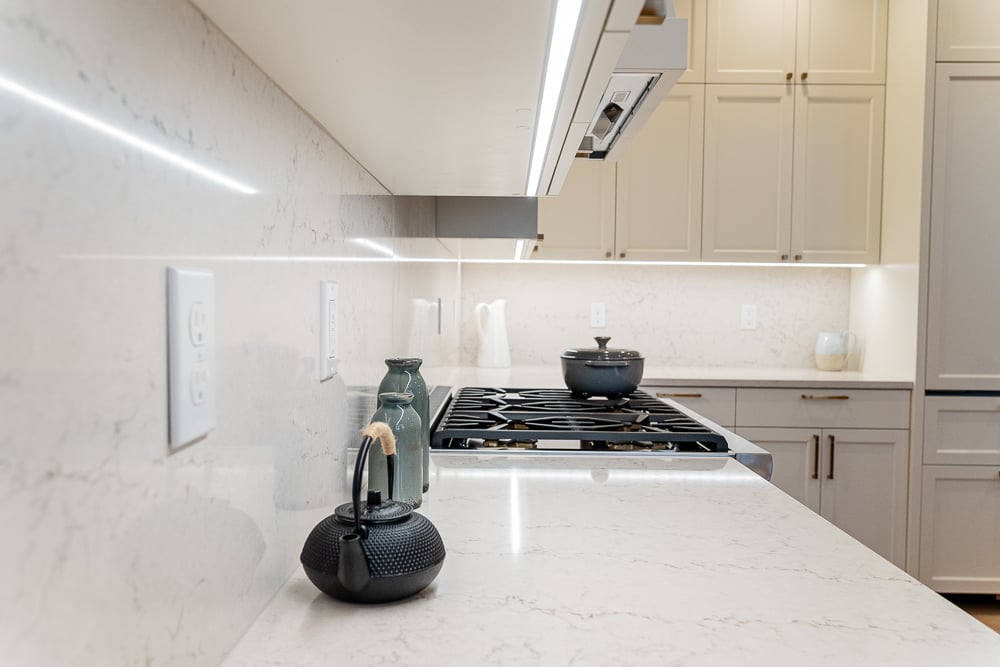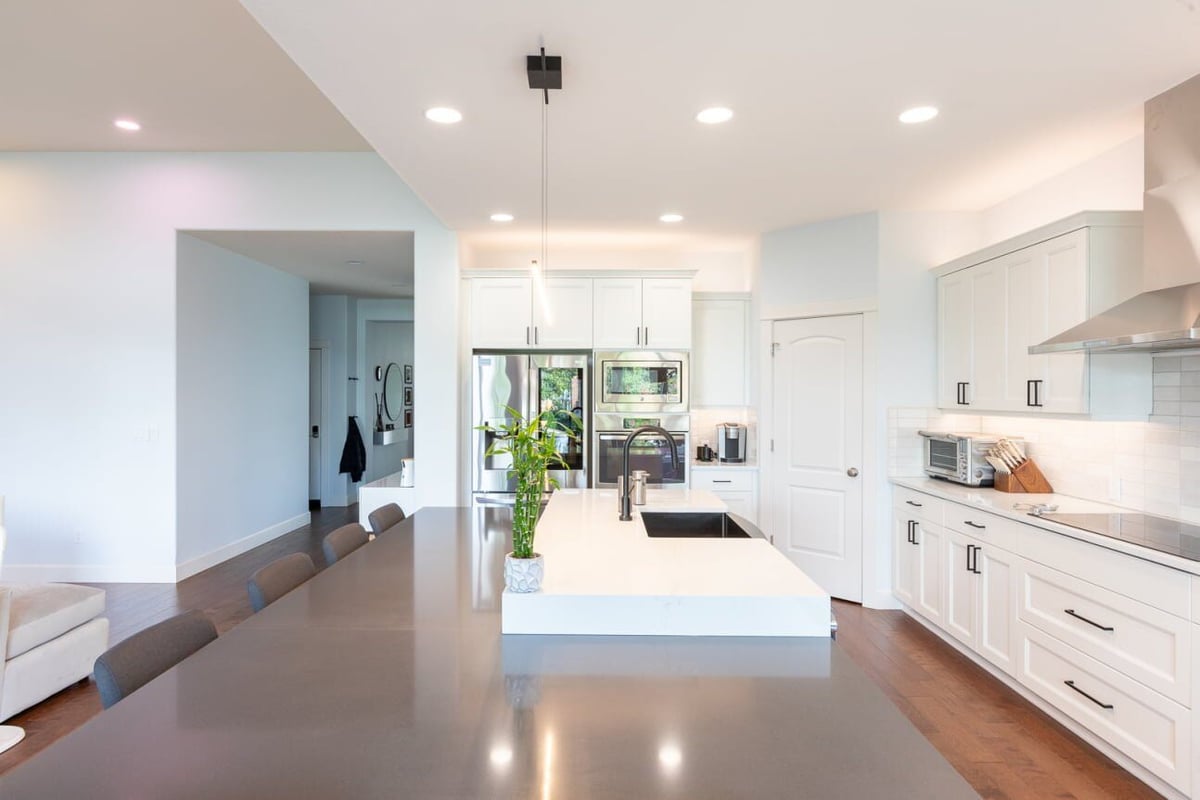
Cabinets define a kitchen more than almost any other element. They set the visual tone before a single appliance or countertop enters the picture, and they shape how the space actually functions every single day. Getting the design right means thinking through style, storage, materials, and layout together rather than one at a time.
Key Points
- Cabinet style should follow the home's architecture. Shaker, slab, inset, and beaded doors each carry a design vocabulary. Choosing a style that conflicts with the character of the house creates tension that no amount of good material selection resolves. The best cabinet designs feel like they belong to the home, not just the kitchen.
- Material and finish decisions are inseparable. MDF performs better than solid wood under painted finishes. Plywood boxes outlast particleboard under daily use. Choosing a finish without understanding the substrate behind it leads to results that disappoint over time.
- Storage should be planned before the layout is finalized. Pull-out shelves, deep base drawers, pantry cabinets, and corner systems all require space allocations that are difficult to add after a layout is set. Building storage during design is straightforward. Adding it after the fact usually isn't.
- Timeless choices outperform trendy ones over the life of a kitchen. Cabinet colors and styles that feel fresh and exciting at installation can feel dated within a few years. Warm neutrals and natural wood tones have shown consistent staying power and tend to hold their value better in resale situations.
Modern Kitchen Cabinet Design: What to Consider First
Before browsing cabinet styles or pulling paint samples, there are several foundational decisions worth working through.
Kitchen layout shapes what kitchen cabinet configurations are even possible. The footprint of the room, the position of windows, doors, and appliances, and the traffic flow through the space all influence where cabinets can go and how they'll be used. A design that looks beautiful in a showroom may not translate to your specific layout without modifications.
Storage needs vary significantly from household to household. A family that cooks daily has different demands than someone who entertains occasionally. Take stock of what you're storing before committing to a cabinet layout. Running out of storage after a remodel is one of the most common regrets homeowners report.

Cabinet style should be decided with the overall design of the home in mind. Cabinets that clash with the architectural character of the house, even if beautiful on their own, tend to feel out of place.
Budget determines which cabinet category is realistic: stock, semi-custom, or fully custom. Each involves real tradeoffs in sizing flexibility, finish options, and storage customization.
Hardware is often treated as an afterthought, but it's one of the most visible details in a kitchen. Pulls and knobs affect both function and aesthetics, and swapping hardware is one of the few things that's relatively easy to change later if preferences evolve.
Long-term resale appeal matters even if selling isn't on the immediate horizon. Kitchens are among the most scrutinized rooms for a home sale. Designs that feel highly personalized or trend-dependent can limit appeal down the road.
Popular Kitchen Cabinet Design Styles
Cabinet style is the single biggest visual decision in a kitchen remodel. These are the styles that show up most consistently in well-designed kitchens today.
Shaker Cabinets
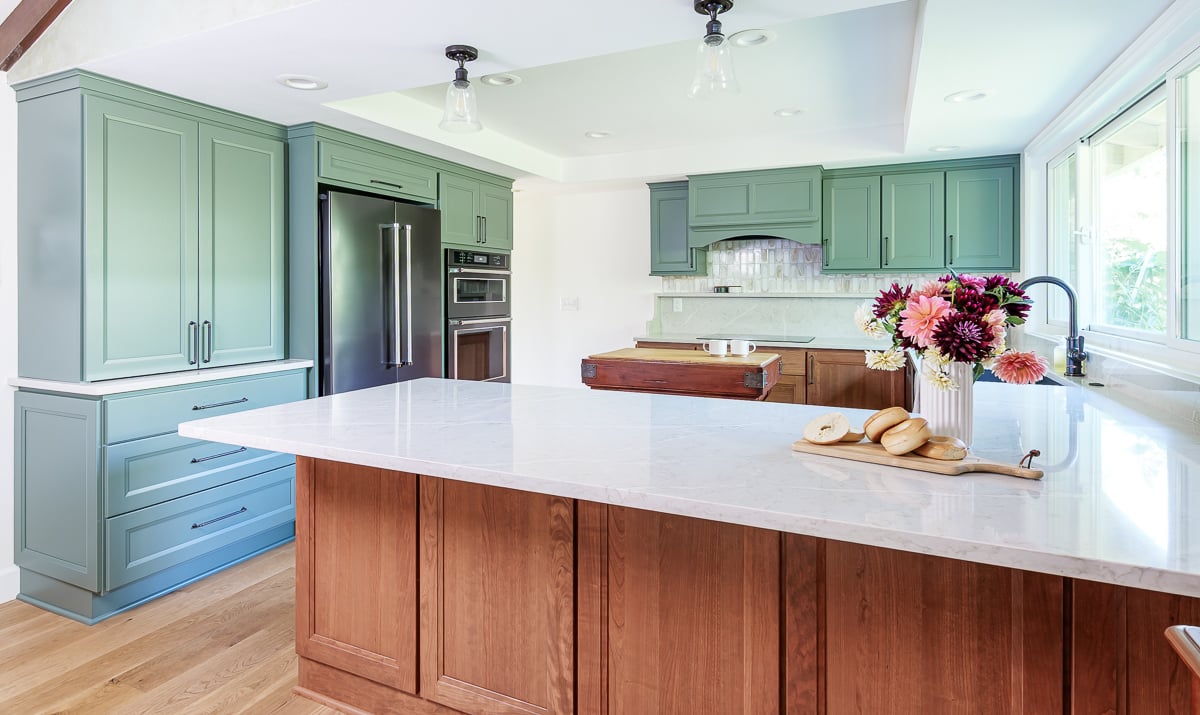
Shaker cabinets are the most widely installed cabinet style in American kitchens, and the reason is straightforward: a recessed center panel with a clean frame reads as finished without committing to any particular era. The same door profile can feel traditional with raised-panel neighbors and warm stains, or contemporary with flat hardware and a painted finish.
Slab or Flat-Panel Cabinets
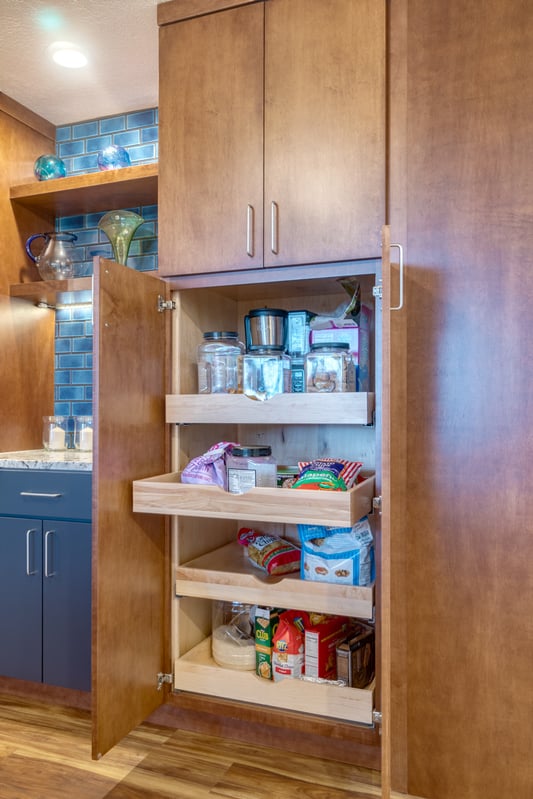
Slab or flat-panel cabinets have a flat door with no frame or detail. They're the defining look of modern and contemporary kitchens, emphasizing clean lines and uninterrupted surfaces. They're also less forgiving of imperfect installation since there's no detail to draw the eye away from alignment issues.
Beaded Cabinets
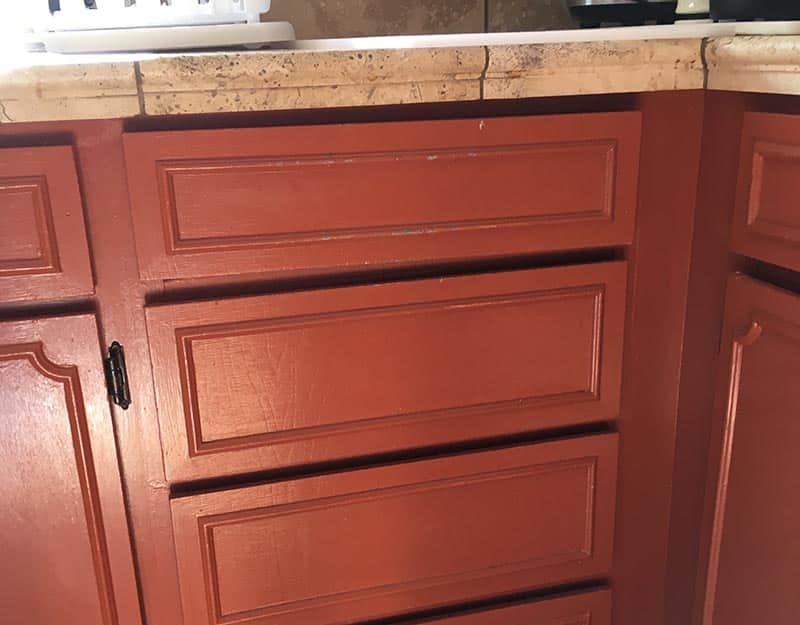
Beaded cabinet doors feature a small, raised bead running along the interior edge of the frame, adding a subtle traditional detail that works well in classic or cottage-style kitchens. The look is quiet but adds character in ways that plain shaker panels don't.
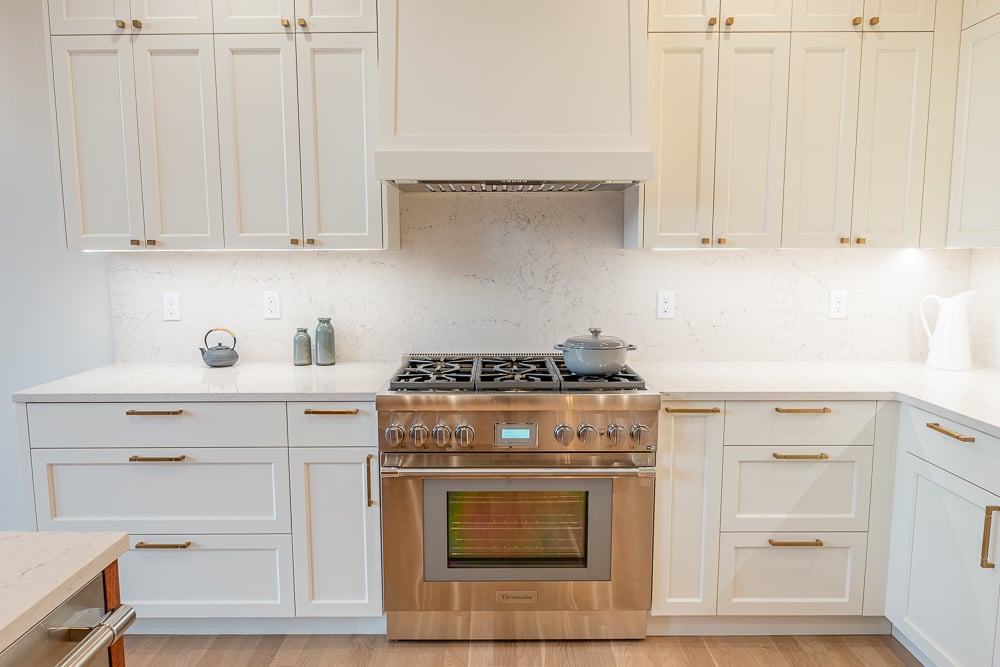
Inset cabinets are built so that the doors and drawers sit flush inside the cabinet frame rather than overlapping it. The result is a refined, furniture-like appearance that reads as high quality even immediately. They typically cost more due to the precision required in manufacturing and installation.
Inset Cabinets
Display Cabinets
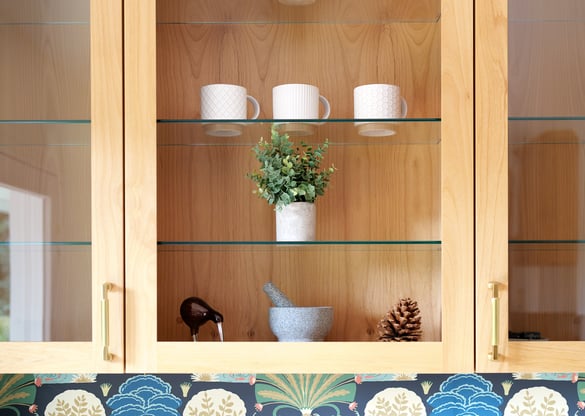
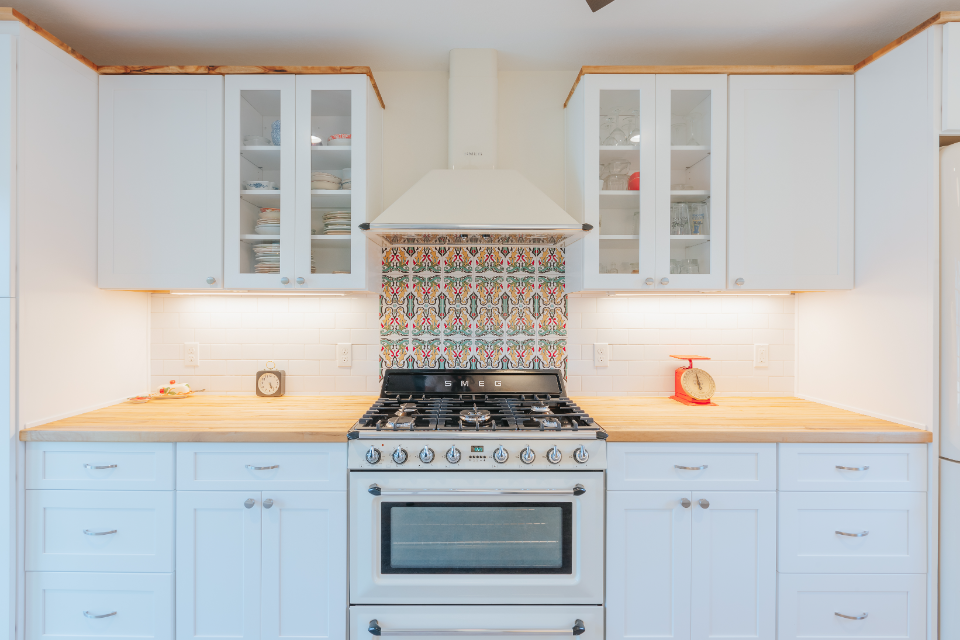
Display cabinets give a kitchen a place to show things worth seeing. Glass-front uppers, open shelving sections, and lighted display niches all serve the same basic purpose: making part of the kitchen intentional rather than purely functional. Done well, a display cabinet breaks up a run of solid doors, adds visual depth, and gives everyday items like glassware, ceramics, or a curated set of dishes a reason to be visible. The key is restraint. A single bank of glass-front cabinets reads as a design choice. Too many, and the kitchen starts to feel like it requires constant maintenance to look presentable.
Traditional, transitional, and modern describe broader aesthetic categories rather than a single door style. Traditional kitchens lean into ornate details, raised panels, and warm wood tones. Modern kitchens favor flat surfaces, minimal hardware, and a restricted palette. Transitional kitchens, by far the most popular category in renovations today, borrow elements from both and tend to age the most gracefully.
Custom Kitchen Cabinet Design Options
Custom cabinets are built to the exact dimensions of a specific kitchen rather than adapted from standard sizes. That distinction matters more than it might initially seem.
Stock cabinets come in fixed widths, typically in 3-inch increments, which means gaps and filler pieces are usually required to complete a layout. Semi-custom cabinets offer more size and finish options but still operate within manufacturer constraints. Fully custom cabinets are built from scratch to fit the exact space, eliminating filler gaps and allowing for storage configurations that stock and semi-custom simply can't accommodate.
Beyond sizing, custom cabinets open storage possibilities that are hard to replicate. Drawer inserts fitted to specific cookware, pull-out shelving sized to an exact pantry depth, cabinet interiors designed around particular appliances — these details are only achievable when the cabinet is built around your needs. Custom also means complete control over color and finish, unrestricted by a manufacturer's palette.
Cabinet Materials and Finishes
The three material decisions that matter most are cabinet box construction, door substrate, and finish type.
For cabinet boxes, plywood is the standard for quality construction. It's stronger and more moisture-resistant than particleboard, holds screws more reliably, and doesn't sag under heavy loads over time. For painted doors, MDF is the better substrate: it has no grain to telegraph through paint, takes primer evenly, and resists the expansion and contraction that causes painted solid wood doors to crack along joints. For stained doors, solid wood or wood veneer over a stable substrate both perform well and showcase the natural character of the material.
On finishes, the choice between painted and stained comes down to whether you want a uniform color or want the wood grain to show. Matte vs. glossy is a maintenance tradeoff: matte conceals everyday wear; gloss wipes clean but shows every fingerprint and smudge between cleanings.
Kitchen Cabinet Layout Ideas
Cabinet layout determines traffic flow, countertop space, and how efficiently the kitchen functions day to day.
Upper and lower cabinet placement should support the work triangle between the refrigerator, sink, and range, keeping primary storage close to where it's used. Floor-to-ceiling cabinets along one wall maximize vertical storage and work particularly well in galley kitchens and tighter spaces. Island cabinetry adds storage accessible from multiple sides, with the seating-facing base cabinets useful for items used outside of cooking. Open shelving mixed with closed cabinets works well for everyday dishes and glassware but requires more curation to stay looking intentional.

Cabinet placement around appliances requires careful coordination: clearance above a range for the hood, door swing for the refrigerator, and access alongside the dishwasher all affect how well the finished kitchen functions.
Cabinet Hardware and Details
Hardware is the last design decision in a cabinet project and one of the most visible in daily use. Getting it right reinforces everything else in the kitchen. Getting it wrong is hard to overlook.
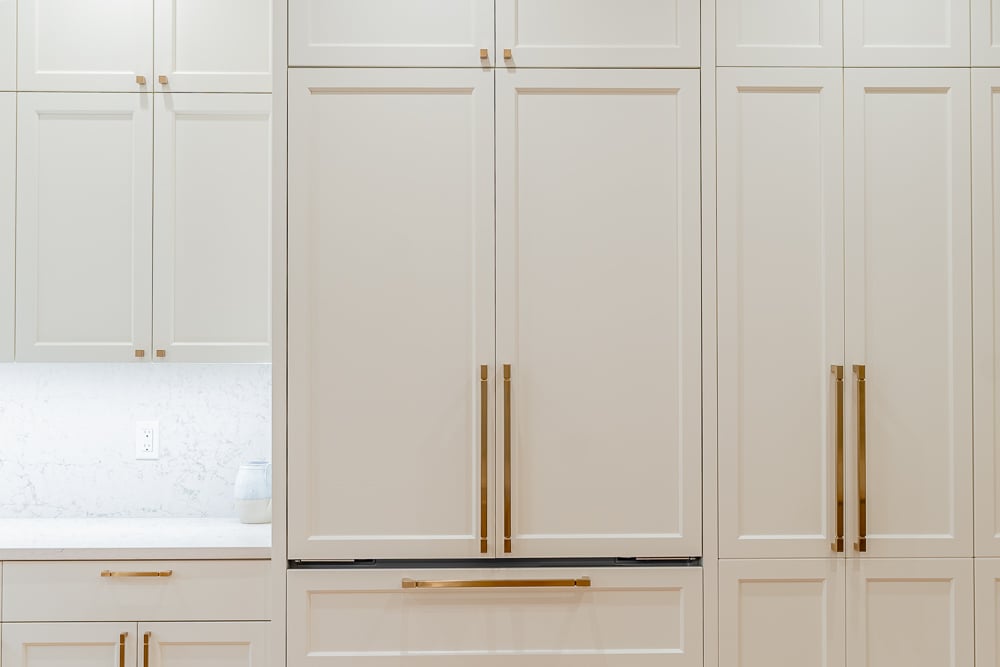
Knobs work well on doors where a single point of contact is sufficient. Pulls are more comfortable on drawers and tall doors, and many kitchens combine both. Bar pulls are the dominant style in contemporary and transitional kitchens, working across cabinet profiles from shaker to slab. Hidden pulls and push-to-open systems eliminate hardware entirely for a seamless look, though push-to-open mechanisms require precise installation and aren't ideal for households with young children.
On finishes, unlacquered brass develops a patina over time that many homeowners find appealing. Matte black is highly versatile and reads as contemporary. Brushed nickel and chrome are the most neutral and easiest to coordinate with appliance finishes. Soft-close hinges and drawer slides are worth including in any new installation — the absence of slamming doors and drawers adds a level of quality that's easy to underestimate until you have it.
Kitchen Cabinet Design Mistakes to Avoid
Not planning enough storage is the most reported regret after kitchen remodels. Cabinet space that looks adequate on a floor plan often feels insufficient once the kitchen is in daily use, and adding storage after the fact is rarely straightforward.
Ignoring workflow creates kitchens that look good but cook poorly. Cabinet placement that doesn't support a logical sequence between the refrigerator, prep area, cooking surface, and plating zone creates unnecessary steps that add up over years of daily use.
Choosing overly trendy finishes produces kitchens that photograph well at installation and feel dated within a few years. Cabinet colors and door styles are among the harder things to change after a remodel, which makes finish decisions worth taking seriously.
Poor hardware placement and wasting vertical space are the two mistakes most visible after the fact. Pulls placed too low, knobs off-center, or cabinets that stop short of the ceiling and collect dust above them all create a sense of incompleteness that no amount of good design elsewhere fully offsets.
FAQs: Kitchen Cabinet Design
Our most frequently asked questions from homeowners when looking at cabinets for their kitchen remodel:
What is the most popular kitchen cabinet design?
Shaker-style cabinets in a painted finish remain the most widely installed cabinet type across all kitchen styles. Their versatility across traditional, transitional, and contemporary kitchens accounts for their consistent dominance, with white and warm white as the most common color choices.
What is a modern kitchen cabinet design?
Modern cabinet design uses flat-panel or slab doors, minimal or no hardware, and frameless construction. The focus is on clean surfaces and proportions rather than decorative detail.
What is the best material for kitchen cabinets?
For cabinet boxes, plywood is the most durable and moisture-resistant choice. For painted doors, MDF provides a smoother, more stable surface than solid wood. For stained doors, solid wood or wood veneer both perform well. The right choice depends on the finish, the environment, and the budget.
Are custom kitchen cabinets worth it?
In kitchens with unusual dimensions, lofty ceilings, or specific storage demands that stock sizing can't accommodate; custom cabinets typically deliver better long-term value. In straightforward rectangular kitchens, semi-custom cabinets can achieve most of the same results at a meaningfully lower cost.
What cabinet colors are timeless?
Warm whites, soft greiges, cream tones, and natural wood finishes have shown the most staying power across design cycles. Two-tone combinations pairing with a darker lower cabinet with a lighter upper are well-established enough to be considered transitional rather than trendy. Bold saturated hues and very cool gray tones both carry stronger period associations and carry more risk over time.
Should kitchen cabinets go all the way to the ceiling?
In most cases, yes. Ceiling-height cabinets eliminate the dust-collecting gap above standard uppers, add meaningful storage, and make the kitchen feel taller and more finished. The exceptions are kitchens with architectural details like exposed beams or sloped ceilings, or design approaches that intentionally use the space above cabinets as a display ledge.
Ready to Design the Kitchen You've Been Dreaming Of?
There's a gap between understanding what makes a great kitchen design and having the expertise to execute it well. Getting cabinets right means coordinating style, layout, materials, storage, and budget simultaneously, and the decisions made early in that process shape everything that follows.
At Lamont Bros. Design & Construction, we've been guiding Portland-area homeowners through that process since 2008.
Because design and construction happen under one roof, we stay involved from the first conversation about layout and style through installation and final walkthrough. No handoffs, no translation errors between designer and contractor. Just a single team accountable for the whole outcome of your kitchen remodel.
If you're starting to think seriously about a kitchen remodel, we'd love to be part of that conversation. Schedule a free consultation with Lamont Bros. Design & Construction and let's talk about what's possible for your kitchen.
-1.jpg)