Most homeowners do not run out of kitchen cabinets. They run out of usable kitchen cabinets. The pots that require shifting three other items to reach, the baking sheets buried behind a stack of pans, the lower cabinet that swallows small appliances and never gives them back. The kitchen has storage, but it just does not work.
The best kitchen cabinet storage ideas are not about accumulating more organizers. They are about making the space you already have easier to access and easier to use. This article covers upgrades worth planning during a remodel, practical fixes for existing cabinets, solutions for small kitchens, and above kitchen cabinet storage ideas that look intentional rather than incidental.
Key Points
- The storage problem is usually about access, not capacity. Most kitchens have enough cabinet space. The issue is that deep cabinets hide items; corners go unused, and flat items stack in ways that make them difficult to retrieve. The right upgrades make existing space easier to use rather than adding more of it.
- The most effective upgrades depend on how the household actually cooks. Pull-out shelves, drawer inserts, vertical dividers, and corner systems all solve specific problems. Choosing the right ones starts with identifying which cabinets cause the most friction in daily use.
- Some storage improvements can be retrofitted; others need to be built in. Pull-out trays, drawer inserts, and shelf risers can be added to existing cabinets with reasonable effort. Appliance garages, mixer lifts, built-in charging drawers, and custom corner systems deliver better results when designed into a remodel from the start.
- A small kitchen with well-configured storage outperforms a larger kitchen that is not. In kitchens where floor space is limited, vertical storage, full-depth pull-outs, and taller cabinets that run to the ceiling add meaningful capacity without expanding the footprint.
Kitchen Cabinet Ideas for Storage That Actually Improve How You Cook
The most effective kitchen cabinet ideas for storage are those built around how a household uses the kitchen. That means making frequently used items easy to reach, eliminating the stacking and digging that slow down meal prep, and choosing upgrades that fit the way a specific household cooks. The ideas below cover the cabinet types and storage problems that come up most often.

Pull-Out Shelves for Deep Base Cabinets
Deep base cabinets offer a lot of room in theory. In practice, anything pushed beyond the first eight inches tends to disappear and stay there. Roll-out trays fix this by bringing the back of the cabinet to you. Pull-out shelves with full-extension drawer slides give access to the entire depth without crouching or moving other items first, and they handle just about anything heavy or awkward: pots, lids, cast iron, small appliances, and pantry overflow.
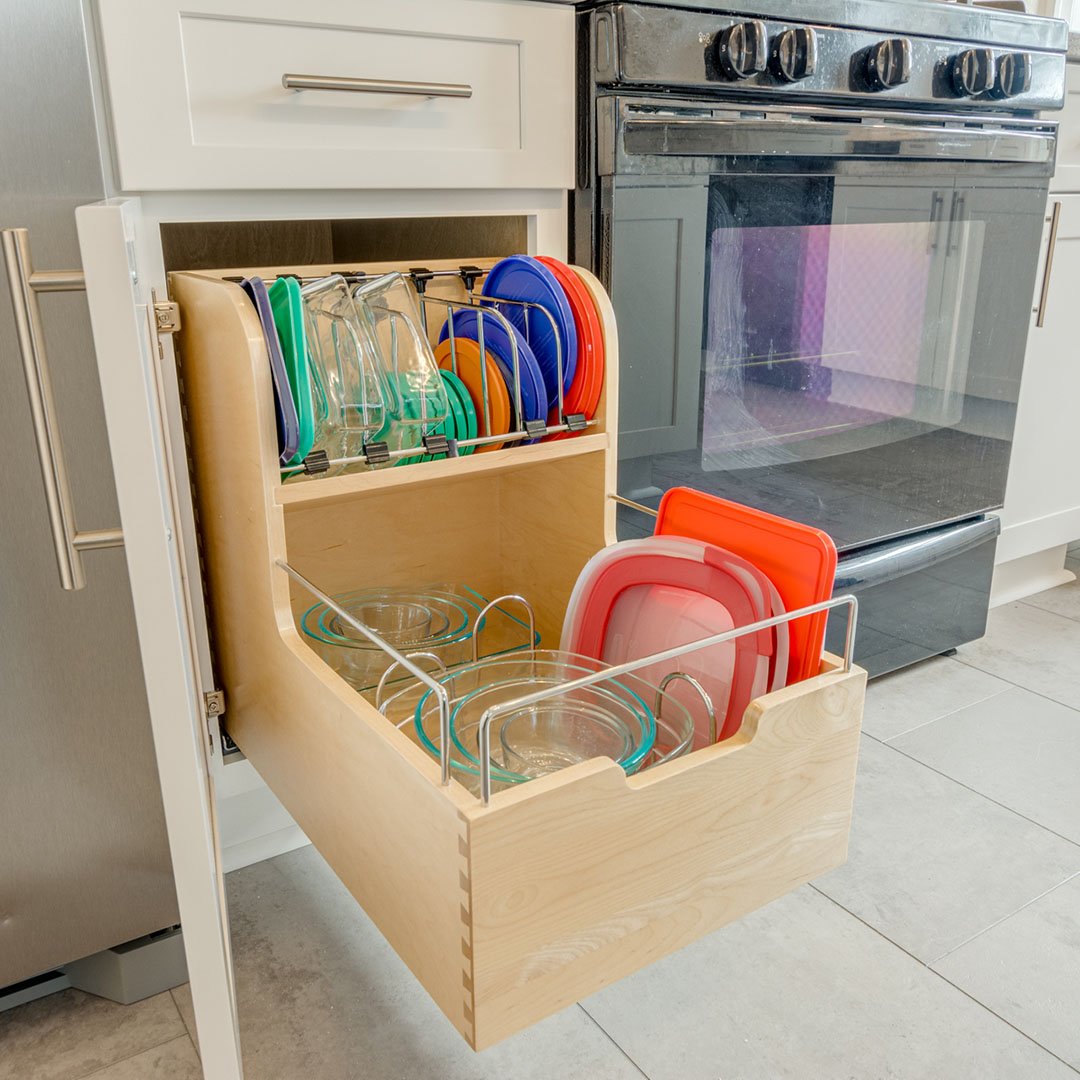
Existing cabinets can often be retrofitted with aftermarket trays. The process is more straightforward than most homeowners expect, and a professionally installed pull-out tray on full-extension slides transforms a frustrating cabinet into one that functions. Custom-built pull-outs designed into a remodel fit more precisely and tend to hold up better over years of daily use, but the retrofit option is a meaningful improvement in any kitchen.
Vertical Dividers for Trays, Cutting Boards, and Bakeware
Baking sheets, cutting boards, serving trays, and cooling racks are flat, heavy, and miserable to stack. Getting to the pan on the bottom means lifting everything above it, and that stack has a reliable tendency to collapse at the worst possible moment. Vertical dividers solve this by letting each item stand on its edge, separated from the next, so any one of them can be pulled out in a single motion.
The dividers themselves are typically metal brackets that attach to the base and back wall of the cabinet, and they can be spaced to fit the specific items being stored. Freestanding wire racks dropped into an existing cabinet work well as a lower-cost option. Either approach works in a base cabinet, a tall pantry cabinet, the narrow space above the refrigerator, or the cabinet above a wall oven.
Corner Cabinet Upgrades
Corner cabinets represent some of the most wasted square footage in a kitchen. The traditional fixed-shelf version is hard to access, impossible to see into fully, and tends to collect items that get functionally forgotten. Most households end up working around their corner cabinet rather than using it.
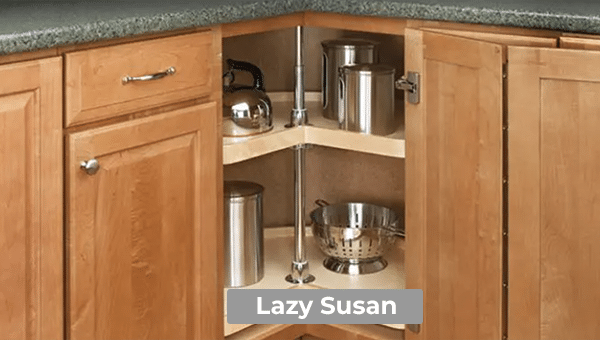
Modern corner systems make these spaces genuinely usable. Lazy Susans, both classic circular and kidney-shaped versions that wrap around the door, improve access on rotating shelves. Blind corner pull-outs use a two-stage mechanism that brings the rear section forward and to the side, so the full depth is reachable without leaning in. Swing-out shelf systems mount to the door and bring tiered shelving forward when it opens. For homeowners planning a remodel, oversized corner drawers that fully extend are worth considering. They eliminate the traditional corner box entirely and give you the same visibility and access you get from a standard drawer, just larger. Corner space handles pots, canned goods, occasional-use appliances, and bulk pantry items well once accessible.
Drawer Inserts for Utensils, Knives, and Cooking Tools
A kitchen drawer without inserts accumulates everything without organizing anything. The right inserts turn the same drawer into a system where every item has a place, and nothing must be moved to reach what you need.
Standard cutlery trays divide a drawer into sections for everyday silverware, but a two-tiered cutlery insert goes further. The top tray slides back on a track to reveal a second storage level underneath, which is ideal for keeping everyday silverware on top and less frequently used pieces like steak knives or serving utensils below. Knife block inserts embed directly into the drawer to protect blades and free up counter space. Spice drawer inserts hold jars at a slight angle, so every label faces upward and is readable at a glance. Adjustable peg systems accommodate bowls, plates, and lids in a single layer without stacking. Drawer storage consistently outperforms open-cabinet storage for daily-use items because everything is visible and reachable from a standing position.
Hidden Storage for Trash, Recycling, and Cleaning Supplies
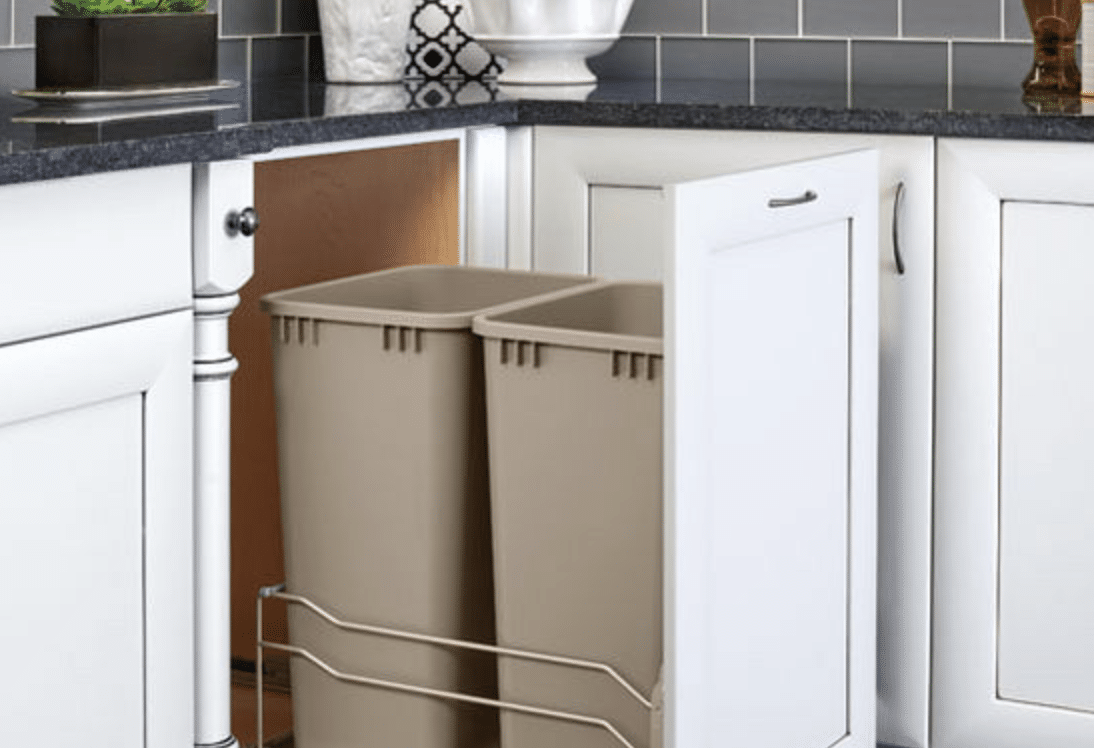
Pull-out trash and recycling systems mount inside a base cabinet near the sink and handle two bins simultaneously, keeping containers off the floor and out of sight. A 15-inch base cabinet is typically wide enough to accommodate a double pull-out system, which means this upgrade is possible in most kitchens without major construction. The bins pull out when the door opens and return fully when it closes.
Under-sink storage presents its own challenge because of the plumbing. U-shaped and split-shelf pull-outs work around the pipes, so cleaning products, soap, sponges, and extra bags have an organized home rather than being piled in front of everything else. Tip-out trays installed on the false drawer front below the sink add a narrow but useful slot for sponges and scrubbers that would otherwise live on the countertop. Motion-activated LED strip lights mounted inside the cabinet doors are a small detail that makes a real difference in a cabinet that is otherwise a dark, hard-to-see corner.
Small Appliance Storage
Appliance garages are built-in cabinet sections with a roll-up or flip-up door that keep appliances permanently housed and plugged in, accessible without sitting in open view. They work especially well for coffee makers and toasters used every day because the appliance stays at counter height and ready to use without taking up visible counter space. Mixer lifts are a spring-loaded mechanism built into a lower cabinet that raises a stand mixer to counter height for use and lowers it back when finished, which is a significant upgrade for anyone who bakes regularly and has struggled with the weight of lifting a stand mixer in and out of storage.
For appliances used a few times a week rather than daily, dedicated lower-cabinet storage with pull-out shelves keeps them reachable without consuming counter space. Frequency of use is the deciding factor. Daily items belong in an appliance garage or on the counter. Weekly items fit a pull-out lower cabinet. Appliances that come out a few times a year belong on a higher shelf or in a pantry where they do not compete with everyday cooking. 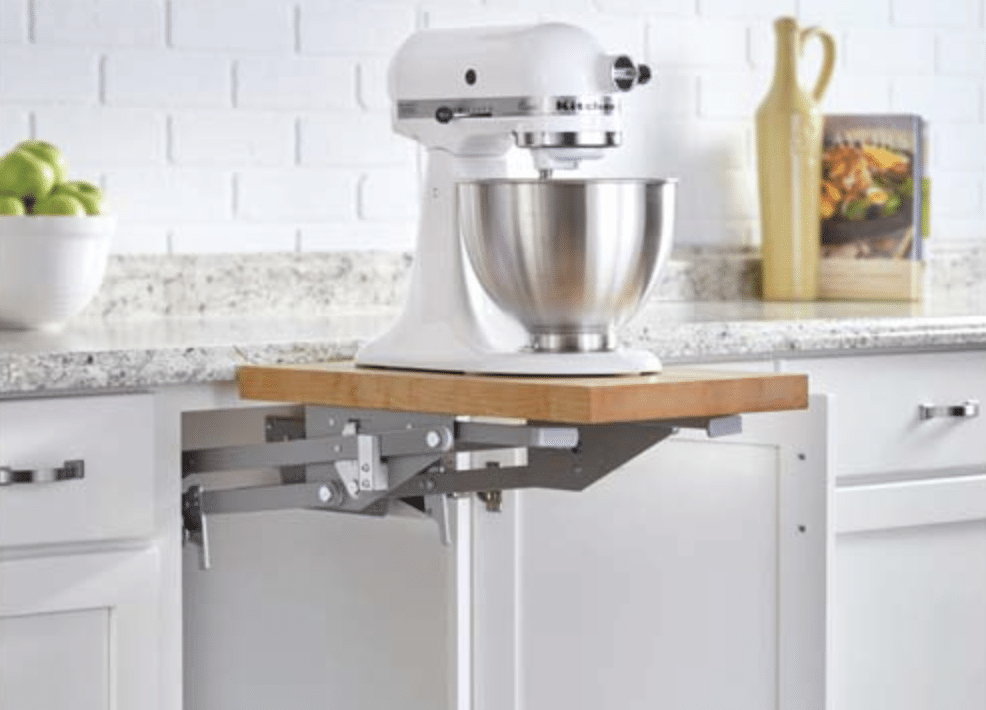
Two-Tiered Drawer Inserts and Built-In Charging Drawers
Two areas that often go unaddressed in kitchen storage planning are vertical drawer space and the growing number of devices that need to be charged in the kitchen. Most standard drawers use only one level of the available height, which leaves real storage capacity on the table. A sliding upper tray that pulls back to reveal a lower compartment doubles what a single drawer can hold without requiring any additional cabinet space.
Built-in drawer outlets, sometimes called docking drawers, address the charging problem that has quietly taken over kitchen countertops. A drawer with a built-in outlet and USB ports keeps phones, tablets, and other devices charged and out of sight. The drawer below a coffee maker or near a kitchen desk area is a natural location. It is the kind of detail that does not show up in a standard kitchen but makes a noticeable difference in daily life once it is there.
Upper Cabinet Organizers and Pantry Pull-Outs
Upper cabinet shelves are often spaced for the tallest items in the cabinet, leaving wasted vertical space above mugs, small plates, and pantry cans. A shelf riser creates a second level within a single shelf so two rows of items occupy the height one row would otherwise use. Stepped organizers keep items at the back visible over items at the front. These are among the lower-cost improvements available without committing to a full remodel, and they make a noticeable difference in how much a standard upper cabinet can hold.
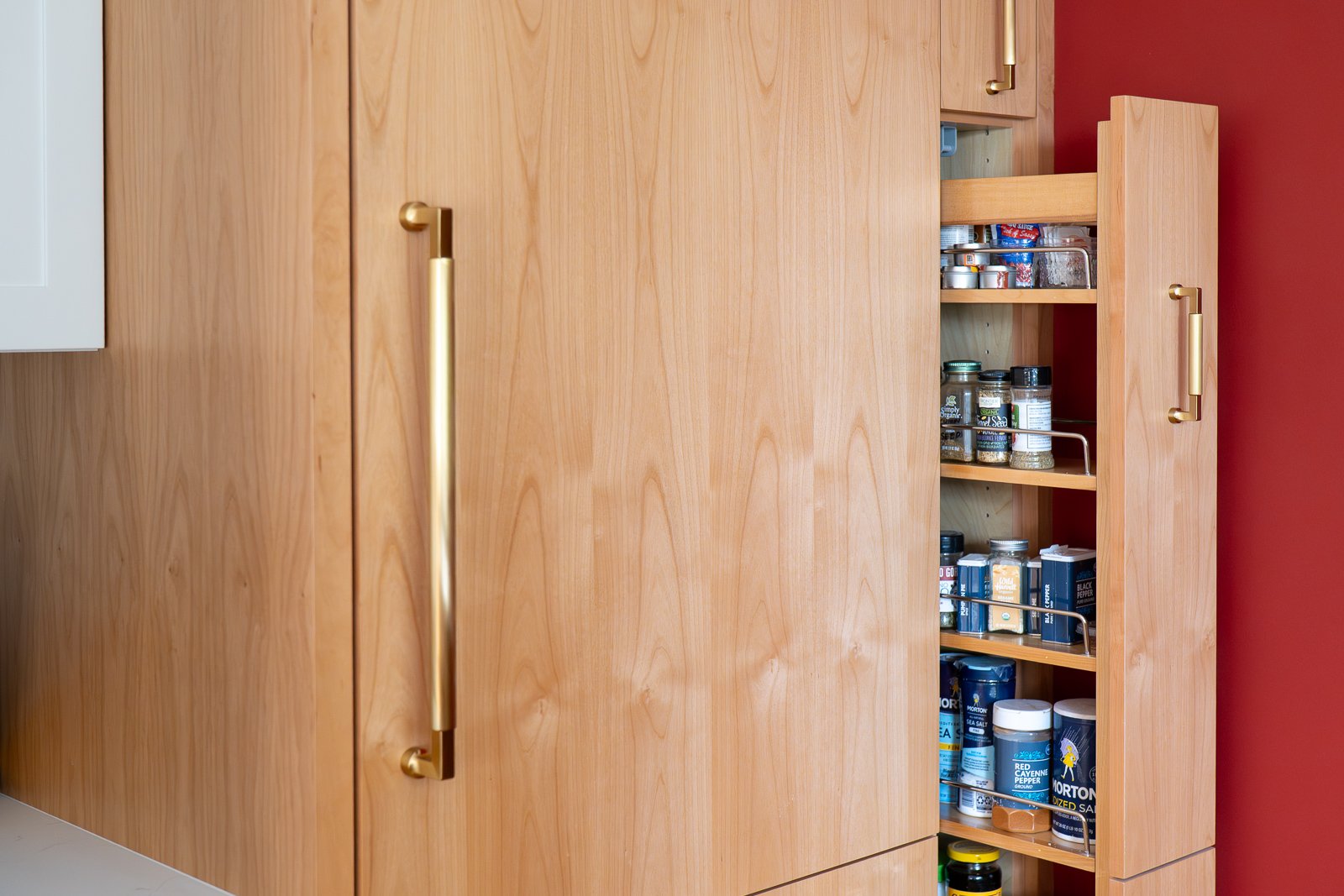
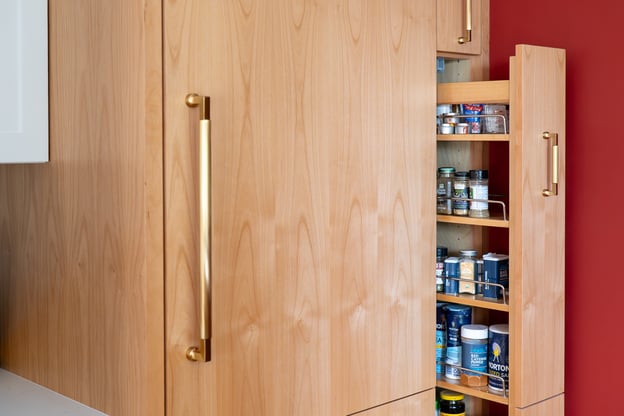
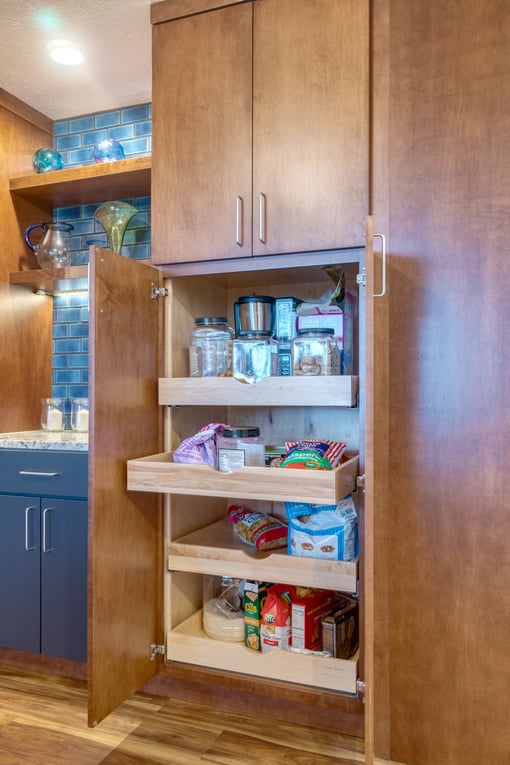
In tall pantry cabinets, pull-out shelves solve a different problem. Items pushed to the back get forgotten and expire before they get used. New purchases stack in front, the back becomes a graveyard, and the household ends up buying duplicates of things already in the pantry. Rolling the entire shelf forward makes the full depth accessible. Pairing pull-outs with clear bins, airtight containers, and labeled zones for dry goods, snacks, baking supplies, and canned goods keeps the pantry readable at a glance and eliminates most of the overbuying problem.

Above Kitchen Cabinet Storage Ideas That Look Intentional
The space above kitchen cabinets is highly visible and frequently misused. Random items stacked at that height read as clutter regardless of what they are. A mismatched row of seldom-used items sitting on top of the cabinets works against an otherwise well-designed kitchen.
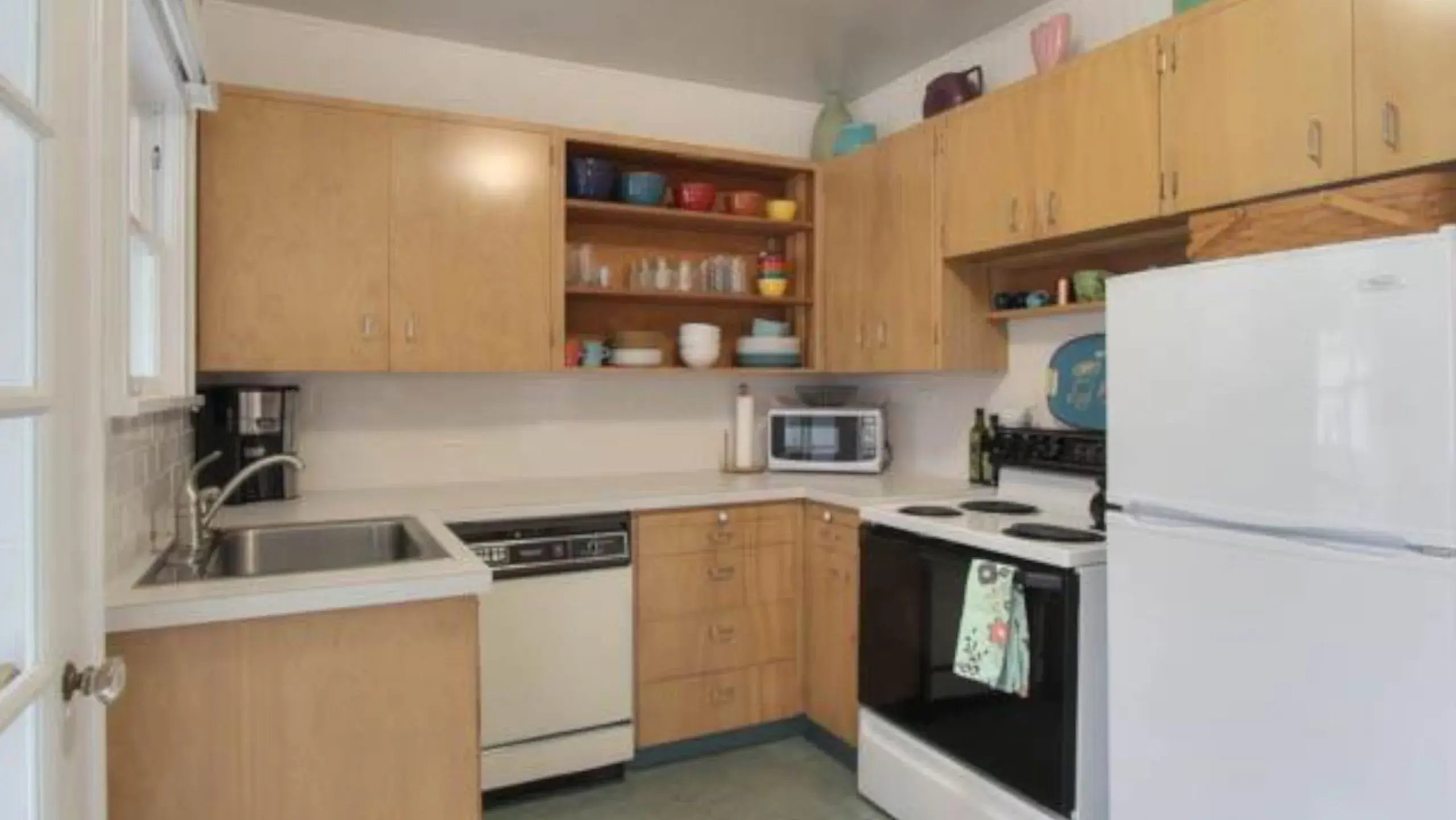
Used deliberately, the same space can function as both low-frequency storage and a design feature. Large serving pieces, lidded decorative baskets, large trays, seasonal entertaining items, and rarely used cookware are the right candidates. They are not needed daily, and their size makes them genuinely hard to store anywhere else. Consistent container choices across the run of cabinets create visual cohesion. Deliberate breathing room between groupings prevents the space from looking overflowed. The overall look should feel like it belongs in the kitchen rather than sitting on top of it, whether that means woven baskets in a farmhouse kitchen or a row of uniform lidded boxes in a more minimal space.
Cabinet Storage Ideas for Small Kitchens
In a small kitchen, the instinct is to add more containers and organizers. The more effective approach is to focus on access and eliminate anything that does not earn its place. A small kitchen with well-configured storage consistently outperforms a larger kitchen where the cabinets are full of things that never get used.
Vertical storage is especially valuable when floor space is limited. Taller wall cabinets that run to the ceiling, pull-out organizers that use the full cabinet depth, and shelf risers that double the usable capacity of a shelf all add meaningful storage without expanding the footprint. Open shelves, used selectively for everyday dishes or cooking oils, can supplement cabinet storage without adding visual bulk. In a remodel, taller cabinets, deeper base drawers, and built-in pantry sections are the upgrades that deliver the most significant gains for small kitchen layouts.
Storage Problems? It could Mean it is Time for a Kitchen Remodel
Organizers and pull-out trays are the right solution when the cabinet layout is fundamentally sound but not configured to match how the household uses the kitchen. A remodel is the better answer when the problems are structural. Cabinet proportions that do not fit standard cookware, corners that no retrofit system can fully address, a workflow that requires crossing the kitchen repeatedly to complete basic tasks, or limited prep space that cannot be expanded without moving walls are all signs that the layout itself is the problem. No amount of reorganizing fixes a kitchen that was not designed to work.
Lamont Bros. Design & Construction helps homeowners throughout the Portland area identify where the real problems are and design kitchens and kitchen cabinets that address them at the source. Contact Lamont Bros. Design & Construction to start planning your kitchen remodel.
FAQs: Kitchen Cabinet Storage
Some of our most frequently asked questions from homeowners looking to upgrade their kitchen cabinet storage:
What is the best way to organize kitchen cabinets?
Organize around how you actually use the kitchen. Keep everyday items within easy reach, group related items together, and use pull-outs, dividers, or drawer inserts to make things accessible without moving other items to reach them. The goal is a system where putting things away and getting them out again takes no thought at all.
How can I make deep kitchen cabinets more useful?
Add roll-out trays or interior drawers with full-extension slides so items in the back are as easy to reach as items in the front. A professionally installed pull-out tray eliminates the need to crouch, reach, or remove items to get to what you need. Deep base cabinets work well for pots, pans, small appliances, and pantry overflow once pull-out access is in place.
What should I store above kitchen cabinets?
Use that space for items not needed every day: seasonal serving pieces, large trays, lidded baskets, and rarely used cookware. Keep the arrangement visually consistent by using matching or complementary containers and leave breathing room between groupings. Treat it as an intentional display rather than overflow storage.
What kitchen cabinet storage ideas are worth adding during a remodel?
Pull-out shelves in base cabinets, two-tiered drawer inserts, tray dividers, pull-out trash and recycling bins, appliance garages, mixer lifts, pantry pull-outs, built-in charging drawers, and a functional corner cabinet system are among the most valuable upgrades to build in during construction. These features are significantly harder and more expensive to retrofit after the fact, and they are the kind of details homeowners notice and appreciate every day.
Ready to Create a Kitchen That Works Better for How You Live?
If your kitchen cabinets feel crowded, awkward, or hard to use, the right storage upgrades can completely change how your kitchen functions. Some of those upgrades come from organizers and accessories. Others require a layout that was designed with storage in mind from the beginning.
Lamont Bros. Design & Construction helps homeowners design a kitchen with smarter cabinet layouts, custom storage features, and a more practical flow for everyday life. Contact Lamont Bros. Design & Construction to start planning your kitchen remodel.
-1.jpg)