Quartz countertops are highly durable under normal kitchen and bathroom use. Their nonporous surface resists most household stains, requires no sealing, and is difficult to scratch during routine use.
Quartz is not indestructible. Direct or sustained heat can discolor the resin or contribute to cracking. Hard impacts can chip exposed edges, and an improperly supported countertop can crack around a sink, cooktop, or seam.

Compared with solid surface, quartz provides better scratch resistance and a harder work surface. Solid surface scratches more easily, but many scratches and small defects can be sanded out or repaired.
What Makes Quartz Countertops Durable?
Quartz countertops are engineered surfaces made from quartz mineral, resins, binders, pigments, and other ingredients. The exact composition varies by manufacturer and product line.
The manufacturing process produces a dense, consistent slab without many of the natural fissures found in some stone products. Resin binds the mineral particles together and creates a nonporous surface.
This combination allows quartz to resist most household stains while handling the ordinary wear associated with cooking, cleaning, and food preparation. Unlike many natural-stone surfaces, quartz does not require periodic sealing.
Quartz countertops should not be confused with quartzite. Quartz is manufactured, while quartzite is a natural stone quarried and cut into slabs. Lamont Bros.’ article on what quartz countertops are made from provides more information about the material and manufacturing process.

Are Quartz Countertops Scratch-Resistant?
Quartz is highly scratch-resistant, but it is not scratch-proof.
Ordinary activities such as setting down plates, moving cookware, or preparing food are unlikely to damage a properly installed quartz surface. Sharp objects, ceramic knives, abrasive cleaning pads, and grit trapped beneath cookware can still leave marks.
Quartz manufacturers recommend using a cutting board rather than cutting directly on the countertop. This protects the surface while also preventing knives from becoming dull.
Color and pattern can affect how visible a scratch appears. Marks may be more noticeable on dark, solid-colored quartz than on a multicolored or heavily patterned design. Textured, honed, and concrete-style finishes may also show fingerprints, residue, and daily surface markings more readily than polished quartz.
The hardness of quartz mineral should not be used as a direct measurement of countertop durability. Engineered quartz contains several materials, and its performance also depends on the slab, fabrication, installation, support, edge profile, and product specifications.
Can Quartz Countertops Chip?
Quartz can chip when a hard object strikes an edge or another vulnerable area. The middle of a well-supported slab is generally less susceptible to impact damage than its perimeter.
Chips commonly occur around sink and cooktop cutouts, outside corners, dishwasher edges, seams, and narrow sections of the slab. Areas without adequate cabinet support may also be more vulnerable.
Cambria states that no stone surface is chip-proof and specifically identifies edges near sinks and dishwashers as areas that can be damaged by hard impacts. Its quartz product-care instructions recommend protecting exposed edges from heavy objects.
The selected edge profile can also affect durability. A rounded or eased edge may be less vulnerable than a sharp or highly detailed profile. The proper choice depends on the design, slab, fabricator, and surrounding cabinetry.
Small chips can sometimes be filled by a countertop professional. The repair may remain slightly visible, especially on quartz with detailed veining or translucent patterns. Contact the manufacturer or fabricator before attempting a repair because an unapproved product or method may affect the finish or warranty.
Can Quartz Countertops Crack?
Quartz countertops do not normally crack during ordinary household use. When a crack develops, it is often related to heat, movement, inadequate support, poor fabrication, improper installation, or a hard impact near a vulnerable area.
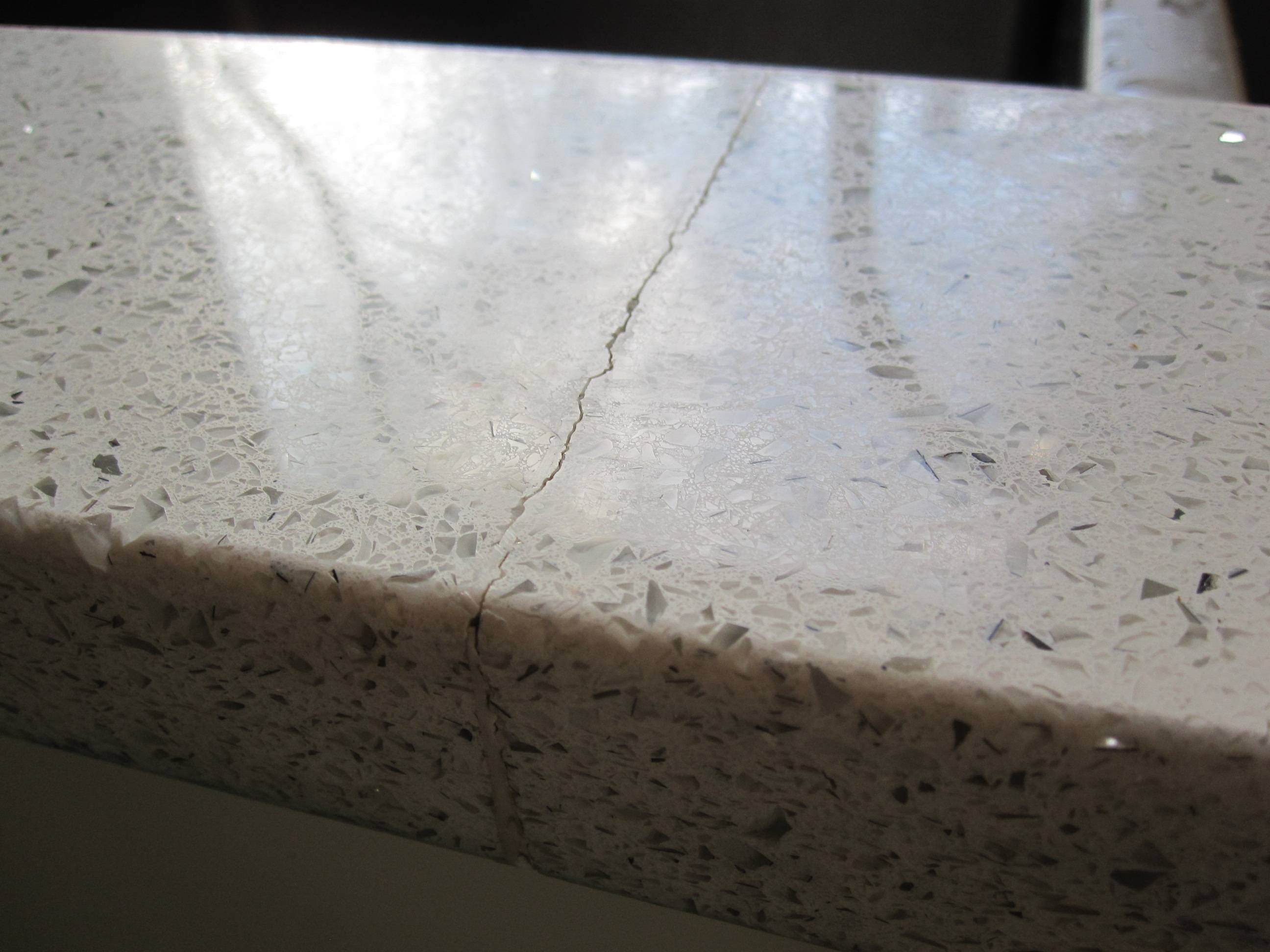
Sink and cooktop openings remove material from the slab and create narrower sections. These areas require accurate fabrication and proper support. Long countertop overhangs may also require concealed brackets or another support system approved by the manufacturer.
Cabinet movement, foundation movement, or an uneven substrate can place stress on the slab. A seam may separate when the structure beneath it shifts.
Thermal shock is another risk. Thermal shock occurs when one part of the countertop changes temperature much faster than the surrounding material. The resulting expansion and contraction can place enough stress on the slab to cause damage, especially near an edge or cutout.
MSI identifies thermal shock, cabinet movement, substrate movement, impact, and improper fabrication among the causes of damage excluded from its residential warranty.
How Heat-Resistant Are Quartz Countertops?
Quartz is heat-resistant, but it is not heat-proof.
The quartz mineral within the slab can tolerate high temperatures, but the resin and other materials are more heat-sensitive. Direct or sustained heat can cause discoloration, scorching, seam failure, or cracking.
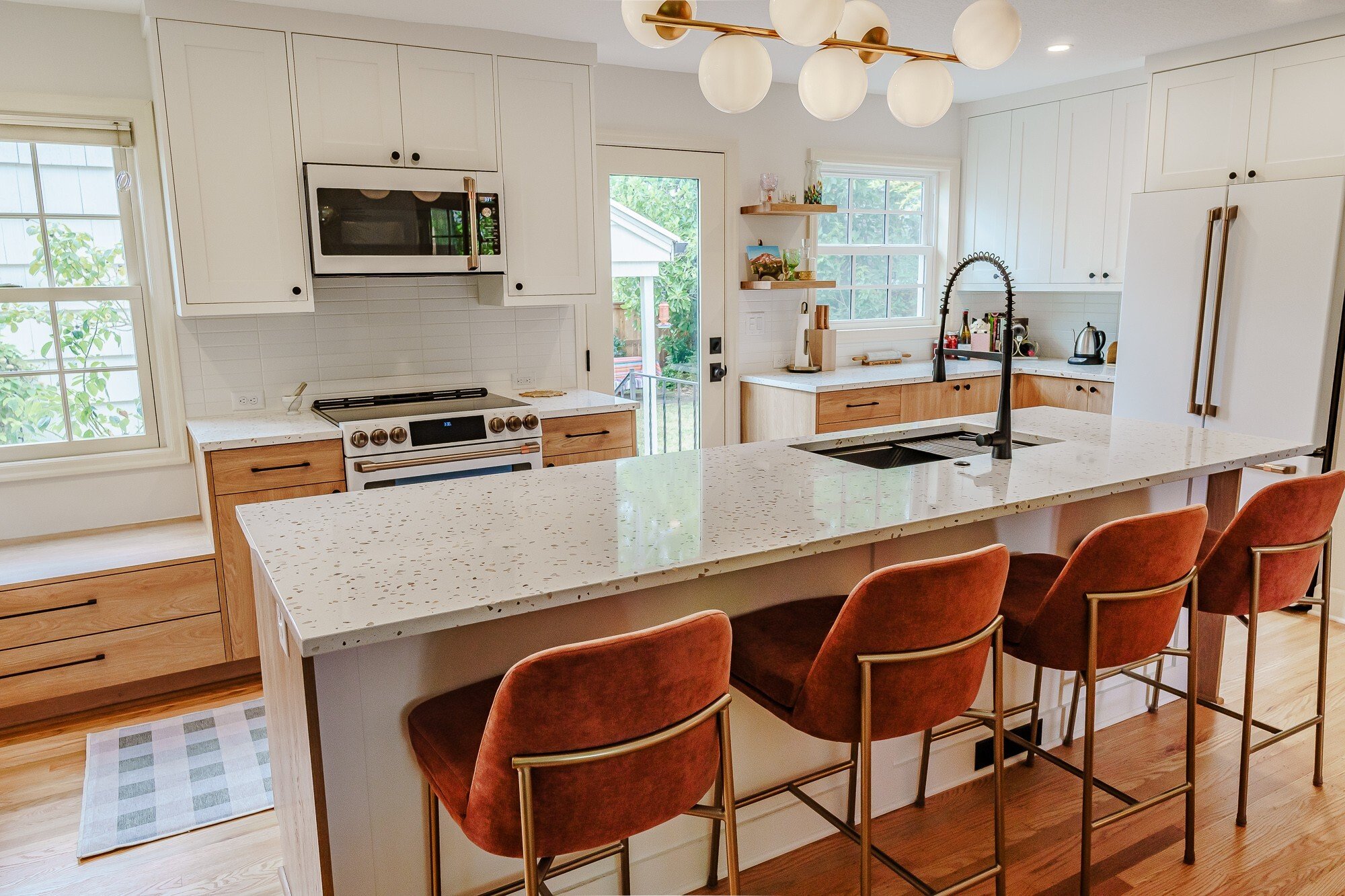
Hot pans should not be placed directly on quartz. Use a solid trivet or heat pad beneath cookware and portable appliances that produce sustained heat. This includes slow cookers, air fryers, electric skillets, griddles, toaster ovens, deep fryers, and roaster ovens.
The temperature at which damage occurs varies by manufacturer, product, exposure time, and installation. A universal temperature limit is therefore less useful than the care instructions for the selected product.
Both Cambria and MSI recommend placing protection beneath hot cookware and heat-producing appliances.
Lamont Bros. encountered one quartz countertop that developed a crack in an area repeatedly heated by a portable electric griddle. The crack became more visible when the appliance was used again. This is a practical example of why sustained appliance heat can be as damaging as brief contact from hot cookware.
Are Quartz Countertops Stain-Resistant?
Quartz is highly stain-resistant because its engineered surface is nonporous. Coffee, tea, wine, oil, sauces, and other common kitchen spills are less likely to penetrate quartz than unsealed natural stone.
Stain-resistant does not mean stain-proof. Prolonged contact with strong pigments, unsuitable cleaners, solvents, or chemicals can leave residue, discolor the resin, or damage the finish.
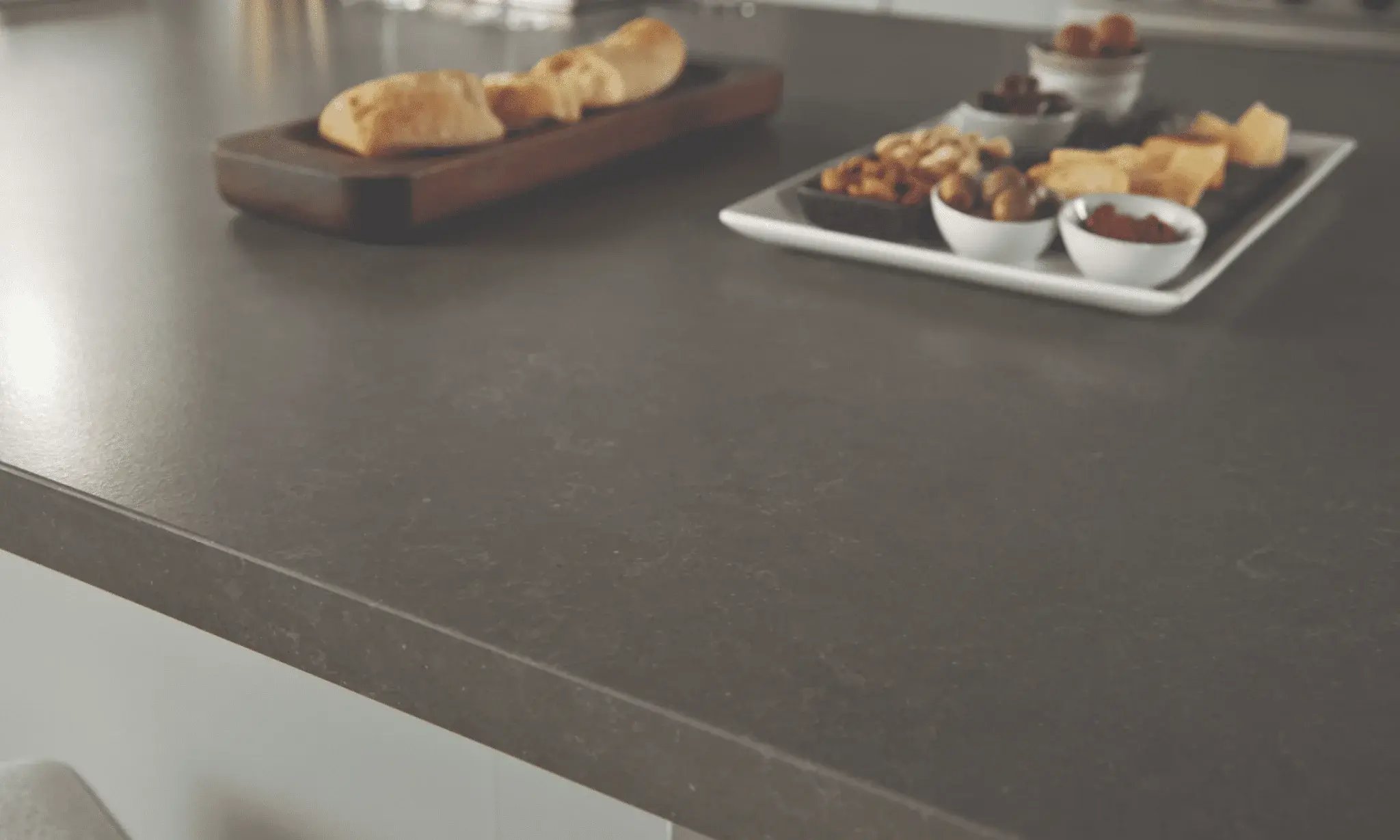
Quartz manufacturers generally recommend cleaning spills promptly with warm water, mild dish soap, and a soft cloth or sponge. Abrasive pads and highly acidic or alkaline chemicals should be avoided unless the manufacturer specifically approves them.
A textured or honed finish may require more frequent cleaning because its surface can hold residue more readily than a polished finish. This does not necessarily mean the material has absorbed the spill.
Do not apply a stone sealer to quartz unless the manufacturer directs it. Quartz is already nonporous, so a penetrating sealer cannot soak into the surface. It may remain on top and wear unevenly.
Does Quartz Require Regular Maintenance?
Quartz requires less routine maintenance than many natural-stone countertops.
For daily cleaning, use warm water, mild dish soap, and a soft cloth. Remove dried residue with a product approved by the manufacturer. Avoid harsh chemicals, abrasive pads, oven cleaners, drain cleaners, paint removers, and products containing strong solvents.
Quartz does not need to be polished, waxed, or sealed. Unapproved surface treatments can leave a film or create an uneven appearance.
Use a cutting board during food preparation and place trivets beneath hot pans and countertop appliances. Clean spills promptly, avoid sitting or standing on the countertop, and protect exposed edges from heavy cookware and other hard objects.
Cleaning requirements vary by manufacturer. Retain the product name, warranty, and care instructions after installation.

How Durable Are Quartz Countertops Compared to Solid Surface?
Quartz is generally more resistant to scratches and routine surface wear than solid-surface products such as Corian or Wilsonart Solid Surface.
Solid surface is made from acrylic or polyester resins combined with minerals and pigments. Like quartz, it is nonporous and does not require a penetrating sealer. It can also be fabricated with less-visible seams, integrated sinks, curved forms, and other features that can be difficult to produce with quartz.
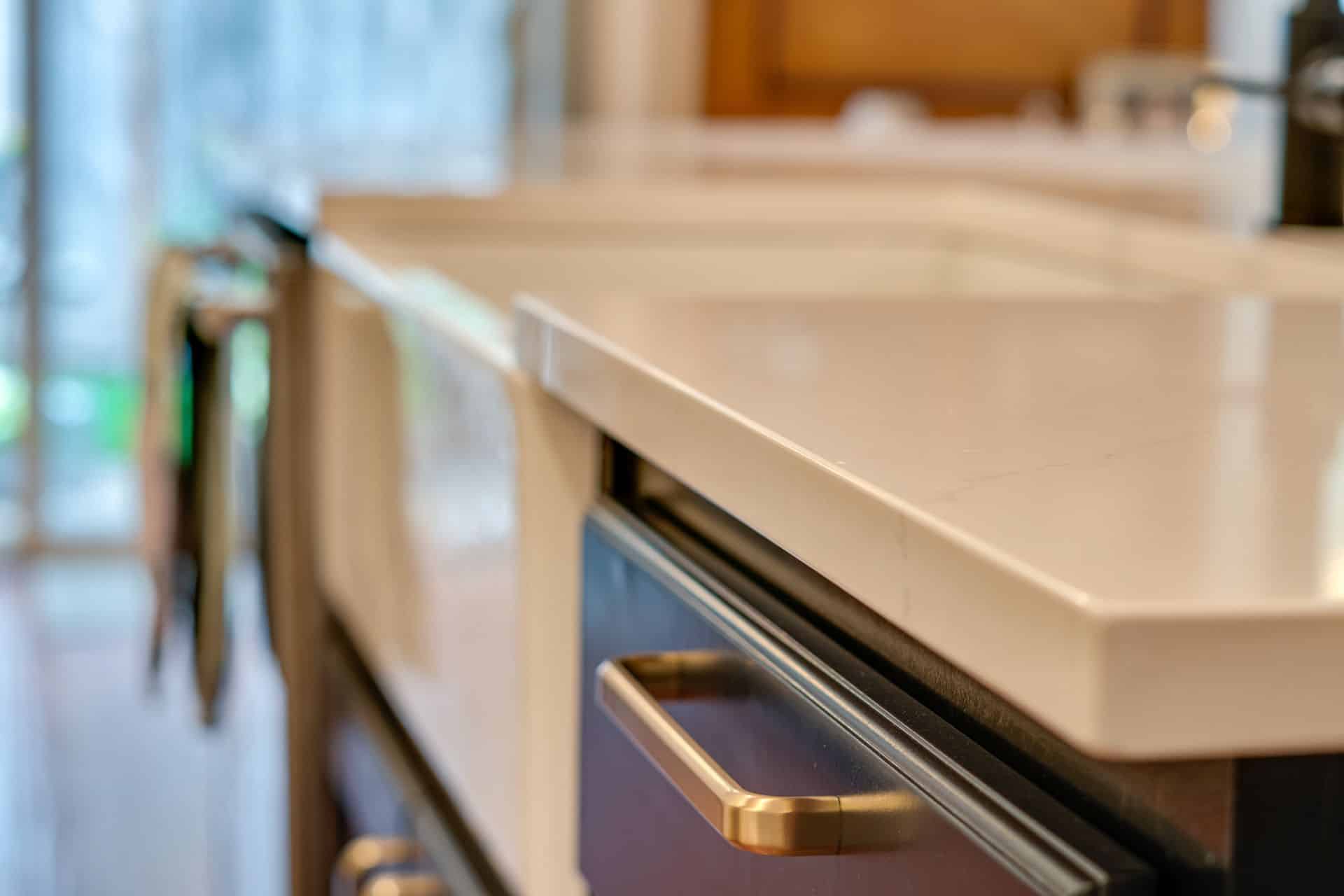
The primary tradeoff is repairability. Solid surface scratches more easily, but its uniform composition allows many scratches and small cuts to be sanded out. Quartz is harder to scratch, but repairing a deep scratch, chip, or crack usually requires a professional and may leave a visible repair.
Solid surface can also be less brittle around edges and cutouts. Quartz provides a harder, more stone-like work surface but can chip when a heavy object strikes an exposed edge.
Neither material should receive direct heat. Hot cookware and portable appliances should rest on a trivet or heat pad.
Corian states that slight abrasion marks can develop during normal use, but many scratches, cuts, and other forms of damage can be repaired. Wilsonart also recommends professional service for deeper scratches, gouges, and cracks. See the manufacturer’s Corian care instructions and Wilsonart solid-surface information.
Quartz is usually the better option when scratch resistance, stone-like appearance, and routine durability are the main priorities. Solid surface may be preferable when repairability, integrated components, and less-visible seams matter more.
For comparisons with additional materials, see Lamont Bros.’ article on countertop material pros and cons.
How Does Quartz Compare With Marble?
Quartz is more resistant to stains, scratches, and acidic foods than marble. It also does not require sealing.
Marble provides natural variation and stronger heat resistance. It can sometimes be professionally honed or polished after years of wear. However, marble can stain and scratch, and acids such as lemon juice, vinegar, wine, and tomato sauce can etch the finish.
Quartz is generally the more forgiving material for a heavily used kitchen. Marble is better suited to homeowners who value natural stone and accept the patina that develops with use.
The full comparison is available in Quartz vs. Marble Countertops.
How Long Do Quartz Countertops Last?
A properly fabricated, installed, and maintained quartz countertop can remain serviceable for many years. Its lifespan depends on the product, fabrication, cabinet support, installation, household use, and exposure to heat or impact.
Avoid promises that quartz will last forever. Some residential warranties use lifetime language, but they contain exclusions and do not guarantee that a countertop cannot be scratched, chipped, stained, or cracked.
Before selecting a product, review its warranty for coverage related to fabrication, installation, seams, heat, impact, outdoor use, and repairs. Confirm who is responsible if a problem comes from the slab, fabrication, or installation.
Can Quartz Countertops Be Used Outdoors?
Most standard quartz countertops are intended for indoor use.
Prolonged sunlight and weather exposure can affect the resin, causing fading, yellowing, warping, or other changes. Some manufacturers exclude outdoor installations from their warranties.
Do not install quartz in an outdoor kitchen unless the specific product has been approved for exterior use. Granite, quartzite, porcelain, or sintered stone may be stronger candidates, depending on the climate and project.
Does Installation Affect Quartz Durability?
Installation has a major effect on how quartz performs.
The cabinets must be level and capable of supporting the slab. Cutouts must be fabricated accurately, seams must be placed appropriately, and overhangs must receive the support required by the manufacturer.
A durable surface can still fail when the substrate moves, cabinets are uneven, cutout corners are poorly fabricated, or an overhang lacks support.
Countertop selection should account for the slab, fabricator, installer, edge profile, seam placement, and cabinet structure. The material alone does not determine the finished countertop’s durability.
Quartz Countertops in Lamont Bros. Projects
Lighter, Simpler Kitchen
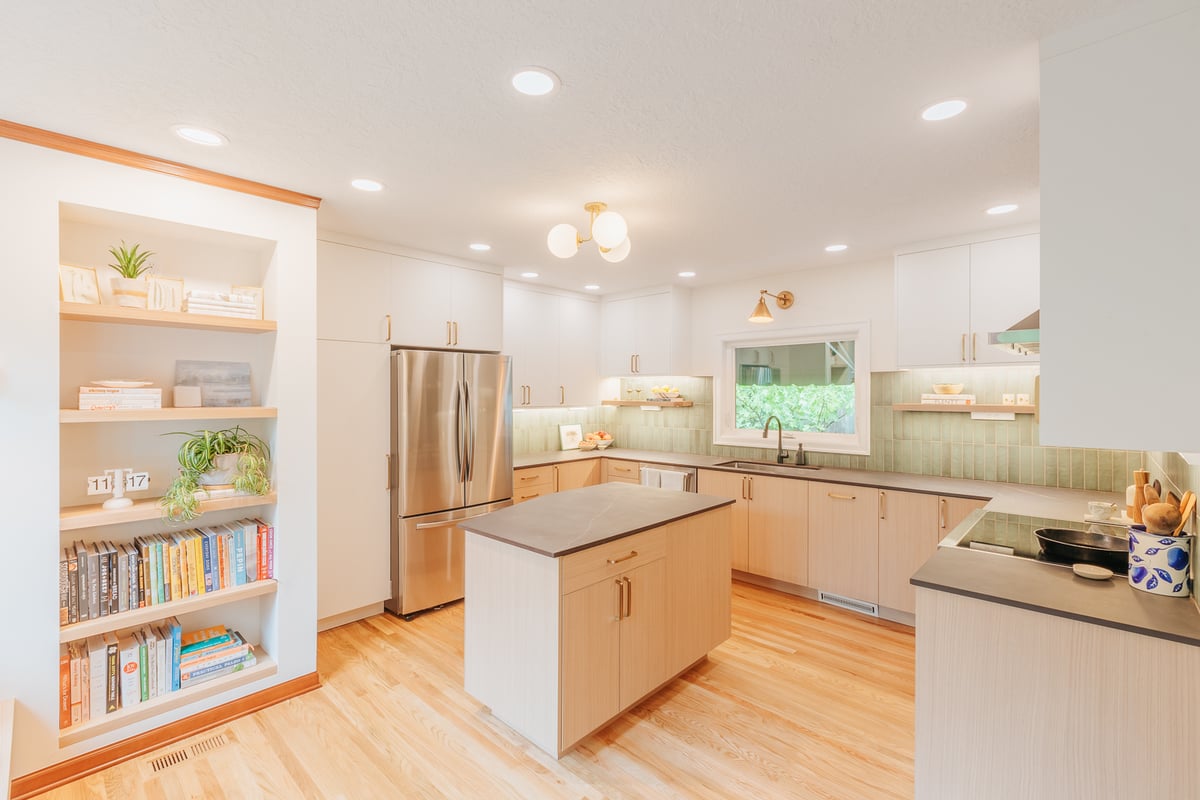
For the Lighter, Simpler Kitchen, Lamont Bros. installed Silestone quartz in Charcoal Soapstone.
The dark countertop provides contrast against the bright cabinetry and backsplash. It also gives the homeowners a nonporous work surface without the sealing associated with natural soapstone.
Dark quartz may show dust, fingerprints, and surface residue more readily than some patterned options. Color and finish should therefore be evaluated alongside durability.
Bolton Kitchen Remodel
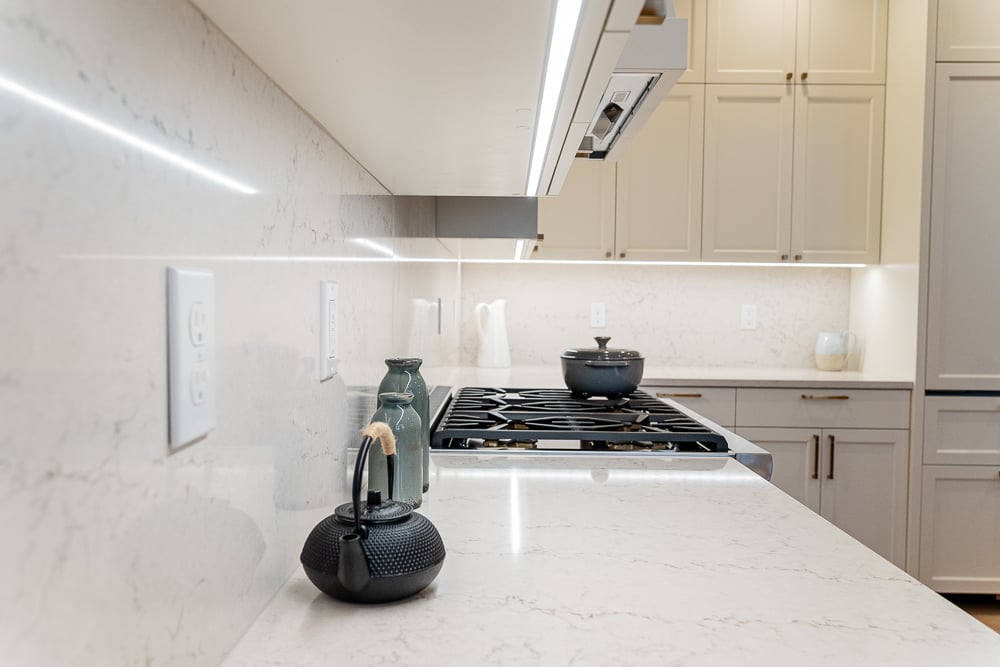
The Bolton kitchen remodel uses Pental Quartz in Tramonto. Its gold-veined white surface provides the movement of natural stone with lower routine maintenance.
The project also demonstrates why installation matters. The remodel expanded the kitchen into an underused dining nook, added an island, and created longer countertop runs. Cabinet placement, cutouts, support, and traffic flow had to be coordinated with the quartz fabrication.
Historic 1925 Kitchen
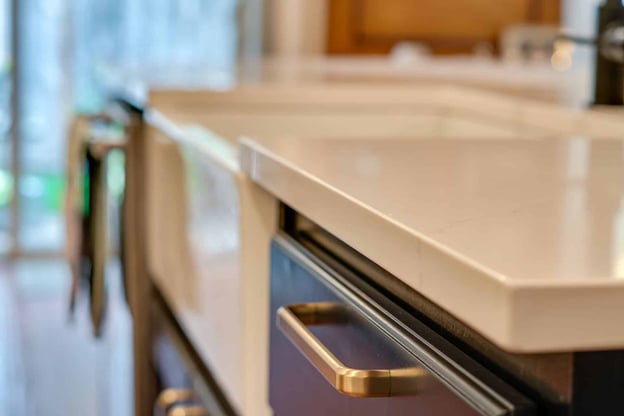
The Historic 1925 Kitchen uses polished Cambria Brittanicca Gold quartz with an ogee edge.
The detailed edge gives the manufactured surface a more traditional appearance suited to the home. It also shows how durability, material selection, and architectural character can be addressed through one design.
Are Quartz Countertops Right for Your Home?
Quartz is a strong choice when you want a countertop that resists stains and scratches, requires no sealing, and offers predictable colors and patterns.
It may not be the right choice if direct heat resistance, outdoor installation, or easy refinishing is the highest priority. Granite, quartzite, porcelain, sintered stone, stainless steel, or solid surface may better fit those requirements.
Countertop selection should account for how you cook, clean, entertain, and use the room. It should also consider the cabinetry, sink, appliances, edge profile, lighting, and surrounding finishes.
Lamont Bros. coordinates these decisions through its kitchen remodeling services and bathroom remodeling services.
Frequently Asked Questions
Are quartz countertops easy to damage?
Quartz is difficult to damage during ordinary household use. High heat, hard impacts along exposed edges, unsuitable chemicals, inadequate support, and improper installation can still cause permanent damage.
Can you put a hot pan directly on quartz?
No. Use a solid trivet or heat pad. Direct or sustained heat can discolor the resin or contribute to cracking.
Can you cut directly on quartz?
Quartz resists scratches, but cutting directly on it is not recommended. Use a cutting board to protect the surface and your knives.
Does quartz need to be sealed?
No. Quartz is nonporous and does not require a penetrating stone sealer.
Can quartz countertops be repaired?
Small chips may be filled by a professional. Cracks, deep scratches, and pattern damage can be harder to disguise. Contact the manufacturer or fabricator before attempting a repair.
Is quartz more durable than solid surface?
Quartz offers better scratch resistance and a harder work surface. Solid surface scratches more easily but is generally easier to sand, refinish, or repair.
What is the biggest weakness of quartz?
Heat is one of its primary weaknesses. Exposed edges and inadequately supported areas around cutouts are also more vulnerable to impact and cracking.
Ready to Select Countertops for Your Remodel?
A countertop should support the way the room is used while fitting the cabinetry, lighting, appliances, and surrounding finishes.
Visit our kitchen remodeling service page to see how Lamont Bros. plans these decisions as part of a complete kitchen. You can also review quartz countertop pricing before selecting a product.
When you are ready to discuss your project, contact Lamont Bros. or call (503) 713-5335.
-1.jpg)