If you have been shopping for new floors, you have probably come across the term engineered hardwood and wondered how it compares to solid hardwood. The short answer: engineered hardwood is real wood flooring, just built differently. It combines a genuine hardwood surface with a layered core designed for greater stability across a wider range of conditions.
Homeowners often compare the two because they look nearly identical once installed. But their construction, performance, and best use cases differ in meaningful ways. This guide walks you through everything you need to know, from what engineered hardwood is made of to how long it lasts, where it works best, and how to spot a quality product.
Key Points
1. Engineered hardwood is real wood, built smarter. It features a genuine hardwood veneer on top bonded to a cross-layered plywood core, giving you the authentic look and feel of traditional wood floors with greater dimensional stability against humidity and temperature changes.
2. It works where solid hardwood can't. Engineered hardwood can be installed over concrete subfloors, in basements, and over radiant heating systems, making real wood flooring possible in areas of the home that would otherwise be off-limits.
3. Quality varies, and the wear layer is everything. Not all engineered hardwood performs equally. A wear layer of 3mm or thicker, paired with a multi-ply plywood core, dramatically extends the floor's lifespan and refinishing potential, making it a worthwhile long-term investment.
What Is Engineered Hardwood Flooring?
Engineered hardwood flooring is a multi-layer flooring product with a real hardwood veneer on top and a core made of plywood or high-density fiberboard underneath. It is called engineered because the layers are bonded together under heat and pressure in a way that controls how the wood responds to moisture and temperature changes.
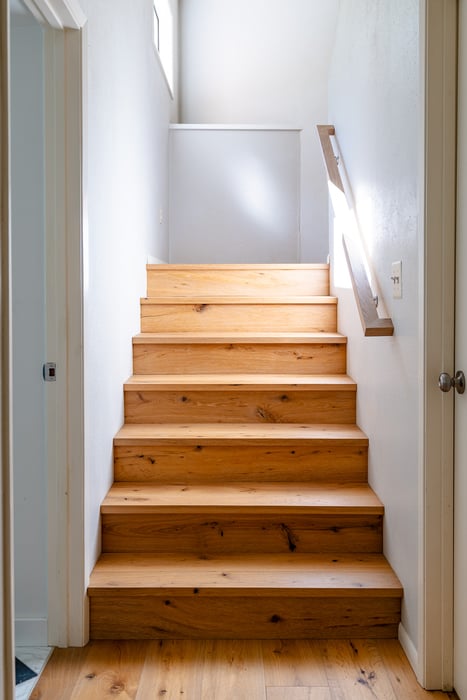
The top surface is genuine hardwood. When you walk on engineered hardwood floors, you are walking on real wood, not a photograph of wood or a synthetic material. That distinction matters both for appearance and for how the floor wears over time.
What Is Engineered Hardwood Flooring Made Of?
Engineered hardwood is built in three main layers, each serving a specific purpose.
Top Layer: The Hardwood Veneer
The top layer, often called the wear layer, is a slice of real hardwood. This is what gives the floor its natural appearance, grain pattern, and texture. Common species include oak, maple, hickory, walnut, and cherry, though many other species are available depending on the manufacturer. The thickness of this layer typically ranges from about 2mm (about 0.08 in) to 6mm (about 0.24 in), and that thickness plays a significant role in how many times the floor can be sanded and refinished over its lifetime.
Core Layers
Beneath the veneer sits the engineered core, which is typically constructed from multiple layers of plywood or high-density fiberboard. Plywood cores are considered higher quality because they handle moisture better and hold fasteners more securely. The layers in a plywood core are oriented with their wood grain running in alternating directions, a technique known as cross-grain construction. This cross-directional layering is what makes engineered hardwood more dimensionally stable than solid wood.
Bottom Backing Layer
The bottom layer serves as a balancing sheet that keeps the plank flat and is structurally balanced. It works in tandem with the top veneer to prevent the plank from cupping or warping as humidity levels change. Without this layer, the tension from the hardwood veneer could cause the board to bow.
How Engineered Hardwood Flooring Is Made
The manufacturing process begins by slicing or peeling hardwood veneers from logs. These veneers are dried, sorted for quality, and then bonded to the prepared core layers using adhesives under high heat and pressure. The cross-grain construction of the core is intentional: by layering wood with alternating grain directions, manufacturers counteract the natural tendency of wood to expand and contract along the grain when humidity changes.
Once the plank is assembled and cured, it is milled to precise dimensions, finished with stain and protective topcoats, and often textured to enhance the look and feel of natural wood. The result is a plank that behaves more predictably than solid hardwood while still delivering the warmth and authenticity of real wood surfaces.
What Is the Difference Between Hardwood and Engineered Hardwood Flooring?
Both products are real wood, but their construction leads to meaningful differences in performance, installation, and longevity.
Construction
Solid hardwood is exactly what it sounds like: a single piece of wood milled from top to bottom. Engineered hardwood uses that same species of wood as its top layer but bonds it to a multi-layer core. The core is what separates the two products in terms of stability and installation flexibility.
Moisture and Humidity Performance
Solid hardwood is sensitive to moisture. It expands when humidity rises and contracts when the air dries out, which can lead to gaps, cupping, or buckling in environments where humidity swings are common. Engineered hardwood handles these fluctuations significantly better thanks to its cross-layered core. This makes it a more practical choice for regions with seasonal climate changes or for areas of the home that experience moderate humidity variation.
Refinishing Potential
Solid hardwood can typically be sanded and refinished multiple times. According to the National Wood Flooring Association, most solid hardwood floors can be refinished five to seven times depending on plank thickness and how much material is removed each time. Engineered hardwood can also be refinished, but only as many times as the wear layer allows. A 2mm (about 0.08 in) veneer may support one light sanding. A 6mm (about 0.24 in) veneer can handle up to five refinishing’s since each pass removes roughly 1mm (about 0.04 in) of material. Choosing a product with a thicker wear layer extends the long-term refinishing potential considerably.
Installation Flexibility
Solid hardwood must be nailed or stapled to a wood subfloor and is not suitable for installation over concrete or below grade. Engineered hardwood can be floated, glued, nailed, or stapled depending on the product, and it is compatible with concrete subfloors and below-grade spaces. It is also suitable for use over radiant heat systems, while solid hardwood is not recommended in those applications.
Lifespan and Long-Term Value
A well-maintained solid hardwood floor can last a century or more, and the ability to refinish it repeatedly keeps it looking fresh across generations. Engineered hardwood, when built with a thick wear layer, can last 25 to 50 years or longer under normal conditions. For most homeowners, that timeline more than meets their needs, but buyers who prioritize maximum refinishing potential over many decades may find solid hardwood to be the better long-term investment.
Pros of Engineered Hardwood Flooring
Real Wood Appearance
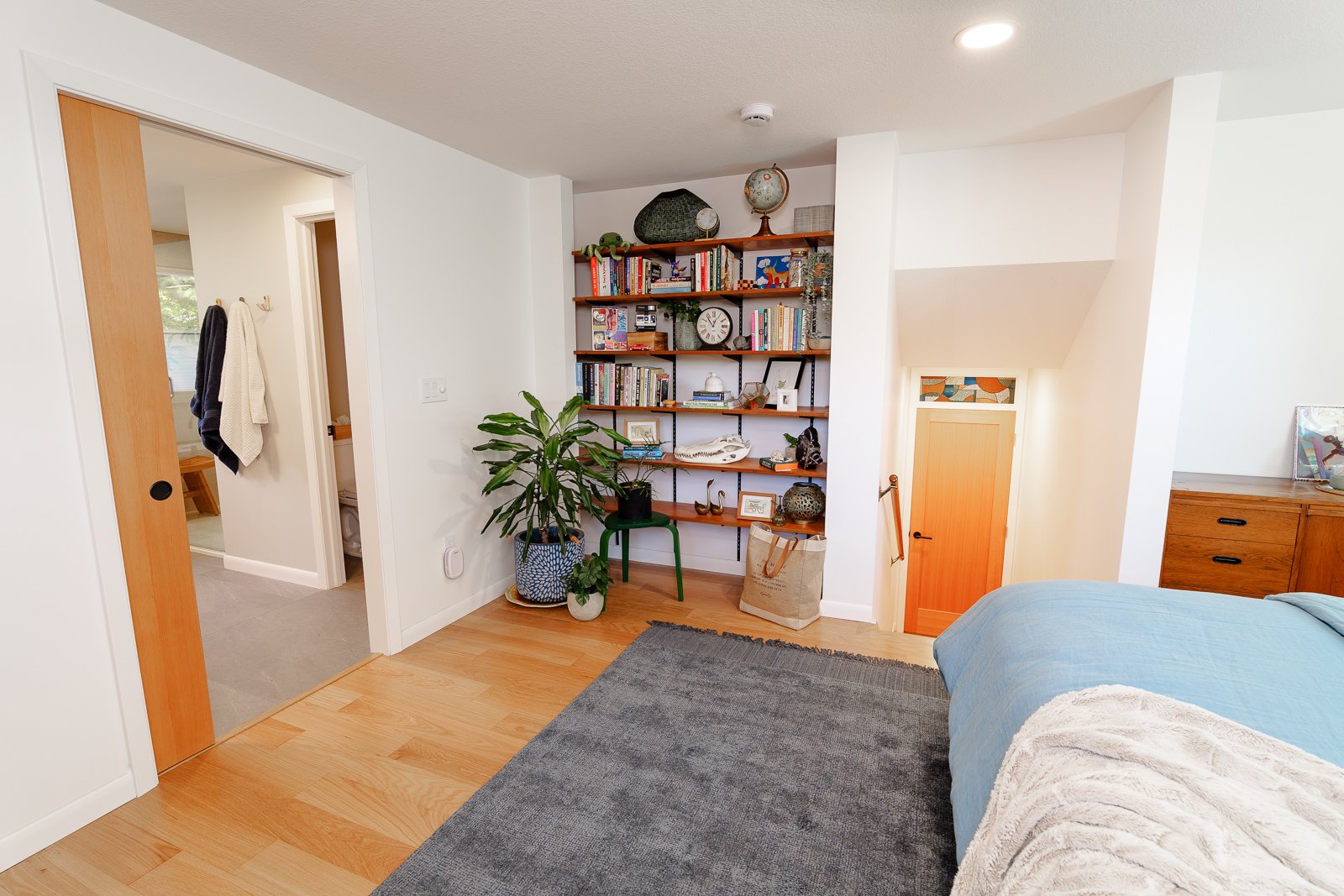
Because the top layer is genuine hardwood, engineered flooring delivers the same visual warmth, grain variation, and character that homeowners love about wood floors. No laminate or luxury vinyl product fully replicates the depth and natural irregularity of real wood.
Better Dimensional Stability
The cross-layered core construction makes engineered hardwood more resistant to seasonal expansion and contraction than solid hardwood. Homeowners in humid climates or drafty older homes often find it performs more consistently throughout the year.
Works in More Areas of the Home
Engineered hardwood can go places solid hardwood cannot, including basements, spaces with concrete subfloors, and rooms with radiant heating systems. This flexibility opens up the entire home to real wood flooring.
Available in Wider Planks
Engineered construction allows for wider planks than solid hardwood without the same risk of warping. Wide-plank floors are a trendy design choice that creates an open, spacious feel, and engineered hardwood makes that look more achievable.
Budget Considerations
Engineered hardwood is often priced lower than comparable solid hardwood products, particularly for premium species like walnut or wide-plank styles. The gap varies by brand and product quality, but it can make real wood flooring more accessible for homeowners working within a set budget.
Cons of Engineered Hardwood Flooring
Not Fully Waterproof
Engineered hardwood handles humidity better than solid hardwood, but it is not waterproof. Puddles, leaks, or sustained moisture exposure can still damage the floor. It is not appropriate for bathrooms, laundry rooms, or any area prone to standing water.
Limited Refinishing Compared to Solid Hardwood
Thinner wear layers limit how many times a floor can be sanded down and refinished. Homeowners who expect to refresh their floors repeatedly over 50 years or more may find solid hardwood a better match for their long-term goals.
Quality Varies Significantly
Not all engineered hardwood is created equal. Budget products with thin veneers and lower-grade cores will not perform or last as well as premium options. Understanding what to look for in product construction is essential before making a purchase.
Where Engineered Hardwood Flooring Works Best
Engineered hardwood is a strong choice in living rooms, dining rooms, bedrooms, and hallways, the same spaces where solid hardwood has traditionally been used. Its real advantage shows up in areas where solid hardwood struggles:
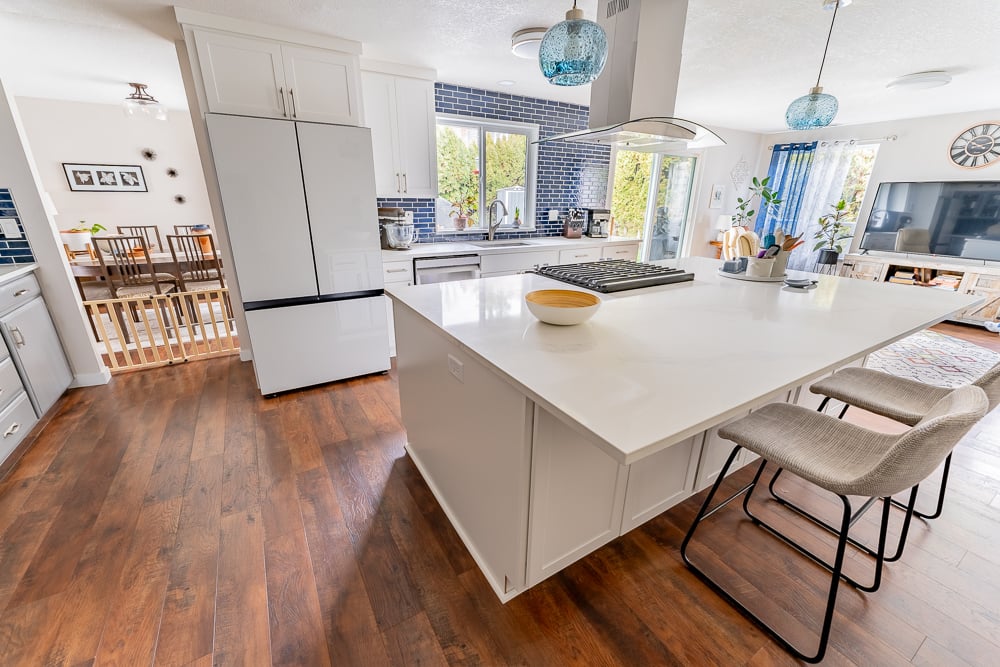
Kitchens benefit from engineered hardwood because the floor sees periodic humidity changes from cooking and cleaning. As long as spills are cleaned up quickly and the floor is not subjected to standing water, engineered hardwood holds up well in kitchen environments.
Basements and below-grade installations are ideal applications for engineered hardwood because concrete subfloors and higher ambient moisture levels make solid hardwood impractical. Engineered hardwood tolerates these conditions far better.
Homes with radiant heating systems are another excellent fit. Solid hardwood can crack or gap when installed over radiant heat because the heat dries the wood unevenly. Engineered hardwood is much more compatible with this type of heating.
Where You Should Avoid Engineered Hardwood
Full bathrooms present too much moisture risk for engineered hardwood. Between showers, baths, and the general humidity that builds up in a bathroom environment, the floor would be exposed to conditions it was not designed to handle.
Laundry rooms, mudrooms with frequent wet traffic, and any area where standing water is a regular occurrence are also poor candidates. In these spaces, tile or luxury vinyl plank are better suited options.
How to Tell If an Engineered Hardwood Floor Is High Quality
Wear Layer Thickness
This is the single most important quality indicator. A wear layer of 3mm (about 0.12 in) or thicker gives you meaningful refinishing potential and greater durability against daily wear. Anything thinner than 2mm (about 0.08 in) limits your options significantly.
Core Construction
Look for a multi-ply plywood core. Products using seven or more plies of Baltic birch or similar quality plywood outperform those built with HDF or particleboard cores in terms of moisture resistance and fastener holding strength.
Finish and Surface Protection
Aluminum oxide finishes are the most durable surface coatings available for hardwood floors. More layers of finish generally mean better scratch and scuff resistance. Ask the manufacturer or retailer about the finish system and its warranty coverage.
Plank Thickness and Width
Total plank thickness affects how solid the floor feels underfoot and how well it handles subfloor imperfections. Most quality engineered hardwood ranges from 3/8 inch to 3/4 inch thick. Wider planks are visually appealing but require a thicker, more stable construction to avoid movement over time.
Warranty
A strong manufacturer warranty reflects confidence in product quality. Look for warranties that cover structural integrity, finish wear, and manufacturing defects. Longer warranty periods, particularly for the finish and wear layer, signal higher-quality construction.
Installation Options for Engineered Hardwood
One of the practical advantages of engineered hardwood is that it supports multiple installation methods, making it compatible with a wide range of subfloor types.
Floating Floor
In a floating installation, the planks are not attached to the subfloor at all. Instead, they lock together and rest on top of the subfloor with an underlayment pad beneath. This method is fast, reversible, and works over concrete or existing flooring. It is a common choice for basement applications.
Glue-Down
Glue-down installation bonds the planks directly to the subfloor using construction adhesive. It is required over concrete in many cases and creates a very stable, solid-feeling floor. This method is commonly used in commercial applications or in homes where a more permanent installation is desired.
Nail-Down or Staple-Down
Nail-down and staple-down methods are used over wood subfloors and plywood. This is the same method used for solid hardwood installation and gives the floor a firm, secure feel. Not all engineered hardwood products support this method, so it is important to verify compatibility with the specific product you choose.
How Long Engineered Hardwood Flooring Lasts
The lifespan of engineered hardwood depends on product quality, traffic levels, maintenance habits, and how well the floor is protected. Mid-range products typically last 25 to 40 years. High-quality engineered hardwood with a thick wear layer in a well-maintained home can last 50 to 80 years or more, comparable to solid hardwood in many cases.
Refinishing extends the usable life of any hardwood floor. Products with thicker wear layers can be sanded and refinished to remove scratches, dents, and surface wear, effectively resetting the appearance of the floor without replacing it. If your floor cannot be refinished again, professional screening and recoating, which only refreshes the finish rather than sanding the wood, can still extend the floor's life by years.
How to Clean and Maintain Engineered Hardwood Flooring
Proper maintenance keeps engineered hardwood looking its best and extends the life of the finish.
Regular sweeping or vacuuming removes grit and debris that would otherwise act as sandpaper underfoot, wearing down the finish prematurely. Use a soft-bristle broom or a vacuum with a hard-floor setting rather than a beater bar, which can scratch the surface.
Damp mopping is appropriate for deeper cleaning, but the mop should be nearly dry. Excess water left sitting on a wood floor is one of the leading causes of finish damage and surface discoloration. Wring the mop out thoroughly and work in small sections.
Always use cleaners specifically designed for hardwood floors. Many household cleaners contain oils, soaps, or ammonia that leave residue or dull the finish over time. Check with your flooring manufacturer for recommended products.
Is Engineered Hardwood Flooring Right for Your Home?
Engineered hardwood is an excellent choice for homeowners who want the beauty and warmth of real wood but need more flexibility in where and how it is installed. It performs reliably across most rooms in the home, handles moderate humidity fluctuations better than solid hardwood, and is available in a wide range of species, finishes, and price points.
It is especially well suited for homes with concrete subfloors, below-grade living spaces, rooms with radiant heat, and families who want wood floors in the kitchen without the limitations of solid hardwood.
It may not be the ideal choice for buyers who plan to refinish their floors many times over 60 or 70 years, or for anyone whose budget only stretches to thin-veneer products. In those cases, solid hardwood or a high-quality engineered product with a thicker wear layer would serve them better.
FAQ's: Engineered Hardwood Flooring
Here are some of our most asked questions from homeowners interested in engineered hardwood flooring:
Is engineered hardwood real wood?
Yes. Engineered hardwood uses a genuine hardwood veneer as its top layer, which is the surface you see and walk on. The core layers are engineered wood composites, but the surface itself is real wood.
Is engineered hardwood better than solid hardwood?
Neither is universally better. Engineered hardwood outperforms solid hardwood in areas with moisture concerns, over concrete subfloors, in basements, and with radiant heat. Solid hardwood has the edge when maximum refinishing over many decades is a priority. The right choice depends on your home, your lifestyle, and your long-term goals.
Can you refinish engineered hardwood?
Yes, but the number of times it can be refinished depends on the wear layer thickness. Thicker veneers allow for multiple sandings; thinner ones may only permit one light refinish or a surface recoat.
Is engineered hardwood waterproof?
No. Engineered hardwood is more moisture-resistant than solid hardwood, but it is not waterproof. Prolonged exposure to water will damage the floor. It should not be installed in full bathrooms or rooms with frequent standing water.
Can you install engineered hardwood in a basement?
Yes. This is one of the strongest use cases for engineered hardwood. Its compatibility with concrete subfloors and its resistance to moderate humidity fluctuations makes it a popular choice for finished basements.
Does engineered hardwood add home value?
Yes, real wood flooring is consistently among the home improvement projects that buyers value most. Engineered hardwood, because it uses a genuine hardwood surface, carries much of the same appeal and perceived value as solid hardwood when buyers are evaluating a home.
Final Thoughts on Engineered Hardwood Floors
Engineered hardwood flooring is real wood flooring, built smarter. A genuine hardwood surface layered over a stable engineered core gives you the look and feel of traditional wood floors with the added flexibility to install them in more rooms, over more subfloor types, and in conditions where solid hardwood would struggle.
When you choose a quality product with a thick wear layer and a plywood core, engineered hardwood can serve your home beautifully for decades.
Ready to Transform Your Home with New Flooring?
Choosing the right flooring is just one part of creating a home you love. Whether you are redesigning a kitchen, renovating a basement, or transforming your entire living space, Lamont Bros. Design & Construction brings the expertise and craftsmanship to bring your vision to life.
If you are considering new flooring as part of a larger kitchen remodel or home renovation, contact Lamont Bros. Design & Construction today to schedule a consultation with one of our home remodeling experts. Our team will help you choose the right materials, finishes, and design choices for your home and your budget.
-1.jpg)