The kitchen is one of the most heavily trafficked rooms in the house. So how do you pick the flooring that will best meet your needs and stand the test of time? We break down 7 Kitchen Flooring Options to help you decide with confidence.
Key Points
- There are 7 distinct kitchen flooring options, each with different tradeoffs. Hardwood and engineered hardwood offer timeless appeal and long-term value, LVP and laminate provide budget-friendly durability, and eco-friendly options like cork and bamboo bring natural character, but each material differs significantly in water resistance, durability, cost, and repairability.
- Hardwood and engineered hardwood are the top recommendation for most kitchens. Real wood brings warmth and character that synthetic materials cannot replicate, holds its value at resale better than most other flooring types, and can be sanded and refinished multiple times over its lifetime. Engineered hardwood is the better fit where moisture or concrete subfloors are a concern.
- The right flooring depends on your lifestyle, not just your taste. Households with young children, large pets, or frequent spills may be better served by LVP or porcelain tile, seniors benefit most from slip-resistant materials like textured vinyl or rubber, and anyone with joint pain should consider cork or cushioned vinyl for its shock-absorbing qualities.
Whether you’re looking for natural materials, something extra-durable, or sustainability is most important, there’s a kitchen flooring option for you. Let’s start with one of the most popular choices…
Hardwood Flooring
Hardwood floors, or solid wood flooring as it’s also called, can be made from a variety of different types of natural wood. Among the hardest is Hickory, Oak varieties fall in the middle, with American Cherry being softer, which can show dents and scratches more than the others. Black walnut is also a popular option, but on the softer side as well.
Hardwood planks are typically 3/4″ thick and usually installed by nailing them down. While solid hardwood is available in both pre-finished and unfinished boards, for the best durability, it’s recommended that you get prefinished floors from the manufacturer. The finishes usually come in a wide range of colors, but the planks often don’t exceed 4″ in width.
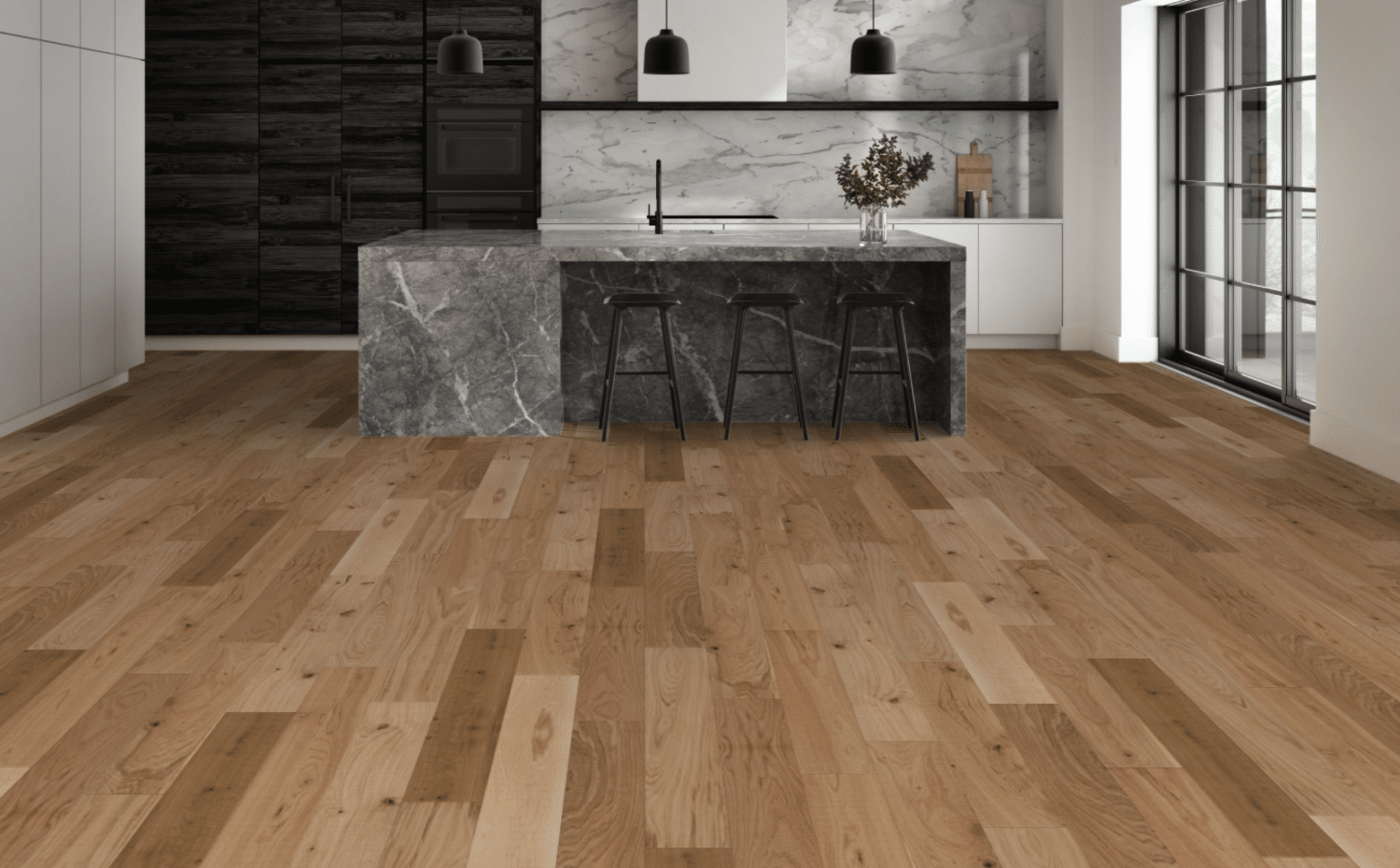
When it comes to maintenance, they’re easy to clean and if they do become damaged or severely scratched, they can be fairly easily refinished. However, humid or damp conditions can lead to warping over time. This is especially true if the floors are installed against concrete slabs, as humidity traveling through concrete can cause solid hardwood to distort.
The look and feel of real hardwoods do come at a price. They typically average in the $15-$20 per square foot range.
Price: $$$
Durability: Hickory is hardest; Walnut and Cherry are softest; Oak is in between
Engineered Hardwood Flooring
If you like the look of natural hardwoods, but need something a bit more budget-friendly, engineered hardwoods may be the kitchen flooring option that’s right for you.
Engineered hardwoods feature a real wood layer on top, then layers of plywood below. The plywood acts as a buffer from hot or cool temperature changes to protect the wood above from damage and warping. This makes them a better choice than hardwoods if installed against a concrete subfloor. They can be installed by nailing them down, by gluing down, or as floating floors.
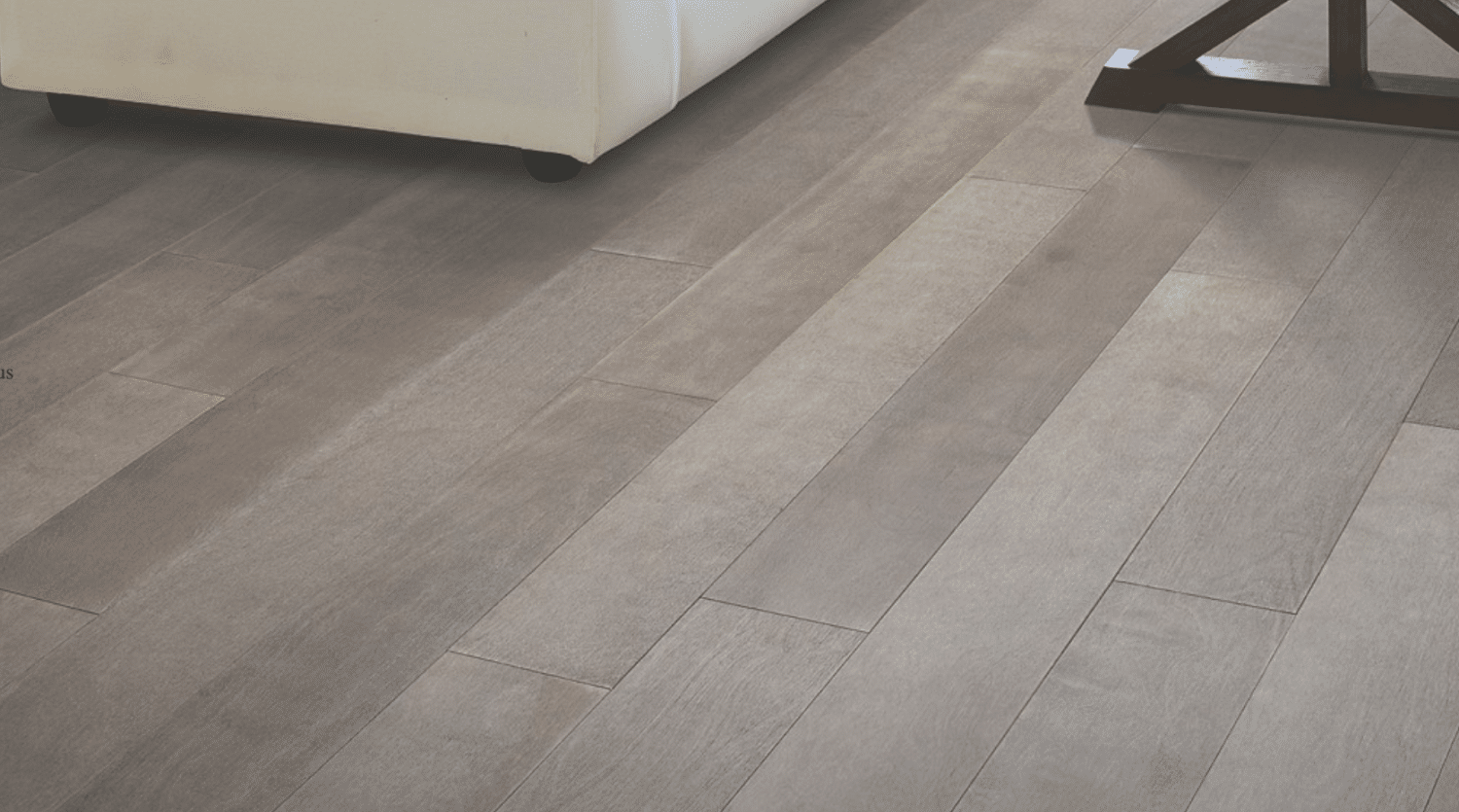
They’re less expensive than natural hardwoods, coming in on average at around $6-$10 per square foot. And they work great if you prefer larger plank widths. While they come in thicknesses as small as 3/8″, for best results, a thickness of at 1/2″ is recommended. They also come in a variety of colors.
While they are more durable than natural hardwood floors, they can be more difficult to repair; most types can be sanded and refinished only one time, as the top hardwood layer is relatively thin.
Price: $$
Durability: High

Laminate Flooring
Laminate is a popular choice for flooring that has the look of wood, but without the sometimes high price tag.
Laminate flooring consists of a base layer of fiberboard covered with another layer that is designed to appear like wood. A clear protective layer covers the upper layer, which helps prevent scratching and stains. The boards themselves usually don’t exceed a thickness of 1/2″ and are installed by locking edges that snap together; no nailing or glue required. This makes them an attractive choice for DIYers.
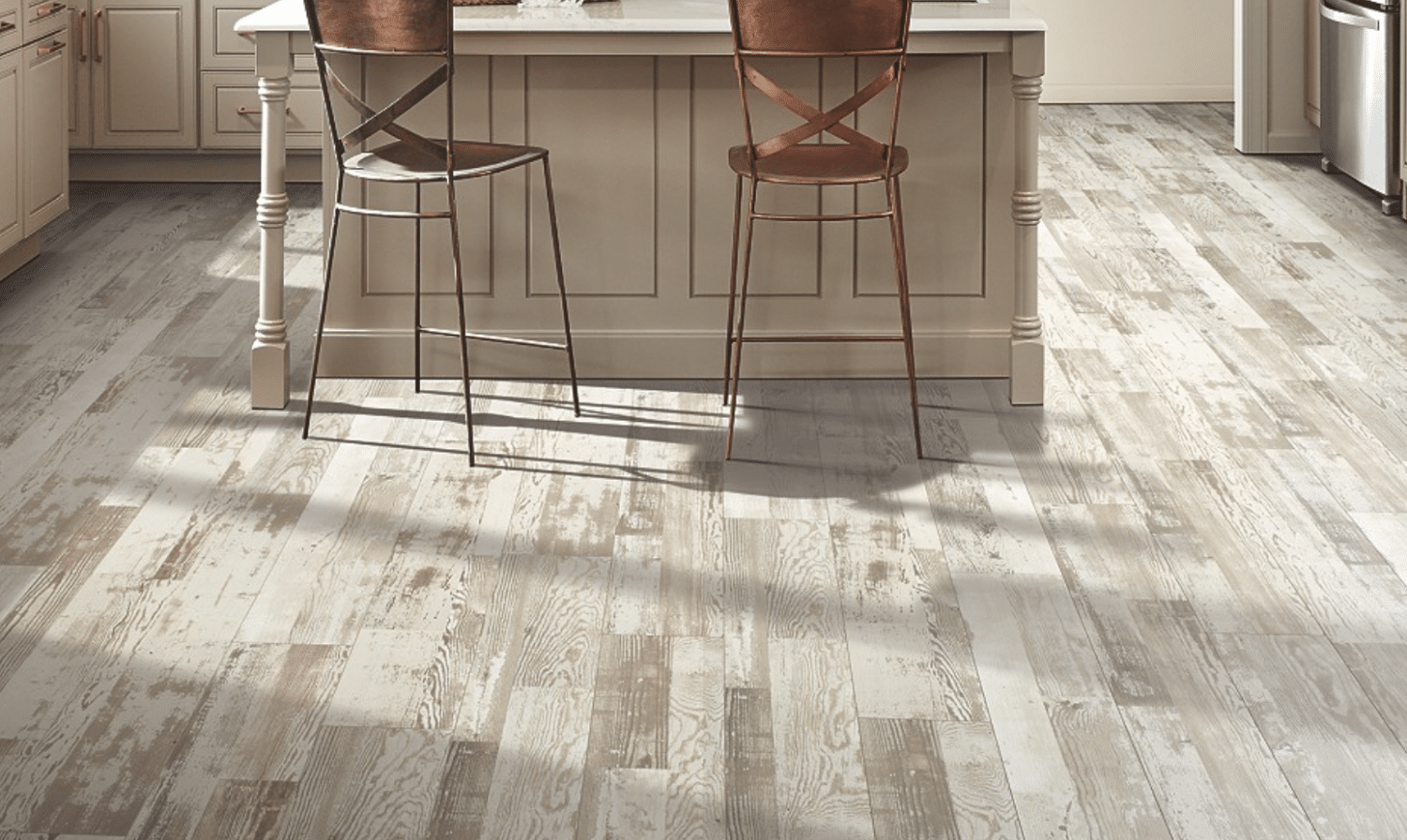
While they’re fairly durable and water-resistant, they can become gouged if heavy objects are dropped on them, and water can cause them to swell if it gets between the planks. As for longevity, they typically only last about ten years and cannot be refinished.
Laminate comes in a variety of style options and costs on average between $2-$4 per square foot.
Price: $
Durability: Medium
Luxury Vinyl Plank Flooring
Luxury vinyl plank, or LVP, is another hardwood alternative that won’t break the bank. It’s a synthetic product that’s much thicker than traditional rolled vinyl, making it semi rigid. The thick core layer is printed over with natural-looking finishes.
It comes in a range of style options to mimic different types of wood, from oak to maple to walnut — and also comes in styles that look like natural stone like marble or granite. It’s installed by snapping the vinyl planks together.
LVP is a popular choice these days due to its design flexibility. It can be made to closely match real wood grain and stone surfaces, and it even can include a distressed look with dings or scratches to appear more “worn-in.”
It’s among also among the most durable kitchen flooring options, with good water and stain resistance. That makes it a great option for heavy use and for households with pets. Learn more about the differences between vinyl plank and laminate flooring.
As for cost, it averages about $4 per square foot.
Price: $
Durability: High
Linoleum (Marmoleum) Flooring
Ok, I know what you may be thinking, but the linoleum of today is different from the drab colors or wacky patterns of yesteryear. With brighter tones and more contemporary styles, linoleum is making a comeback, and it may just be the right kitchen flooring option for you.
Linoleum is an eco-friendly product, made with linseed oil. One of the most popular manufacturers is Marmoleum, which stands for “marbelized linoleum.” It includes more than 100 color options and you can even create customized designs.
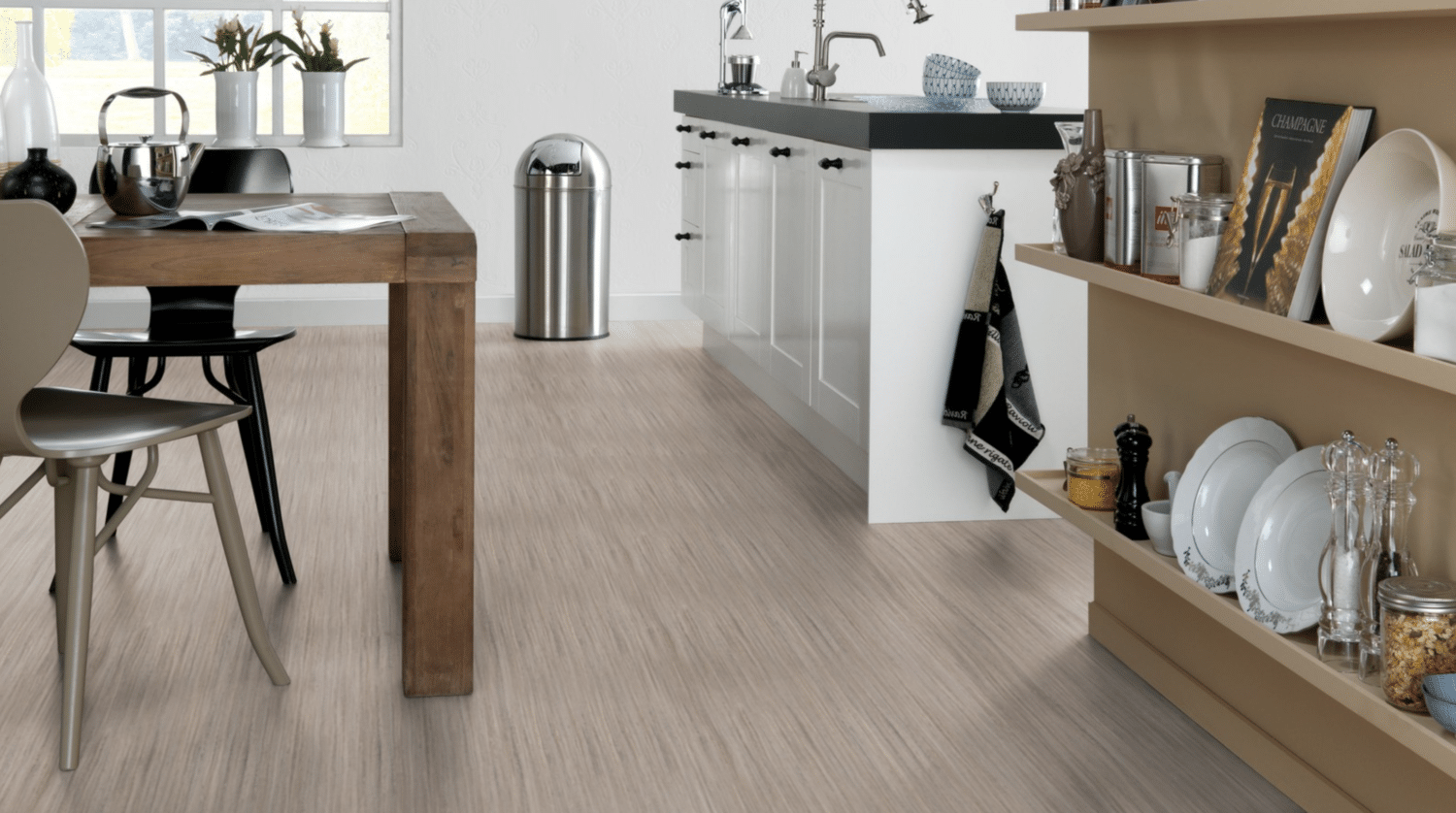
As for installation, it can be rolled out in sheets or laid down as planks, both using adhesives. Or you can use click-into-place tiles. When it comes to durability, Marmoleum can scratch fairly easily, so consider adding pads underneath chairs or tables that rest on it. It is also not fully waterproof, so liquids should be cleaned up as soon as possible.
Despite the wear issues it can last in excess of 25 years, but it’s also a bit pricier than some other materials. On average, Marmoleum will run you about $10 per square foot.
Price: $$
Durability: Low-to-medium
Cork Flooring
Another environmentally-friendly kitchen flooring option to consider is cork. It harvested from the cork oak tree and is a totally natural and easily replenishable material. Cork flooring is made with ground up, compressed pieces that are combined with resins and shaped into sheets.
While cork is a sustainable choice, it is not as durable as some other options. It can be susceptible to water damage, so spills should be cleaned up promptly to prevent staining. And it should be sealed regularly. It can also be damaged via scuffing, pets, or heavy furniture. However, you can refinish its surface when necessary by sanding it down and then applying a new finish sealer.
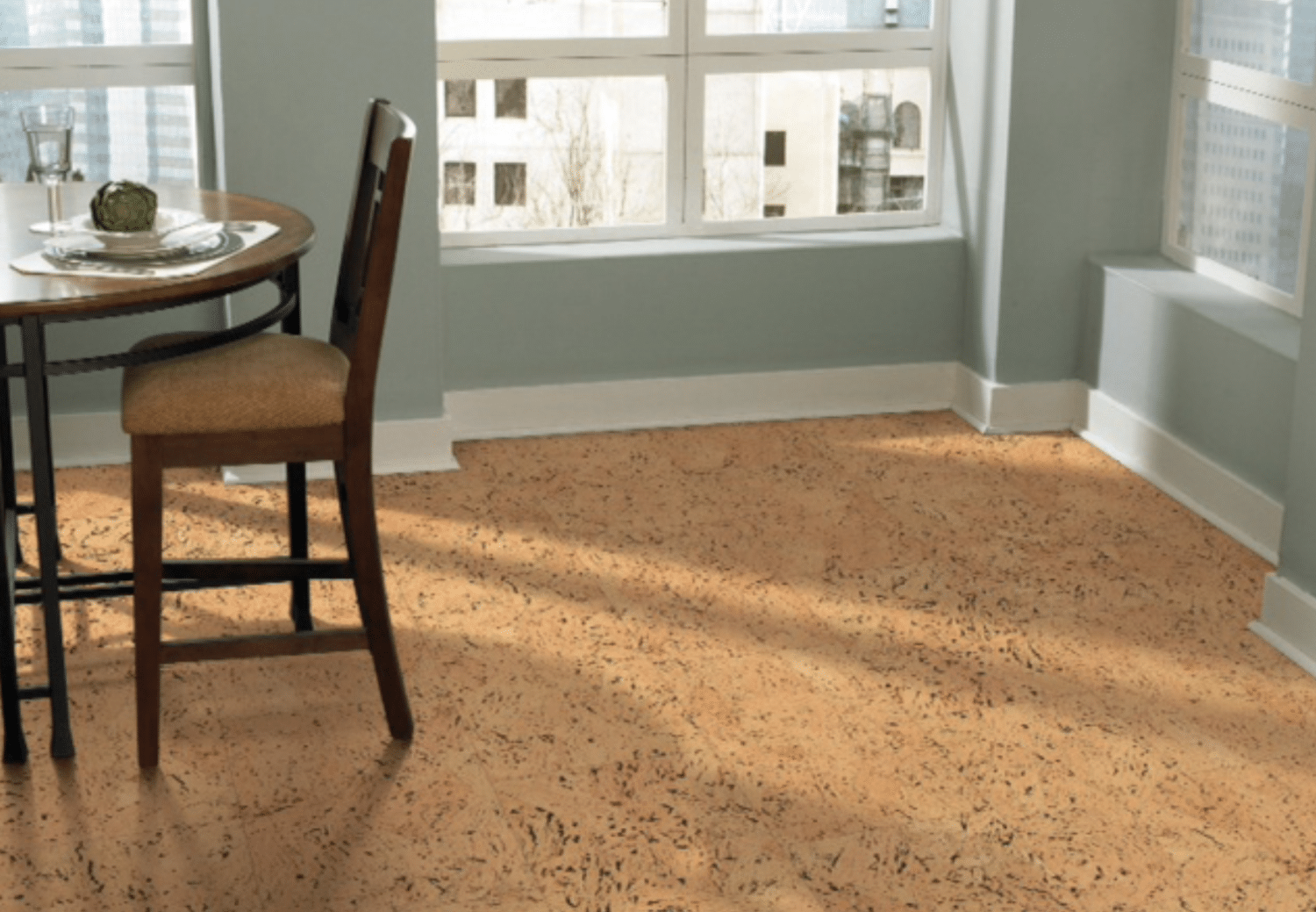
Traditional cork tiles that are installed by gluing them down. Newer laminated cork planks usually feature locking edges for a floating floor installation. Both are fairly easy jobs and good for DIYers.
In addition to being a green option, cork’s soft, bouncy feel not only helps insulate your floors and create warmth in your space, it also can help dampen sounds and it’s fairly easy to install. As for cost, it is a midrange kitchen flooring option, averaging about $8 per square foot.
Price: $$
Durability: Low-to-medium
Bamboo Flooring
If using a renewable resource is important to you, but you’re looking for something more durable than cork, you may consider bamboo. It’s made from the fibers of the bamboo grass plant, which regrows after harvesting. It’s greater durability over cork means that it is more resistant to scratches and dents, but heavy humidity exposure can cause it to crack.
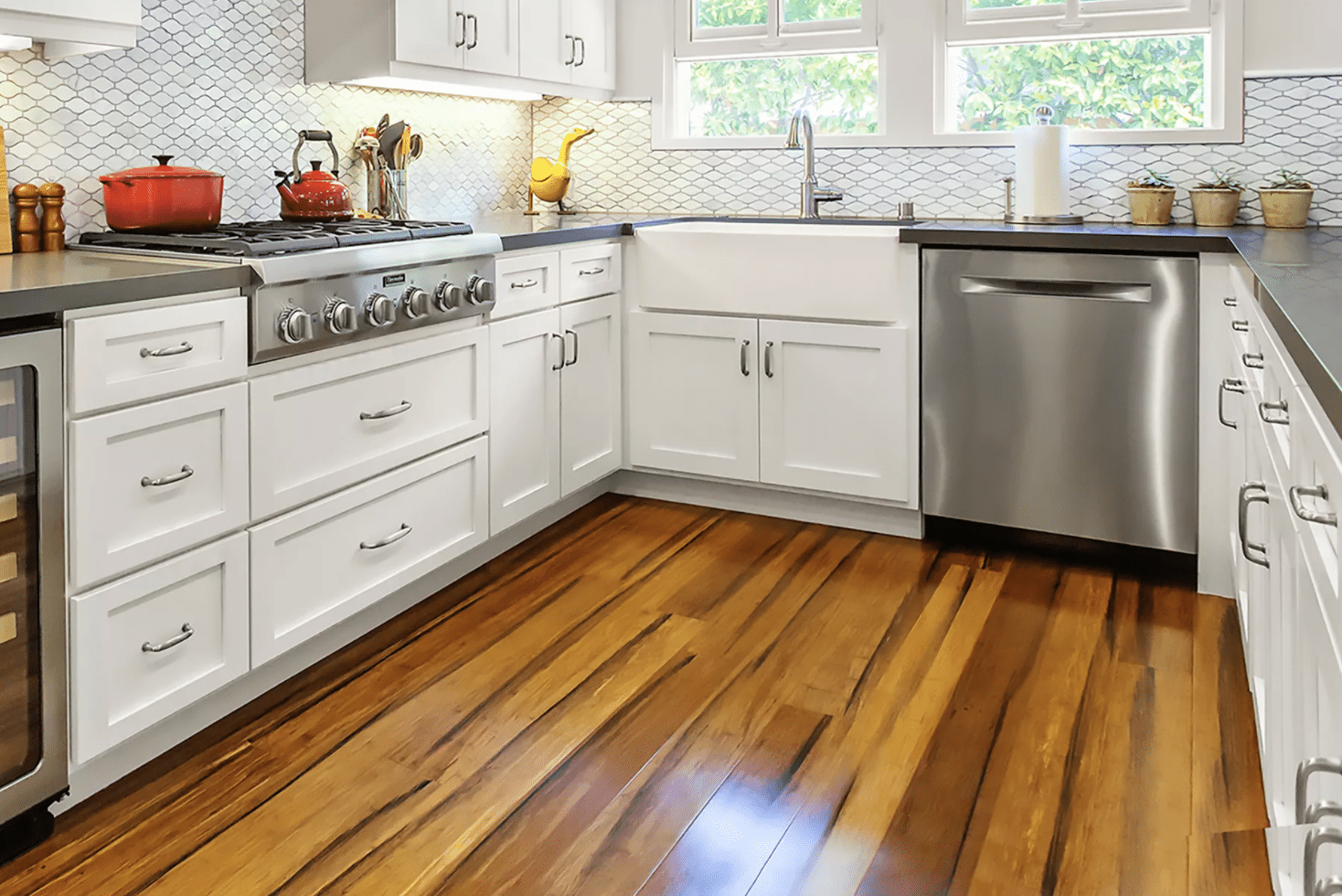
Bamboo flooring comes in 3 main varieties:
Stranded: Bamboo stalks are shredded into small strands, compressed into sheets, then cut into planks. It can be installed as nailed down tongue-and-groove planks or as a floating floor. It’s available in several color options.
Horizontal: Thin strips of bamboo strands are glued together to form planks, creating a visible “grain” in the flooring. It’s less durable than stranded bamboo, but it can be more visually appealing.
Engineered: A thin layer of bamboo is bonded onto a plywood or MDF core. It’s comparable to an engineered hardwood and is the least expensive option. But it’s also the least durable and cannot be refinished.
But what you can gain in strength over cork you may lose in comfort. Bamboo doesn’t have the soft underfoot feel, warmth, or sound insulation that comes with cork. Average cost: $6 per square foot.
Price: $
Durability: Medium
Our Top Pick for Kitchen Floors
Our top pick for kitchen flooring at Lamont Bros. Design & Construction is hardwood and engineered hardwood.
Here is why. There is a reason hardwood floors have been a staple in homes for centuries. No other material brings the same warmth, character, and timeless appeal that real wood does, and the kitchen is one of the best places to showcase it. Wood floors have a way of tying the entire space together, complementing cabinetry, countertops, and fixtures in a way that synthetic materials simply cannot replicate. When clients walk into a kitchen with beautiful hardwood floors, the response is immediate and consistent — it just feels different.
For kitchens with a concrete subfloor, or for homeowners who want a bit more flexibility in installation and a slightly lower price point, engineered hardwood is an exceptional choice. The construction of engineered hardwood, with a real wood veneer over a plywood core, makes it more dimensionally stable than solid hardwood and better equipped to handle the temperature and humidity fluctuations that kitchens are prone to. You still get the look and feel of genuine wood without the vulnerability to warping that comes with solid hardwood in high-moisture environments.
From a long-term value standpoint, hardwood floors consistently rank among the home features that resonate most with buyers at resale. They are one of the few flooring investments that can actually appreciate the value of your home rather than simply maintain it. And unlike LVP or laminate, solid hardwood can be sanded and refinished multiple times over its lifetime, meaning a well-maintained hardwood floor can last generations.
That said, we recognize that hardwood is not the right fit for every kitchen or every lifestyle. For households with young children, large pets, or a high likelihood of standing water, LVP or porcelain tile may be more practical. But for homeowners who want a kitchen that feels genuinely elevated and holds its value over time, hardwood and engineered hardwood are where beauty, durability, and long-term investment converge.
FAQ's: Kitchen Flooring Options
Here are some of our most frequently asked questions from homeowners when deciding what flooring to use for their home:
What is the current trend in kitchen flooring?
Kitchen flooring in 2026 has made a clear departure from the cold, gray, minimalist aesthetic that dominated the last decade. Homeowners are gravitating toward warmer materials, richer textures, and more characterful finishes. Wide-plank hardwood and large-format tile continue to be among the most popular choices, valued for the open, seamless look they create with fewer grout lines and more visual breathing room. Pattern is also having a moment — herringbone and chevron layouts are showing up in both wood and tile, and checkerboard floors in marble or travertine are making a genuine comeback after years out of fashion. On the material side, there is growing interest in sustainable options like cork, bamboo, and reclaimed wood, which bring a natural, lived-in warmth that pairs well with the earthy tones and organic textures showing up across kitchen design more broadly.
What is the best flooring to put down in a kitchen?
The best kitchen flooring depends on what you are prioritizing, but a few materials consistently perform well across the categories that matter most in a kitchen: water resistance, durability, ease of cleaning, and comfort underfoot. Porcelain and ceramic tile are hard to beat for longevity and waterproof performance — properly installed, they can last the lifetime of the home. Luxury vinyl plank has become one of the most popular choices for good reason: it is fully waterproof, softer underfoot than tile, more affordable, and available in styles that convincingly mimic wood and stone. For homeowners who want real wood character, engineered hardwood with a water-resistant core is a practical option, though solid hardwood is generally not a good fit for kitchens given its susceptibility to moisture and warping over time.
Which floor is good for arthritis?
Hard, unforgiving surfaces like porcelain tile, natural stone, and concrete are the most difficult to stand on for long periods when you have arthritis or joint pain. They offer no shock absorption, which means the impact of every step travels straight up through the joints. Cork is widely regarded as one of the best flooring options for people with arthritis because it has a natural springiness that cushions each step and reduces joint stress over time. Luxury vinyl plank with a quality underlayment is another strong option — it has more give than tile while still being waterproof and practical for a kitchen environment. If you already have hard flooring installed and are not ready to replace it, a thick anti-fatigue mat in front of the sink and stove can make a meaningful difference for anyone who spends a lot of time on their feet while cooking.
What kind of flooring is safest for seniors?
For seniors, the two most important flooring considerations are slip resistance and what happens when a fall does occur. Rubber flooring checks both boxes better than any other material — it grips reliably even when wet and provides enough cushioning to reduce the severity of a fall. Luxury vinyl with a textured or matte finish is a close second: it offers good traction, is completely waterproof, and is easy to maintain. Smooth, high-gloss tile is one of the more hazardous options in a kitchen, particularly when wet. One of the most important things to avoid regardless of flooring material is loose area rugs, which are a leading cause of trips and falls for older adults. If rugs are used, they should be secured with non-slip backing and kept flat at the edges.
Choose Lamont Bros. Design & Construction For Your Next Kitchen Remodeling Services
A great kitchen starts long before a single plank of flooring goes down. It starts with thoughtful design, careful planning, and a team that knows how to bring all the pieces together. At Lamont Bros. Design & Construction, we guide homeowners through every stage of the kitchen remodeling process, from the first design conversation to the final walkthrough. If you are thinking about remodeling your kitchen and want to work with a team that takes the details seriously, we are here to help.
Are you thinking about doing a kitchen remodel and aren’t sure where to start? We’re happy to discuss your project. Simply schedule a conversation with us.
-1.jpg)