Key Points
- Knob and tube (K&T) wiring was installed in most American homes between the 1880s and the 1940s, so a Portland house built before about 1950 may still have some.
- It is not automatically a hazard, but age, DIY modifications, and insulation packed around the wires make it a real fire risk and a major insurance problem.
- Most standard insurers will not cover a home with active K&T wiring, which makes replacement a financial decision as much as a safety one.
- Replacement typically runs roughly $8 to $20 per square foot, or $12,000 to $36,600 for most homes. A remodel is the best time to do it because the walls are already open.
- In Portland, new wiring requires an electrical permit and inspections before walls are closed.
What is knob and tube wiring, and is it dangerous?
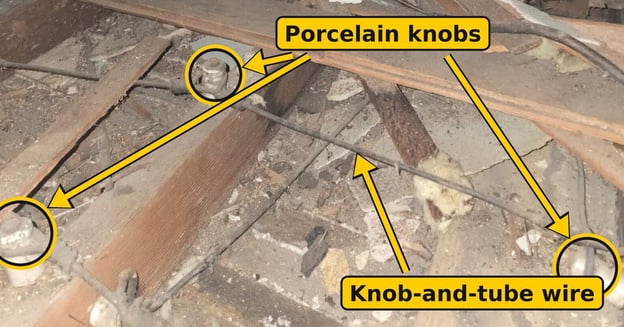
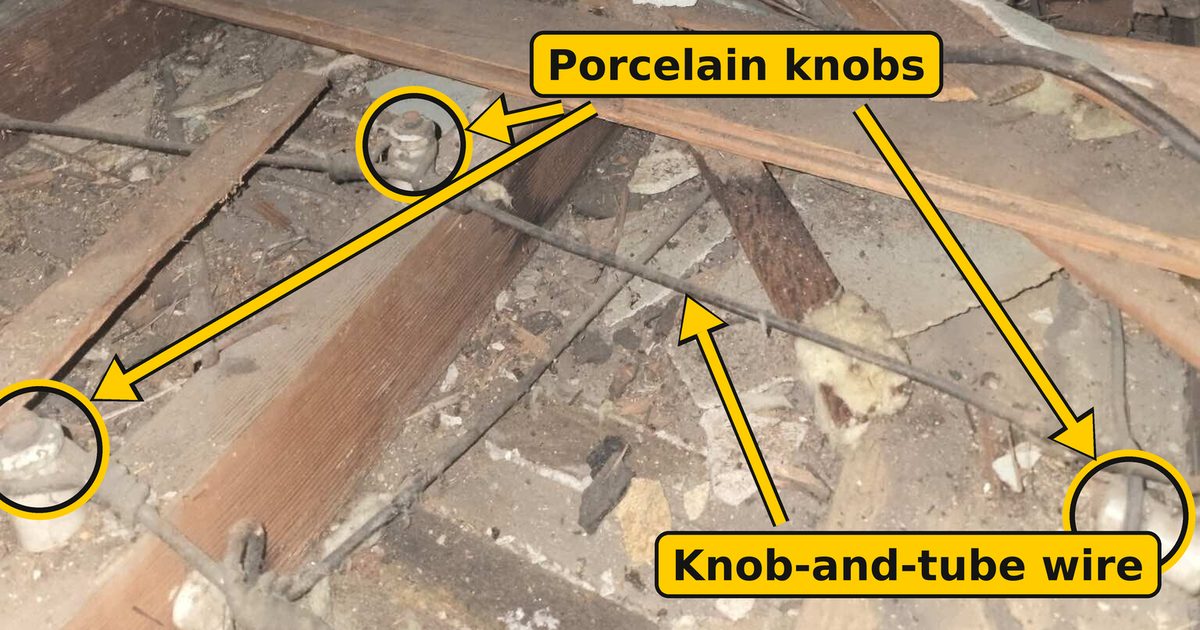
Knob and tube wiring is an early electrical system in which single insulated copper wires run through the framing, held off the wood by porcelain knobs and threaded through drilled holes in porcelain tubes. Most of it was installed between the 1880s and the 1940s, and it was designed for the electrical loads of that era, typically a 60-amp service (Angi, 2026).
Whether it is dangerous depends on its condition. Intact K&T that has been inspected and left undisturbed can be sound, which is why it is not automatically a hazard. The trouble comes from what happened to the system over the decades:
- Insulation around the wires. The wiring was designed to shed heat into open air. Attic and wall insulation packed against old conductors traps that heat.
- Worn and brittle sheathing. The cloth or rubber coating can crack and fall away, leaving bare wire inside walls.
- Splices and added outlets. Decades of extensions, taped splices, and oversized fuses can turn a safe original system into an unsafe one.
- No ground wire. Stray electricity has no safe path out, and the system cannot properly serve modern three-prong appliances.
How can you tell if your house has knob and tube wiring?
Start with the age of the house. Homes built before about 1950 are the likeliest candidates. Then look where framing is visible:
- Attic, basement, and crawlspace: look for single wires running on white or brown porcelain knobs, and porcelain tubes where wires pass through joists.
- Two-prong outlets only or ungrounded outlets throughout.
- Cloth-covered wire where it enters switches, fixtures, or old metal boxes.
- Cracked or crumbling wire coating, sometimes with bare copper showing.
- A fuse box or a small 60-amp panel, which is typical of older systems.
- Frequently tripping breakers.
You can often see only part of the system. Wiring inside finished walls may be a mix of K&T and newer cable, which is why a licensed electrician's written inspection is the reliable way to know. A useful report notes which circuits are still live, where the wiring has been spliced or extended, whether it is buried in insulation, and the condition of the panel.
Does knob and tube wiring affect homeowners insurance?
Yes, and for many owners it is the deciding factor. Most standard insurers will not write a policy on a home with active K&T wiring. The specialty carriers that will can charge 50 to 100 percent more, and some major carriers will insure the home only if the wiring is removed within a set window, often 30 days (Insure.com, 2026). Replacing it is usually the way back to a standard policy at a standard price.
Because underwriting rules vary by carrier, ask your agent before you list, buy, or remodel, and find out what documentation they want once the wiring has been replaced. That is also why an electrician's written report is worth getting early.
How much does it cost to replace knob and tube wiring?
National cost guides put replacement at about $8 to $20 per square foot, with totals of roughly $12,000 to $36,600 for most homes (Angi, HomeGuide). Cost scales with home size and with how hard the framing is to access.
| Home size | Typical national range |
|---|---|
| 1,000 sq ft | $10,000 to $20,000 |
| 1,600 sq ft | $16,000 to $32,000 |
| 2,000 sq ft | $20,000 to $40,000 |
| 2,500 sq ft | $25,000 to $50,000 |
| 3,000 sq ft | $30,000 to $60,000 |
Table figures are from Angi (2026). Expect add-ons on top: a panel upgrade, permits and inspections, and repair of any walls that have to be opened. Wall repair is where costs swing most, and it is largely avoided when walls are already open for a remodel. Treat these as national starting points, not a Portland quote.
Planning a remodel in an older home? Download the Six Step Remodeling Guide and run the Whole Home Cost Calculator to see where wiring, plumbing, and structural updates fit in your budget.
Do you have to replace knob and tube wiring?
Not always on its own, but in practice replacement becomes the sensible or required path in four situations:
- Insulation has been or will be installed over it.
- A buyer's inspection or your insurer flags it.
- You are adding circuits, outlets, or load (kitchens, EV charging, heat pumps).
- Walls, ceilings, or floors are being opened for a remodel.
What happens to knob and tube wiring during a remodel?
When a remodel opens walls, ceilings, or floors, K&T is usually replaced in the affected areas, because you cannot connect new circuits to it, bury it in new insulation, or close it up behind new drywall without creating the exact conditions that make it hazardous. Inspectors also have no reason to approve closing walls over wiring that fails current requirements.
On a design-build project, this is planned for rather than discovered. Lamont Bros. identifies likely K&T during the home visit and design phase so rewiring is in the scope, the fixed-price contract, and the schedule before demolition starts. That matters because the alternative, finding it mid-demo, produces change orders and delays. It also lets the electrical plan be designed once for how you will use the home, including panel capacity, circuits for a new kitchen or primary bath, and lighting.
What does the permit process look like in Portland?
In Portland, adding outlets or fixtures, replacing a service panel, or running new wiring all require an electrical permit, even when a building permit is not needed. The rough-in inspection must pass before the work is covered by insulation or finishes, and every permit needs a final inspection to close (City of Portland Permitting & Development, n.d.). Homeowners may do their own electrical work only if they own and live in the home, and not on rental property or an ADU. Lamont Bros. participates in Portland's FIR permit program, which helps keep residential permitting moving.
Why older Portland homes need extra attention
Portland's craftsman bungalows, foursquares, and mid-century homes were often built in the K&T era, then updated room by room over decades. The result can be a patchwork: new circuits in the kitchen, original K&T upstairs, and insulation added later. Wet climate and attic or basement retrofits add to the mix. If you own a historic home, see our guide to common challenges of remodeling historic homes in Portland.
Conclusion
Knob and tube wiring is a manageable problem when it is planned for, and an expensive surprise when it is not. Lamont Bros. works with Portland-area homeowners, often busy professionals and families in older homes, who want one accountable design-build team to handle design, permits, electrical, and construction under a single fixed-price contract, so hidden conditions like old wiring are scoped up front. If your home was built before 1950 and a remodel is on your list, start with a consultation.

Frequently Asked Questions
Is knob and tube wiring a fire hazard?
It can be. The risk rises sharply when the wiring is covered by insulation, has been spliced or extended, or has deteriorated insulation. Lamont Bros. recommends having an electrician evaluate any home built before 1950 before major work.
Can you get homeowners insurance with knob and tube wiring?
Often only through specialty carriers at a higher price, since most standard insurers decline active K&T. Ask your agent before you buy or remodel, and ask what documentation is needed once the wiring has been replaced.
How much does a whole house rewire cost?
National guides put knob and tube replacement at about $8 to $20 per square foot, or $12,000 to $36,600 for most homes. Lamont Bros. includes rewiring in the fixed-price scope when a remodel requires it, based on what the design team finds at the home visit.
Can knob and tube wiring be left in place during a remodel?
Only in areas the project does not touch, and only where it is intact and uncovered. Lamont Bros. replaces it in any wall, ceiling, or floor that is opened, and plans for it in the design phase.
Does Lamont Bros. rewire homes as a standalone job?
No. Lamont Bros. is a design-build firm and takes on rewiring as part of a larger project such as a whole-home remodel, kitchen, bathroom, or addition.
Do I need a permit to replace knob and tube wiring in Portland?
Yes. Running new wiring requires an electrical permit and inspections. Lamont Bros. handles permitting as part of its process.
Is it safe to remodel a kitchen or bathroom with knob and tube wiring still in the walls?
No. Kitchens and bathrooms carry heavy and wet loads that K&T was never designed for, so Lamont Bros. replaces it in any kitchen or bathroom it remodels.