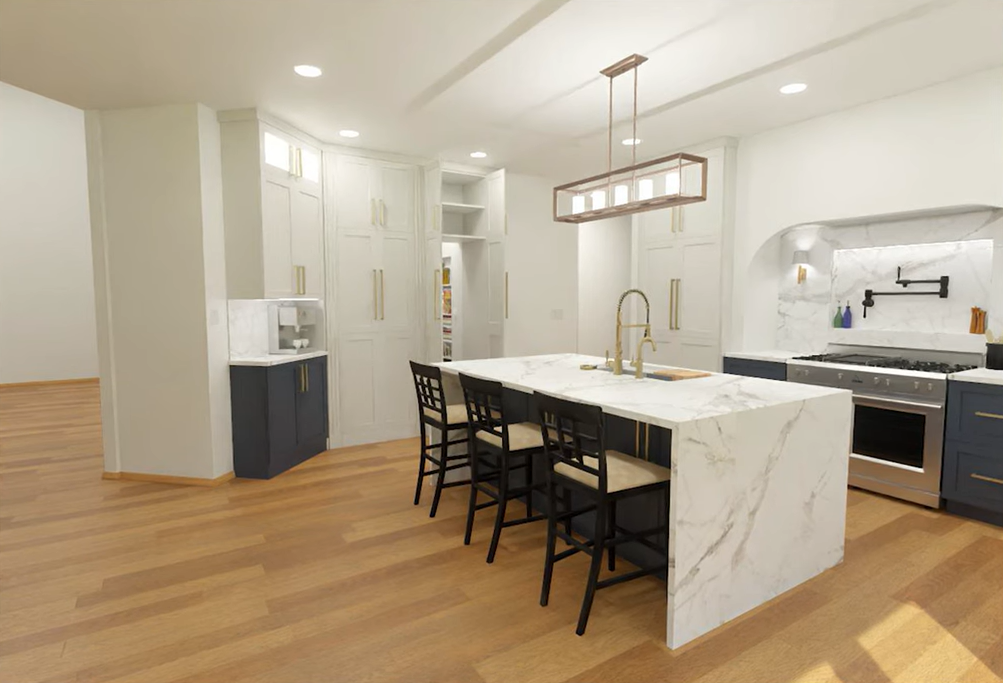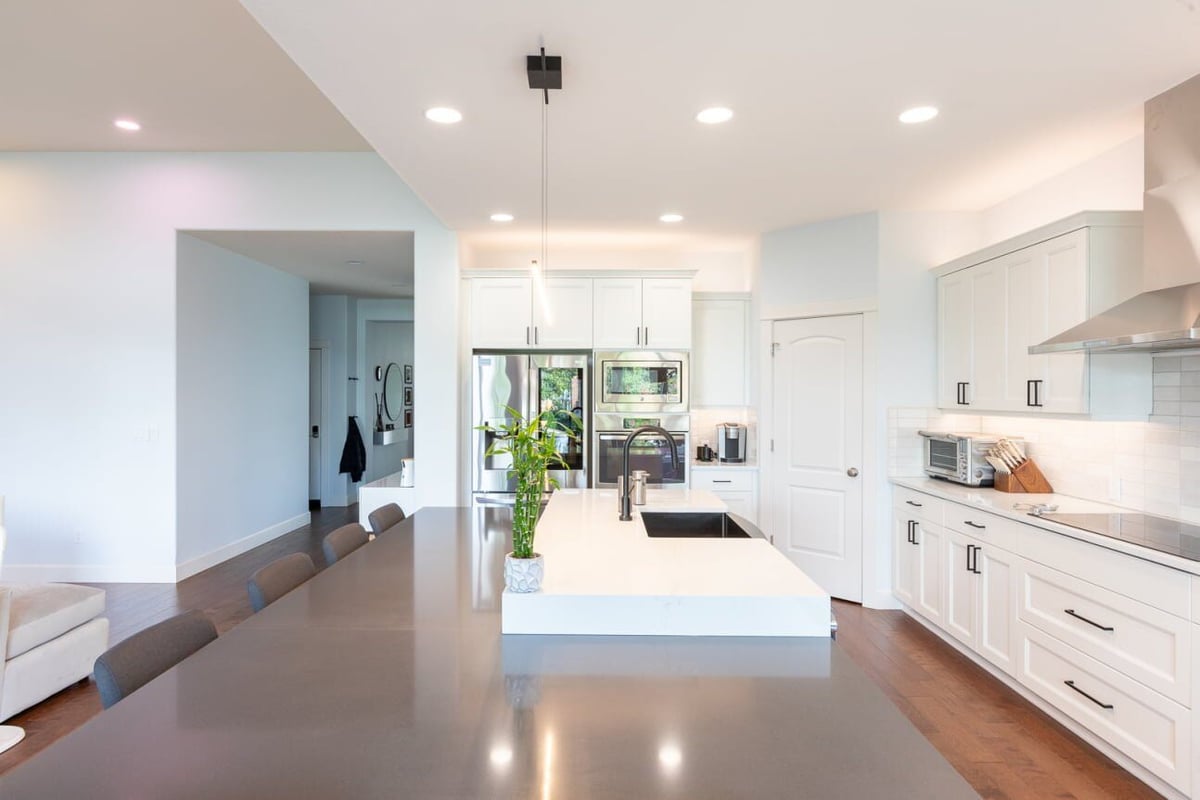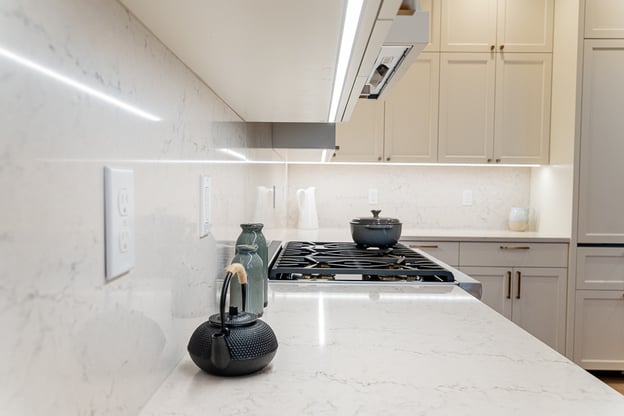
Quartz is usually the more practical countertop for a busy household. It resists stains, requires no sealing, and offers consistent colors and patterns. Marble provides natural veining and visual depth that engineered materials cannot fully reproduce, but it can stain, scratch, and etch from ordinary use.
Neither material is right for every room or homeowner. The better choice depends on where the countertop will be installed, how heavily it will be used, and whether you are comfortable with the wear that natural marble develops over time.

What Are Quartz Countertops?
Quartz countertops are engineered surfaces made from ground quartz combined with resins, binders, and pigments. The material is pressed into dense slabs that can be fabricated for kitchens, bathroom vanities, laundry rooms, bars, and other surfaces.
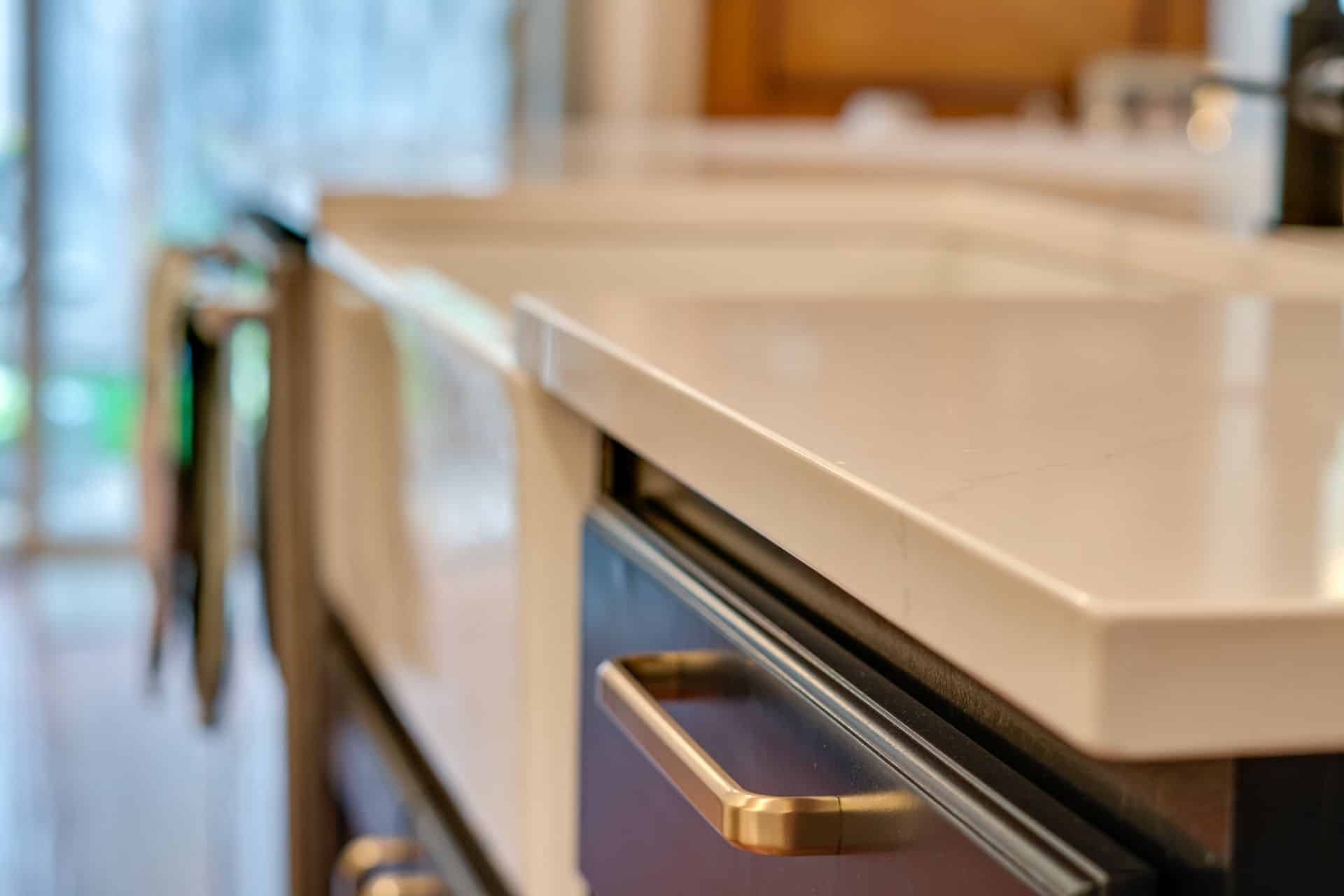
The resin fills the spaces between the mineral particles, creating a nonporous surface. This allows quartz to resist moisture and most household stains without a separate stone sealer.
Because quartz is manufactured, its color and pattern are more predictable than natural stone. Manufacturers can produce solid colors, subtle patterns, dramatic veining, and surfaces that resemble marble, granite, or concrete.
That consistency is useful when a project requires several slabs or when the countertop pattern needs to align across an island, backsplash, or waterfall edge.
For a closer look at its composition and limitations, read what quartz countertops are made from.
What Are Marble Countertops?
Marble is a natural stone formed when limestone is changed by heat and pressure. Minerals within the stone create the colors, movement, and veining visible in each slab.
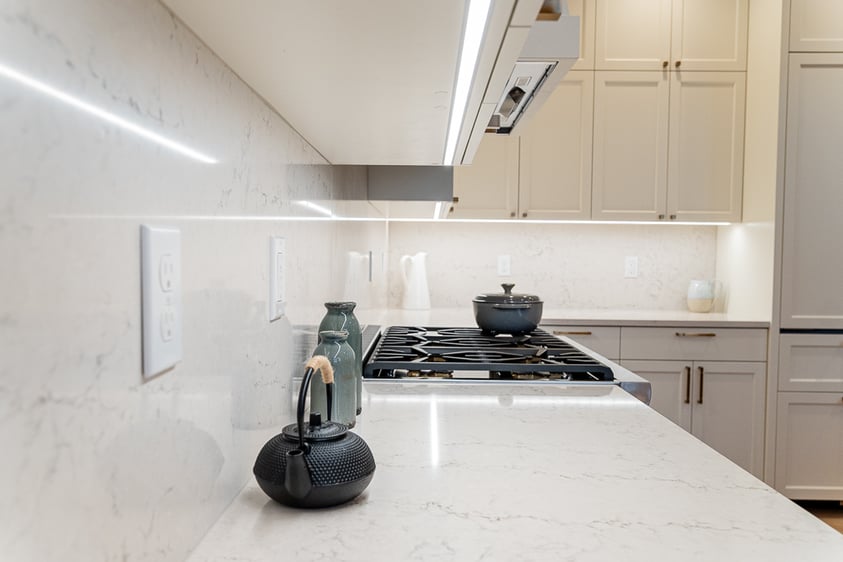
No two marble slabs are identical. Even slabs cut from the same block can contain meaningful differences in color and pattern. That variation gives marble a depth and individuality that manufactured surfaces do not completely reproduce.
The same natural composition also creates marble’s main disadvantages. Marble is softer and more porous than quartz. It can absorb liquids, scratch under regular use, and react with acidic substances.
Some homeowners see the resulting wear as part of the stone’s character. Others expect the countertop to keep its original polished appearance. That difference in expectation should be settled before the material is selected.
Quartz vs. Marble Appearance
Marble offers natural movement, translucency, and variation. Its veining may be quiet and cloudy or bold and highly directional. Because the pattern was formed naturally, it does not repeat at predictable intervals.
Quartz offers greater control. Designers can select from consistent colors and patterns, making it easier to coordinate the countertop with cabinetry, flooring, tile, and adjoining rooms.
Modern marble-look quartz can come close to the appearance of Carrara or Calacatta marble. It can provide a light background and dramatic veining without marble’s sealing and etching concerns. The tradeoff is that printed or manufactured veining may appear more uniform and less dimensional than real stone.
View both options as full slabs before making a decision. A small sample may not show the scale, movement, or pattern repetition that will be visible across a large island.
Which Is More Durable?
Quartz generally handles daily wear better than marble. It is highly resistant to scratching, staining, and moisture under normal household use. It can still chip along exposed edges or crack after a heavy impact, so it should not be treated as indestructible.
Marble is softer and more likely to develop scratches, chips, and dull areas. Heavy cookware, sharp objects, and abrasive cleaners can damage the finish.
Marble can sometimes be professionally honed or polished when wear becomes significant. Quartz repairs are possible, but matching the original color and pattern can be difficult.
For a closer comparison of heat, scratches, stains, and impact, see how durable quartz countertops are.
Staining and Etching
Staining and etching are different problems.
A stain occurs when a substance absorbs into the countertop and leaves discoloration. Marble’s porous surface makes it more susceptible to stains from wine, coffee, oil, cosmetics, and other liquids. Sealing can reduce absorption, but it does not make marble completely stain-proof.
Etching occurs when acid reacts with the calcium carbonate in marble. Lemon juice, vinegar, wine, tomato sauce, and some cleaning products can leave dull or lighter marks on the surface. An etch mark is a physical change to the finish, not residue that can be removed with ordinary cleaning.
Quartz does not etch in the same way because it is not made from calcium carbonate. Its nonporous surface also provides much stronger stain resistance. However, prolonged spills, harsh chemicals, solvents, and highly pigmented substances can still discolor or damage some quartz products.
Follow the care instructions supplied by the countertop manufacturer or fabricator for either material.
Which Handles Heat Better?
Marble handles heat better than quartz because it does not contain resin. Even so, placing hot cookware directly on marble can cause thermal stress, discoloration, or damage to the finish.
Quartz is more sensitive to high heat. A hot pan can scorch or discolor the resin, and a sudden temperature change can contribute to cracking.
Use a trivet or heat pad with both materials. Marble’s stronger heat resistance should be treated as an advantage, not permission to place hot cookware directly on the countertop.
Maintenance and Cleaning
Quartz requires relatively little routine care. Mild dish soap, water, and a soft cloth are appropriate for most daily cleaning. It does not need to be sealed.
Avoid abrasive pads, strong solvents, bleach-heavy cleaners, and products that the manufacturer does not approve. Spills should still be wiped up rather than left on the surface.
Marble needs a stone-safe, pH-neutral cleaner. Acidic and abrasive cleaning products can damage the finish. Spills should be cleaned promptly, particularly when they involve wine, citrus, coffee, oil, or cosmetics.
Many marble countertops benefit from a penetrating sealer, but the proper product and schedule depend on the stone, finish, original treatment, and level of use. A fabricator can recommend the appropriate care plan. Lamont Bros. also provides instructions for testing and sealing marble countertops.
Quartz vs. Marble Countertop Cost
Neither material is automatically less expensive.
Quartz pricing varies according to the manufacturer, pattern, slab thickness, edge profile, cutouts, seams, and installation requirements. Highly detailed marble-look quartz can cost as much as some natural stone.
Marble pricing depends heavily on the variety and availability of the slab. Common marble may overlap with quartz pricing, while rare or heavily veined slabs can cost considerably more.
Fabrication can be as important as the slab price. A waterfall edge, mitered profile, large island, difficult seam, bookmatched pattern, or complicated sink cutout can increase the installed cost of either material.
Lamont Bros.’ article on quartz countertop pricing explains how slab quality, fabrication, edging, and installation affect the final number.
Which Is Better for a Kitchen?
Quartz is usually the better fit for a heavily used kitchen. It handles coffee, oil, wine, citrus, and daily cleanup with less risk and less maintenance.
This makes it well suited to households with children, frequent cooking, regular entertaining, or homeowners who want the countertop to retain a consistent appearance.
Marble can still be used successfully in a kitchen. It is a strong design choice for homeowners who value natural stone and accept that scratches, etching, and patina will become part of the surface.
Marble is also valued by bakers because it remains cool during pastry preparation. Some kitchens use marble only in a dedicated baking area while installing a lower-maintenance material around the sink and range.
Countertops are only one part of a complete kitchen. Lamont Bros.’ kitchen remodeling services coordinate surface selections with cabinetry, lighting, storage, appliances, and the way the room is used.
Which Is Better for a Bathroom?
Both materials can work well for bathroom vanities.
Quartz provides strong moisture and stain resistance without sealing. It is a practical choice for shared bathrooms, children’s bathrooms, and vanities exposed to cosmetics, hair products, and frequent cleaning.
Marble can be easier to manage in a bathroom than in a kitchen because it is not exposed to cooking oils, wine, or acidic food throughout the day. It can still stain or etch from cosmetics, cleaners, and personal-care products, so maintenance remains part of the decision.
A marble vanity can bring natural movement to a smaller room without requiring the amount of stone needed for a large kitchen. It may also coordinate with marble tile used on floors, shower walls, or decorative details.
Lamont Bros.’ bathroom remodeling services include vanity, countertop, tile, fixture, lighting, and layout selections as part of the complete design.
What About Laundry Rooms, Bars, and Pantries?
Quartz is usually the safer choice in laundry rooms and bars. Detergent, cleaning products, wine, mixers, coffee, and standing water can all affect a porous natural stone.
Marble may be appropriate in a pantry, beverage station, or lower-use room where appearance carries more weight than daily performance. The decision still depends on what will be stored, prepared, or spilled on the surface.
A countertop should be selected for the work it will perform, not only for how it appears in a showroom.
Quartz Is Not the Same as Quartzite
Quartz and quartzite are different materials.
Quartz countertops are manufactured from ground minerals, resins, and pigments. Quartzite is a natural stone cut into slabs.
Quartzite generally offers greater heat resistance and natural variation, but it may require sealing. Quartz provides more consistent patterns and lower routine maintenance.
The similar names cause frequent confusion, particularly when a quartz design is made to resemble quartzite or marble. Confirm the exact material and manufacturer before approving a slab.
For comparisons with additional surfaces, see Lamont Bros.’ article on the pros and cons of common countertop materials.
Quartz Countertops in Lamont Bros. Projects
Lighter, Simpler Kitchen
The owners of a 1935 Oregon City home wanted to brighten their kitchen while retaining enough contrast to keep the room from feeling flat.
Lamont Bros. selected Silestone quartz in Charcoal Soapstone for the countertops. The dark surface creates contrast against the lighter cabinetry and backsplash while providing the stain resistance and low maintenance expected from quartz.
See the completed Lighter, Simpler Kitchen.
Historic 1925 Kitchen
A second Oregon City project used polished Cambria Brittanicca Gold quartz with an ogee edge. Its warm veining provides some of the movement associated with marble while retaining quartz’s easier maintenance.
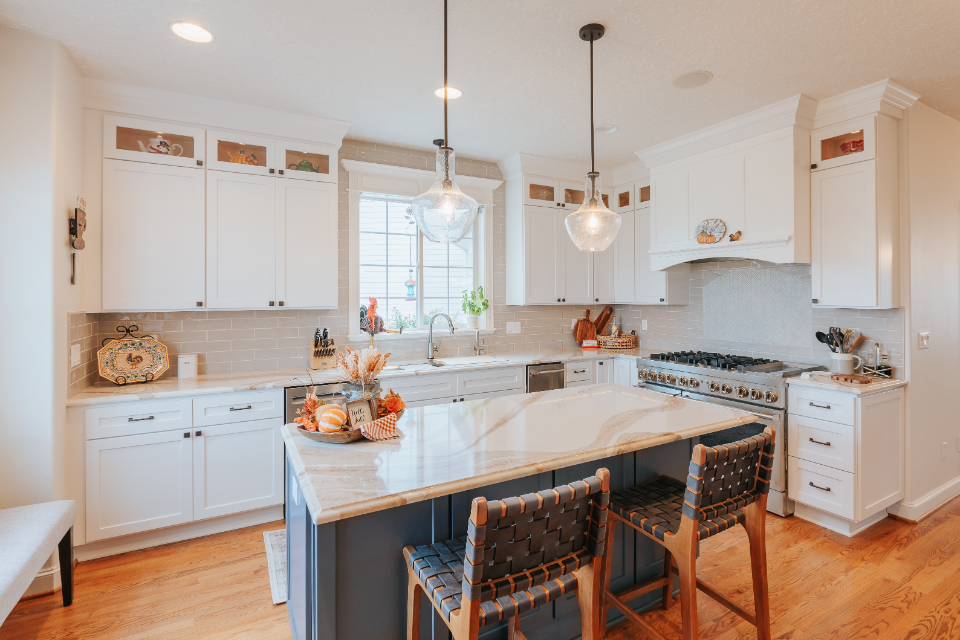
The quartz works with two-tone cabinetry, vintage-inspired details, and the original character of the 1925 home. It is a good example of using an engineered surface without making the kitchen feel generic.
View the Historic 1925 Kitchen remodel.
Natural Marble Used With Quartz
In the Southwest Portland Flood Restoration, Lamont Bros. used quartz countertops alongside genuine marble flooring in wet areas.
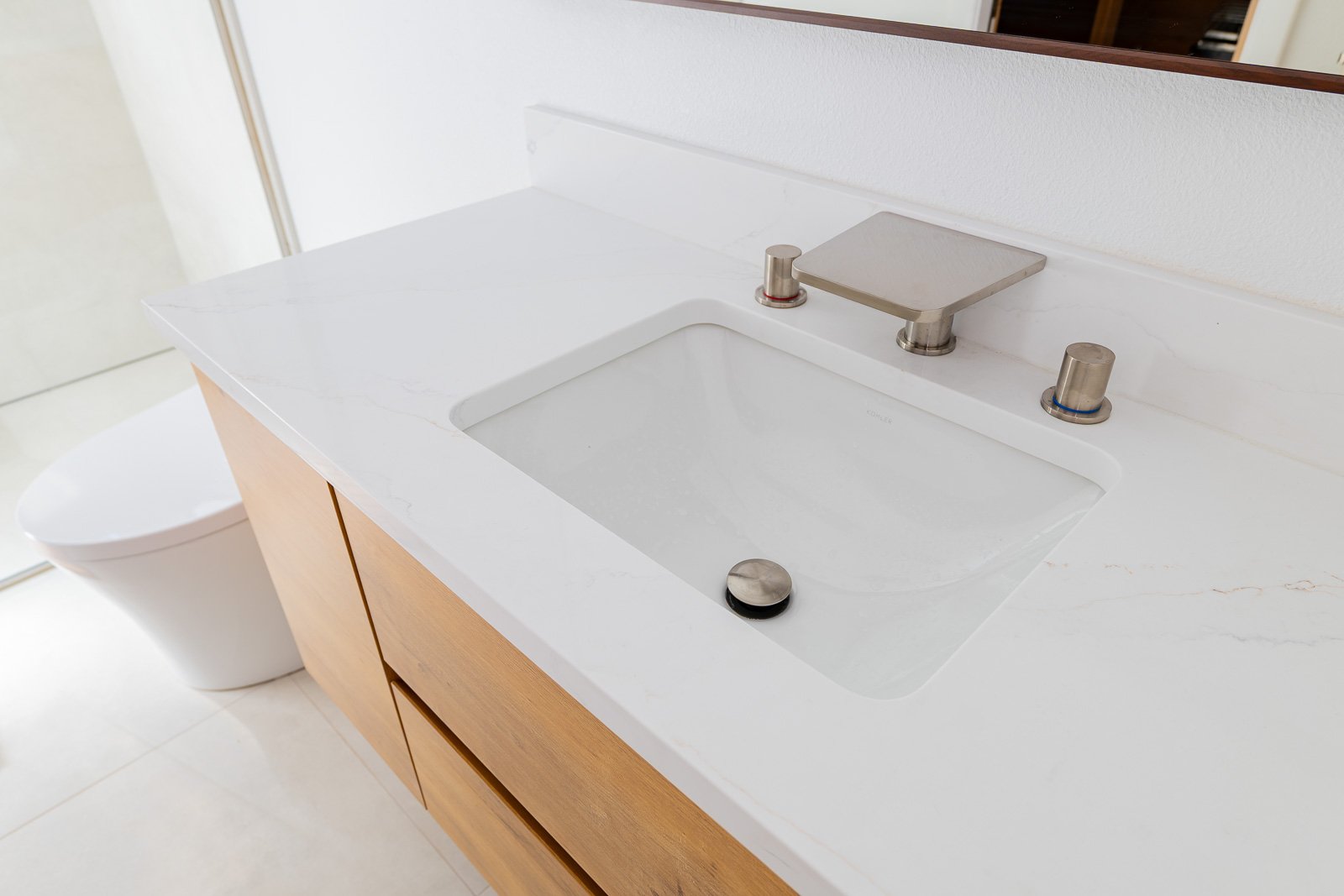
This project does not contain a verified marble countertop. It does show how natural marble and engineered quartz can serve different purposes within the same home. Quartz provides a lower-maintenance work surface, while marble adds natural variation where the design called for it.
A verified Lamont Bros. marble countertop project should replace or supplement this example when one is added to the published portfolio.
How to Choose Between Quartz and Marble
Choose quartz when easy care, stain resistance, pattern consistency, and daily durability are the main priorities. It is generally the stronger option for active kitchens, shared bathrooms, laundry rooms, and bars.
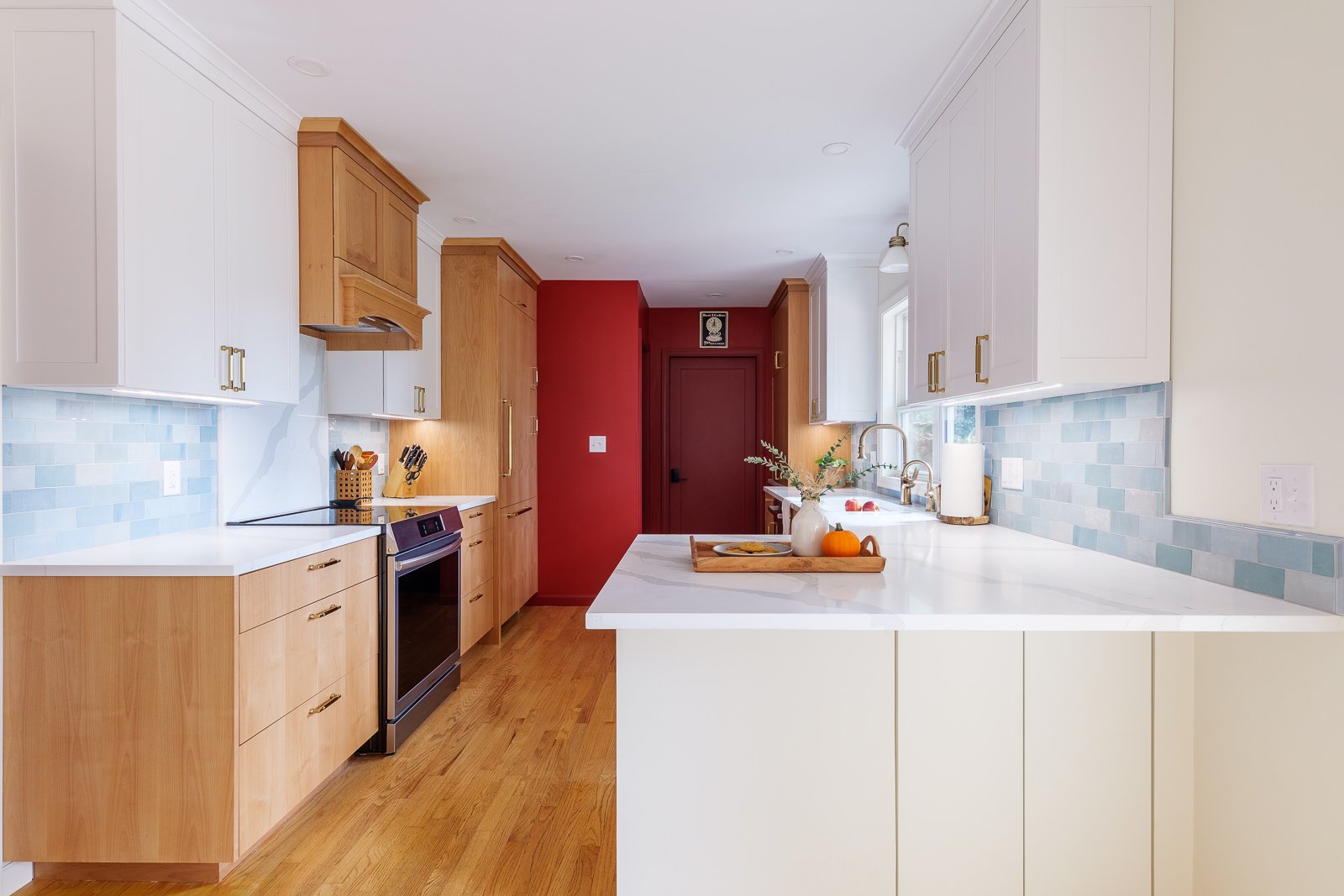
Choose marble when natural variation and material character matter more than maintaining a flawless surface. It works best for homeowners who accept etching, periodic sealing, and the patina that develops with use.
The decision should account for the entire room. Cabinet color, flooring, backsplash, lighting, edge profile, seam placement, and slab pattern all affect how the countertop will appear after installation.
A beautiful material can still be the wrong selection if it conflicts with how the room is used. Good design makes the material and daily routine support one another.
FAQs About Quartz vs Marble Kitchen Countertops
Some of our most frequently asked questions from homeowners choosing between marble and quartz countertops:
Which is better for kitchen countertops, quartz or marble?
For most busy kitchens, quartz performs better. It is more stain-resistant, scratch-resistant, requires no sealing, and holds up to daily use with less effort. Marble is the better choice for homeowners who prioritize natural beauty and unique character and are willing to invest in their care. Neither material is objectively superior. The right choice depends on how you cook and what you value in a kitchen.
Is marble more expensive than quartz for kitchen countertops?
Generally, yes. Marble, particularly premium or rare varieties, tends to cost more per square foot than quartz. The final cost of a countertop project depends on much more than the material itself, though. Slab thickness, edge profiles, fabrication complexity, and kitchen layout all affect the number. Premium quartz lines, especially those with detailed marble-look veining, can also carry a significant price tag. Getting accurate estimates for both materials based on your specific kitchen is the only reliable way to compare.
Does quartz look as good as marble in a kitchen?
Modern quartz, particularly marble-look options, comes close and works well in a wide range of kitchen designs. For many homeowners, the visual difference is not worth the maintenance tradeoff. That said, real marble has a natural depth, movement, and variation that engineered stone has not fully replicated. Whether the distinction matters is a personal call. If you are unsure, seeing both materials in person, whether in a showroom or on an actual project, tends to make the decision clearer than photos do.
What are the disadvantages of quartz kitchen countertops?
Quartz is not heat-proof. The resin content makes it susceptible to scorching or discoloration from hot pans, and rapid temperature changes can cause cracking. Seams may be visible in large kitchens with long countertop runs. It also does not offer the natural variation of real stone, which matters to some homeowners more than others.
What are the disadvantages of marble kitchen countertops?
Marble is porous and requires sealing. It can stain from common kitchen liquids including coffee, wine, and cooking oils, and it can etch from acidic foods and many cleaners. Etching is a physical change to the surface that cannot be cleaned away and may require professional refinishing. It is softer than quartz and more prone to scratches and chips from regular kitchen use.
Which countertop is best for a busy kitchen?
Quartz is one of the stronger choices for a busy kitchen. Its non-porous surface resists staining, it requires no sealing, and day-to-day cleaning is straightforward. Quartzite and sintered stone surfaces such as Dekton are also worth considering for high-use kitchens, as both offer excellent durability with different tradeoffs. Your designer can walk you through how all three compare based on your specific cooking habits and kitchen layout.
Choose a Countertop for the Way You Live
Quartz and marble can both produce a well-designed countertop. The difference lies in what happens after installation.
Quartz offers consistency, stain resistance, and easier care. Marble offers natural depth, unique veining, and a surface that changes as it is used.
Lamont Bros. Design & Construction helps Portland-area homeowners select materials as part of a complete room design. Visit our kitchen remodeling services or bathroom remodeling services to see how our design-build team carries those decisions from the first plans through construction.
Ready to discuss your remodel? Contact Lamont Bros. or call (503) 713-5335.
-1.jpg)