Yes, but only if the exact laminate product is approved by its manufacturer for bathroom use and installed according to its wet-area instructions.
Standard laminate is generally a poor choice for a full bathroom. Water can enter the seams, reach the wood-fiber core, and cause permanent swelling. Bathroom-rated waterproof laminate can work in some powder rooms and low-splash bathrooms, but it becomes riskier in busy family bathrooms, wet rooms, and spaces where water may sit on the floor.
The important distinction is not simply laminate versus waterproof laminate. You need to consider the specific product, installation system, bathroom layout, and amount of water the floor will encounter.
Why Can Laminate Flooring Fail in a Bathroom?
Most laminate flooring contains a high-density fiberboard core beneath its decorative surface and protective wear layer. The top may resist spills, but water can still enter through plank joints, cut edges, perimeter gaps, or openings around plumbing.
Once water reaches the core, the material can swell. Raised edges, opened joints, buckling, staining, and soft areas may follow. Drying the room does not reliably restore damaged boards to their original shape.
Bathrooms expose flooring to more than an occasional spill. Water may be tracked out of the shower, collect beneath a bath mat, splash around a tub, or escape during a plumbing leak. Condensation and poor ventilation can keep the room damp long after someone finishes bathing.
The type of bathroom also matters. A powder room has no tub or shower, so the floor normally sees less water. A full bathroom used by children may experience frequent splashing. A doorless wet room places the floor much closer to direct water exposure.
Can Waterproof Laminate Work in a Bathroom?
Waterproof laminate can work when the manufacturer approves the exact product for that type of bathroom. The room also needs a sound, flat, dry subfloor and ventilation that prevents moisture from lingering.
Manufacturer requirements vary considerably. EGGER approves certain Aqua products for private bathrooms with normal household use, no floor drain, and only brief exposure to splashing water. Quick-Step approves selected Hydroseal laminate when its water-resistant finishing system is used. Tarkett says its laminate is not suitable for bathrooms.
These different recommendations show why the product documentation matters more than the category name. A waterproof label does not mean every laminate can tolerate standing water, a wet-room installation, or a plumbing leak.
The installation details are also part of the flooring system. The manufacturer may require a particular underlayment, sealant, foam backer rod, transition, adhesive, or edge treatment. Floor and Decor, for example, says selected bathroom-rated laminate products require 100% silicone around the room perimeter for warranty coverage.
Before choosing a product, read its installation guide and warranty. Pay close attention to excluded rooms, exposure limits, perimeter treatments, plumbing penetrations, and instructions for toilets and built-in cabinetry.

Is Laminate a Good Fit for Your Bathroom?
Bathroom-approved waterproof laminate is most defensible in a powder room or low-splash bathroom. It can provide a convincing wood appearance, good scratch resistance, and a warmer surface than tile.
It becomes harder to recommend in a busy family bathroom, a room with a doorless shower, or any space where standing water is likely. A failure may also become expensive when damaged boards extend beneath cabinetry or plumbing fixtures.
Household habits matter as much as the product specifications. A homeowner who wipes up water immediately creates a different environment from a household where damp towels and bath mats regularly remain on the floor.
The warranty should be treated as part of the design decision. Coverage may exclude flooding, plumbing leaks, excess humidity, incorrect sealing, or water left in place beyond a stated period.
What Are the Best Alternatives to Laminate?
If you want the appearance of wood with less moisture risk, luxury vinyl plank or wood-look porcelain tile may be a better fit.
LVP usually handles bathroom moisture more reliably because its core does not react like typical fiberboard laminate. It also feels warmer and softer underfoot than tile. Its drawbacks include the possibility of scratches, gouges, dents, and movement caused by temperature changes.
Porcelain and ceramic tile remain dependable bathroom choices when the complete floor assembly is built correctly. Tile provides broad design flexibility, works well with radiant floor heating, and can coordinate with a custom shower. It is harder and colder than laminate or vinyl, and grout requires maintenance.
Other materials can also work. Marmoleum provides a resilient surface with rich color and a warmer feel. Polished and sealed concrete can be a durable option when an existing slab is suitable.
Our Best Bathroom Flooring guide compares the broader range of materials. You can also explore our Good, Better, Best Flooring Options for a whole-home comparison.
What Flooring Has Lamont Bros. Used in Bathrooms?
Our portfolio shows several ways to create warmth and character without relying on standard laminate.
The Arlington Heights bathroom remodel was designed around an imported teak soaking tub. The room combines Marmoleum flooring with teak cabinetry, cedar ceiling planks, large-format tile, and leathered Dekton counters.
The Marmoleum supports the natural material palette without imitating hardwood. This project shows how the entire room can create warmth instead of asking one surface to carry the full design.
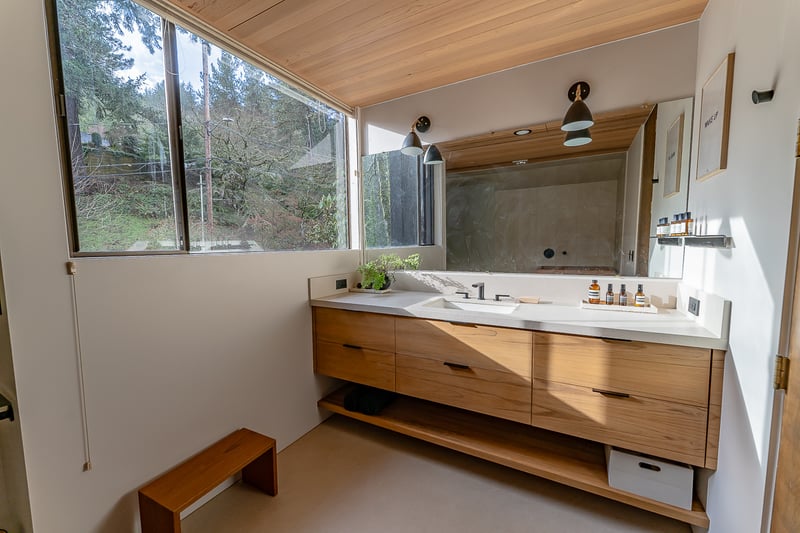
For a Japandi-inspired bathroom conversion, we used cream porcelain tile, wood-look tile, and an existing concrete floor that was polished and sealed.
Those materials were well suited to the doorless wet-room layout. They provide natural color and texture without placing a fiberboard floor next to frequent water exposure.
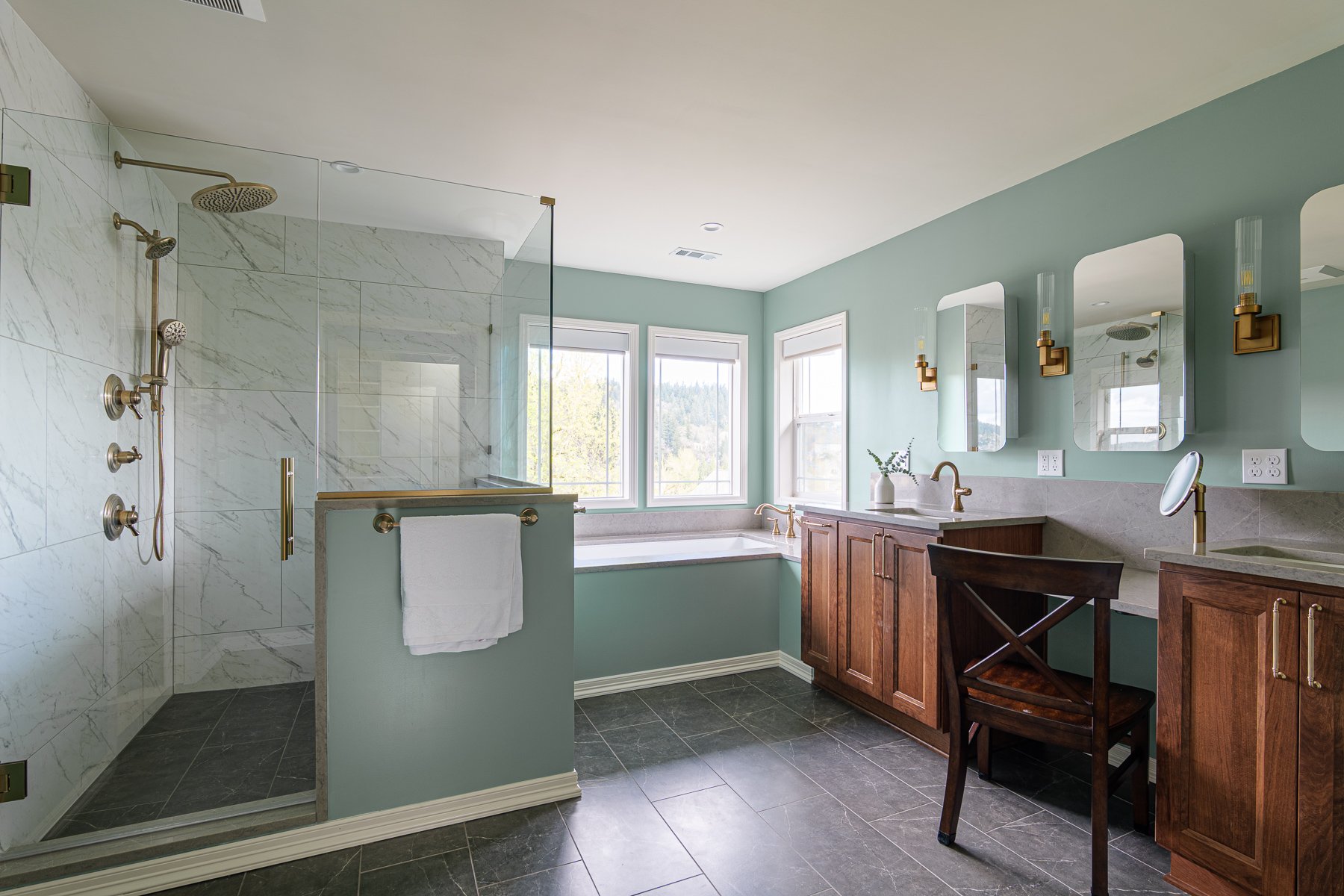
The Happy Valley primary suite remodel serves a multigenerational household and two young children. The bathroom includes a large custom shower, freestanding tub, specialized drainage, and porcelain floor tile.
This room needed to support frequent family use and greater independence. Porcelain tile gave the design team a surface suited to the bathroom’s scale, shower details, and expected water exposure.
How Should You Choose Your Bathroom Flooring?
Start with the way the bathroom will be used. Consider who uses it, how often the floor gets wet, how quickly water will be cleaned up, and how difficult a future repair would be.
Next, compare the exact products rather than broad material categories. Review the room approval, installation method, water-exposure limit, warranty, slip resistance, maintenance requirements, and compatibility with floor heating.
Finally, consider the entire bathroom. Flooring must work with the shower, tub, drainage, transitions, ventilation, subfloor, and surrounding rooms. Our article on how to design a bathroom remodel explains how these decisions fit together.
Frequently Asked Questions
Can you put waterproof laminate flooring in a bathroom?
Yes, if the exact product is approved for bathrooms and installed according to its wet-area requirements. Check the manual for exclusions, exposure limits, sealant, underlayment, transitions, and warranty terms.
Can you put wood laminate flooring in a bathroom?
Only use wood-look laminate that the manufacturer approves for bathrooms. Most laminate contains a wood-fiber core that can swell when water reaches it.
Is water-resistant laminate good enough for a bathroom?
Not every water-resistant product is approved for bathroom installation. Use it only when the manufacturer’s documents name the bathroom type and expected exposure. For a full bath, a bathroom-approved waterproof product creates a stronger starting point.
Can laminate flooring go under a toilet?
Follow the flooring manufacturer’s toilet-installation detail. Many floating floors need movement space and should not be pinned by a fixture. The installation also needs a plan for leaks and perimeter sealing.
Can you install laminate over bathroom tile?
It may be possible when the existing tile is sound, flat, dry, firmly bonded, and compatible with the laminate system. Added floor height can affect doors, transitions, toilets, and clearances. Repair moisture or subfloor problems before covering the tile.
What happens if laminate flooring gets wet?
Surface water should be removed promptly. If water reaches the wood-fiber core, the planks may swell, cup, open at the joints, or buckle. Damaged boards usually need replacement.
Is laminate or LVP better for a bathroom?
LVP usually handles bathroom moisture more reliably. Quality laminate may provide better scratch resistance and a more convincing wood texture. The final choice depends on the exact products, room use, installation system, and design goals.
Planning a Bathroom That Needs to Work Every Day
Flooring is one of many decisions that shape a bathroom’s comfort and long-term performance. Lamont Bros. plans the layout, drainage, waterproofing, ventilation, storage, lighting, and finishes as one coordinated design, then our construction team builds it.
Explore Lamont Bros. bathroom remodeling services to see our process and completed projects. Once you're ready to start your bathroom remodel, contact us for a free consultation with one of our Design Consultants.