The best shower tile options include porcelain, ceramic and natural stone. Porcelain is the best all-around choice for most remodels: large-format porcelain on the walls and a smaller, slip-resistant porcelain or stone mosaic on the floor. Beyond the material, the look comes down to tile size, pattern, color and grout, and the right combination depends on your bathroom’s size, your budget and how long you plan to stay in the home.
Tile is one of the biggest decisions in a bathroom remodel. According to the 2026 U.S. Houzz Bathroom Trends Study, a survey of 1,619 homeowners, the shower was upgraded in 84% of bathroom renovations, and tile appears in 79% of upgraded shower floors. It is also the part of a shower that is hardest to change later, because the tile sits on top of the waterproofing, the pan and the layout, and fixing a mistake means tearing it out.
In this post we’ll give you a complete guide to shower tile options. We’ll cover which materials work best, wall tile versus floor tile, tile size, patterns and layouts, grout and slip resistance, waterproofing, tile versus slab, and what a tile shower costs, so you can make these choices before you build.
Lamont Bros. is a Portland-area design-build remodeling company founded in 2008. We have completed more than 850 projects across the Portland metro area and Southwest Washington, and we earned two 2026 National NARI Remodeler of the Year awards, one for a bathroom remodel. One cohesive team designs and builds every project, with a superintendent on every job, so the advice here comes from showers we build.
Planning a bathroom remodel? Download our bathroom remodel buyer’s guide for expert advice across the full bathroom remodel, including where a tiled shower fits in your project.
Key points
- Porcelain is the best all-around shower tile because it is dense, durable and available in nearly every look, including marble, wood and stone.
- Wall tile and floor tile do different jobs. Walls can use large tile for fewer grout lines, while floors need smaller tile or a textured finish for traction.
- Pattern, grout color and tile size change the look of a shower as much as the tile itself.
- Tile does not waterproof a shower. The waterproofing behind and under it does, so it has to be planned and built with the tile.
- In Lamont's good, better and best tile shower breakdown, averages run about $27,000, $37,000 and $45,000, depending on the pan, tile, glass and fixtures.
What Is the Best Tile for a Shower?
Porcelain is the best tile for most showers because it is dense, resists water and stains, and comes in a wide range of looks. Ceramic works well on shower walls and usually costs less. Natural stone is beautiful but needs sealing and more upkeep, and glass tile works best as an accent. Here is how the common options compare:
| Tile | Best for | Keep in mind |
|---|---|---|
| Porcelain | Walls and floors | Dense and durable; available in marble, wood, stone and concrete looks |
| Ceramic | Walls | Budget-friendly and easy to clean; usually not the first choice for floors |
| Natural stone (marble, travertine, slate) | Walls and floors, as a design feature | Needs sealing and more upkeep, and can stain or etch |
| Glass tile | Accent strips, niches and backsplashes | Reflects light; installation is less forgiving |
| Mosaic tile | Shower floors, niches and accents | More grout lines add traction, but more grout to maintain |
Shower Wall Tile vs. Shower Floor Tile
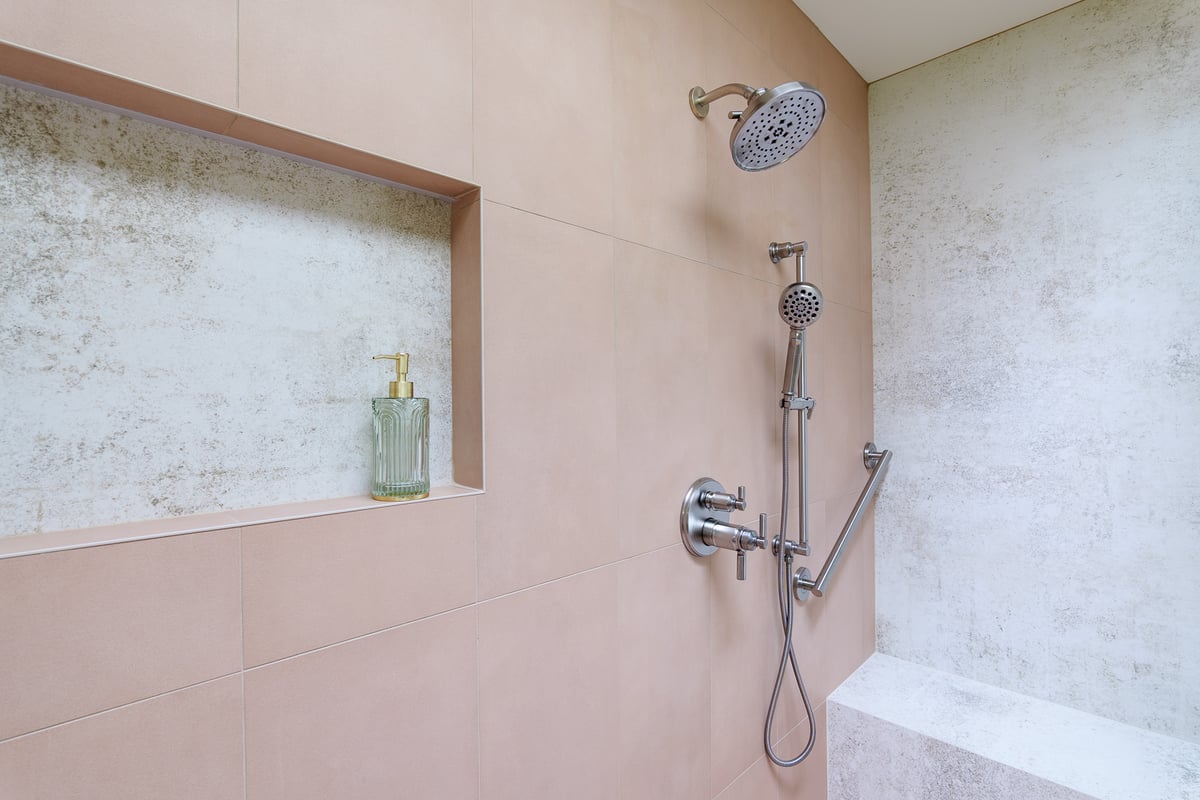
Shower wall tile can be almost any size, but shower floor tile has to grip when wet. On the walls, tile starts at about 3x6 inches and goes up to very large panels. The size we are asked for most often is 12x24. Larger tile leans modern and means fewer grout lines to clean, while smaller tile leans classic.
On the floor, the shower pan decides the tile size. A pan with a threshold usually calls for small tile, about 3 inches or less on a standard tile pan, because the floor slopes to a center drain. A shower with no threshold and a linear drain slopes one way, so it can take larger tile. See our guide to choosing a shower pan for how the pan and drain affect the tile.
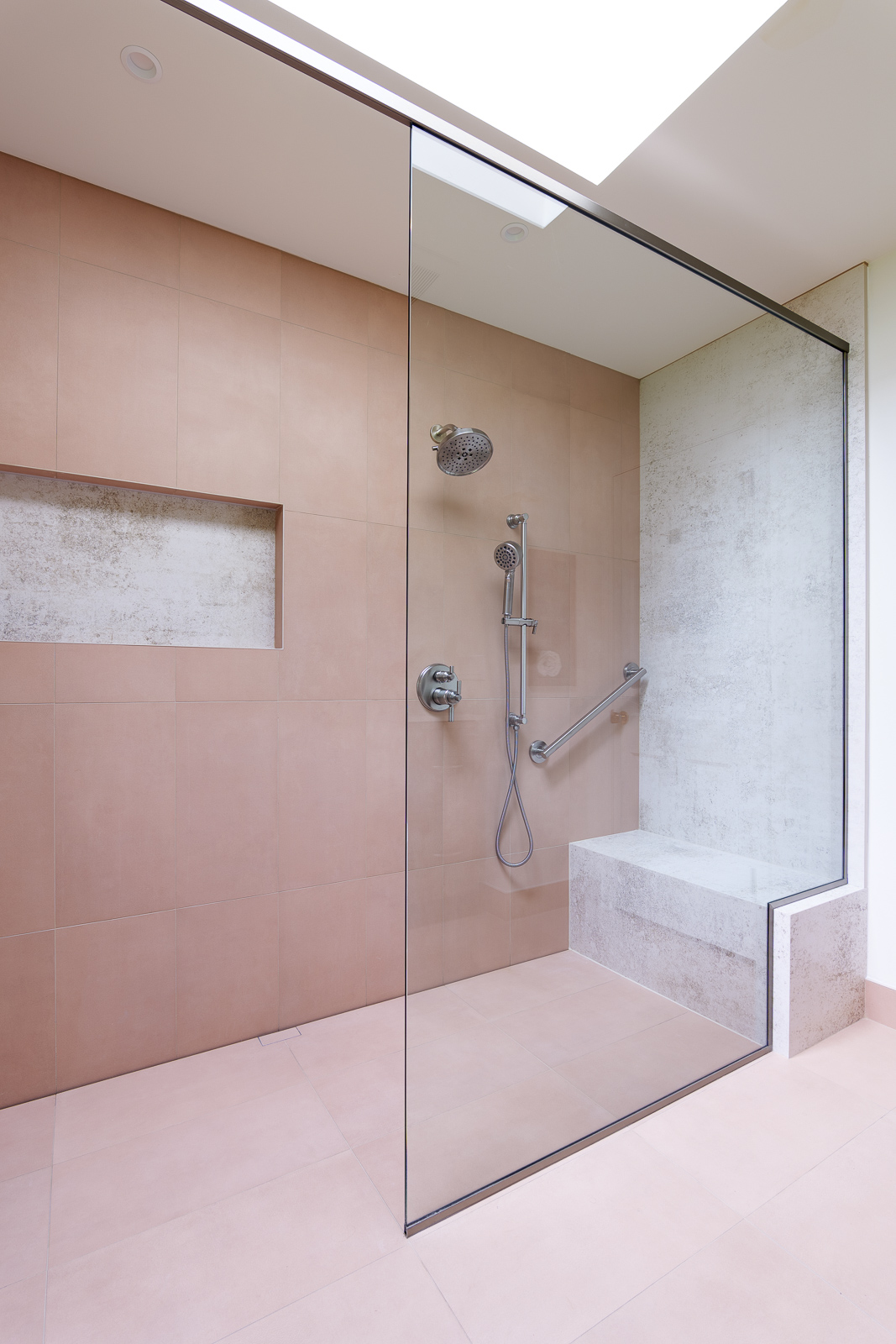
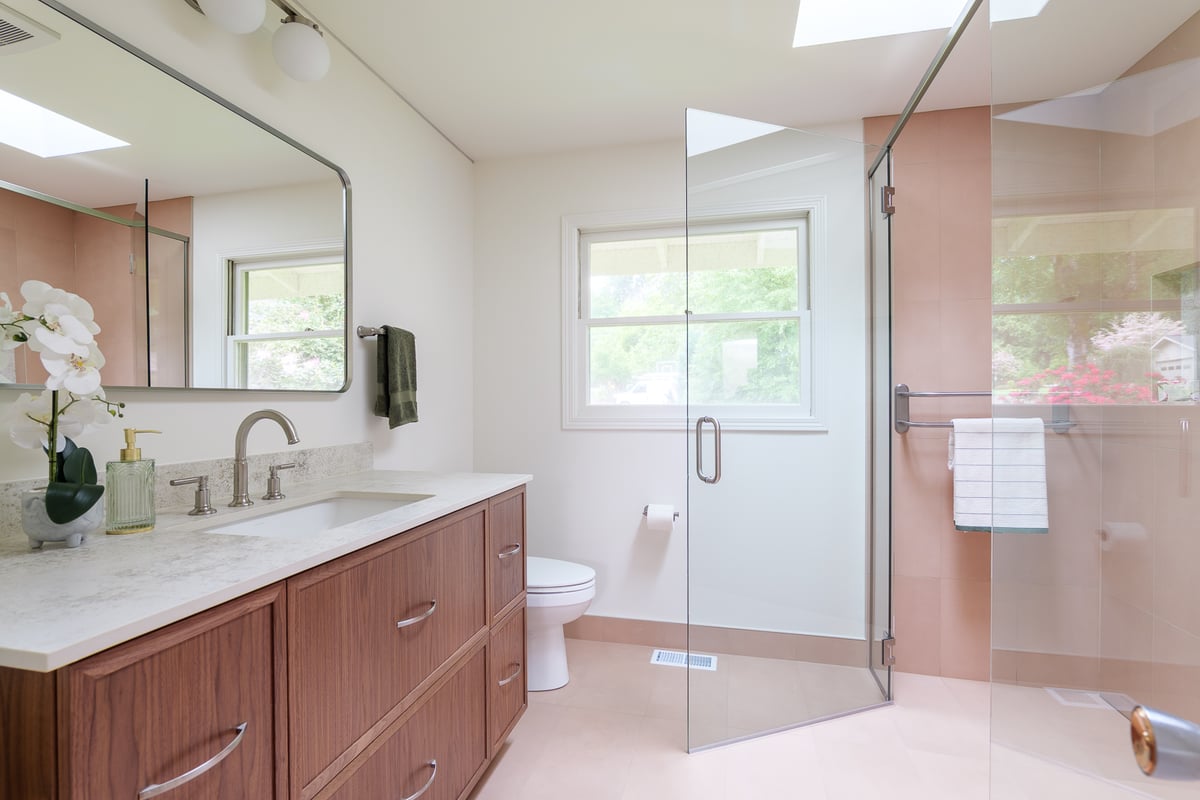
Large-format tile like this runs through the Lake Oswego whole-home remodel.
Shower Tile Ideas by Look
Classic subway tile
Subway tile is the most familiar shower look and works in almost any style. Laid in a running bond it reads as traditional. Stacked straight or vertically, it feels cleaner and more modern. A white or soft neutral tile keeps a small shower bright.
Large-format porcelain
Large tile, such as 12x24 or bigger, cuts the number of grout lines and makes walls look calm and continuous. It needs flat walls and careful installation, so the surface under it matters.
Marble-look and stone-look porcelain
Porcelain that looks like marble or stone gives you the veining without the sealing and staining. It is a popular choice for primary bathrooms where the shower is the focal point.
Mosaic and pattern tile
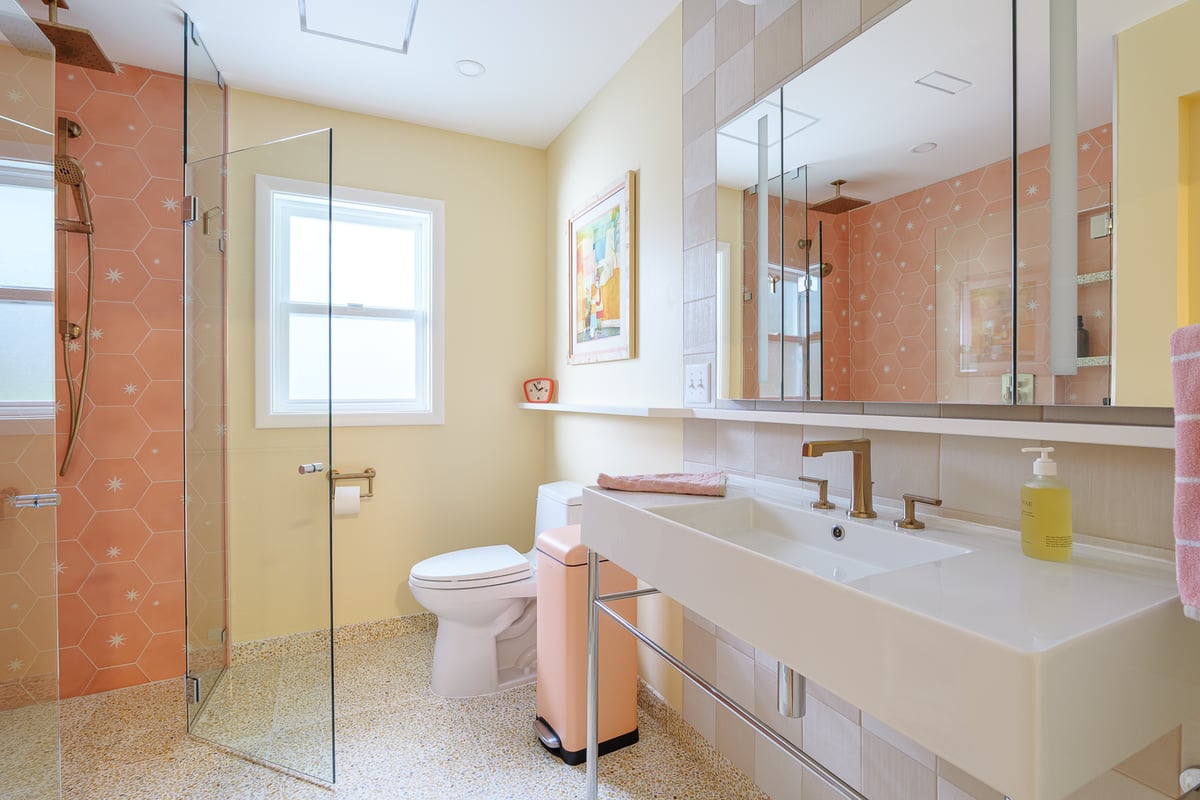
Mosaics suit shower floors, niches and accent bands. A patterned or decorative tile on one wall, or inside a niche, adds interest without covering the whole shower.
Color and handmade-look tile
Green, blue and warm earth tones are common requests, and handmade-look ceramic adds texture and character. Keep the rest of the bathroom quieter so the shower color is the feature.
Wood-look porcelain
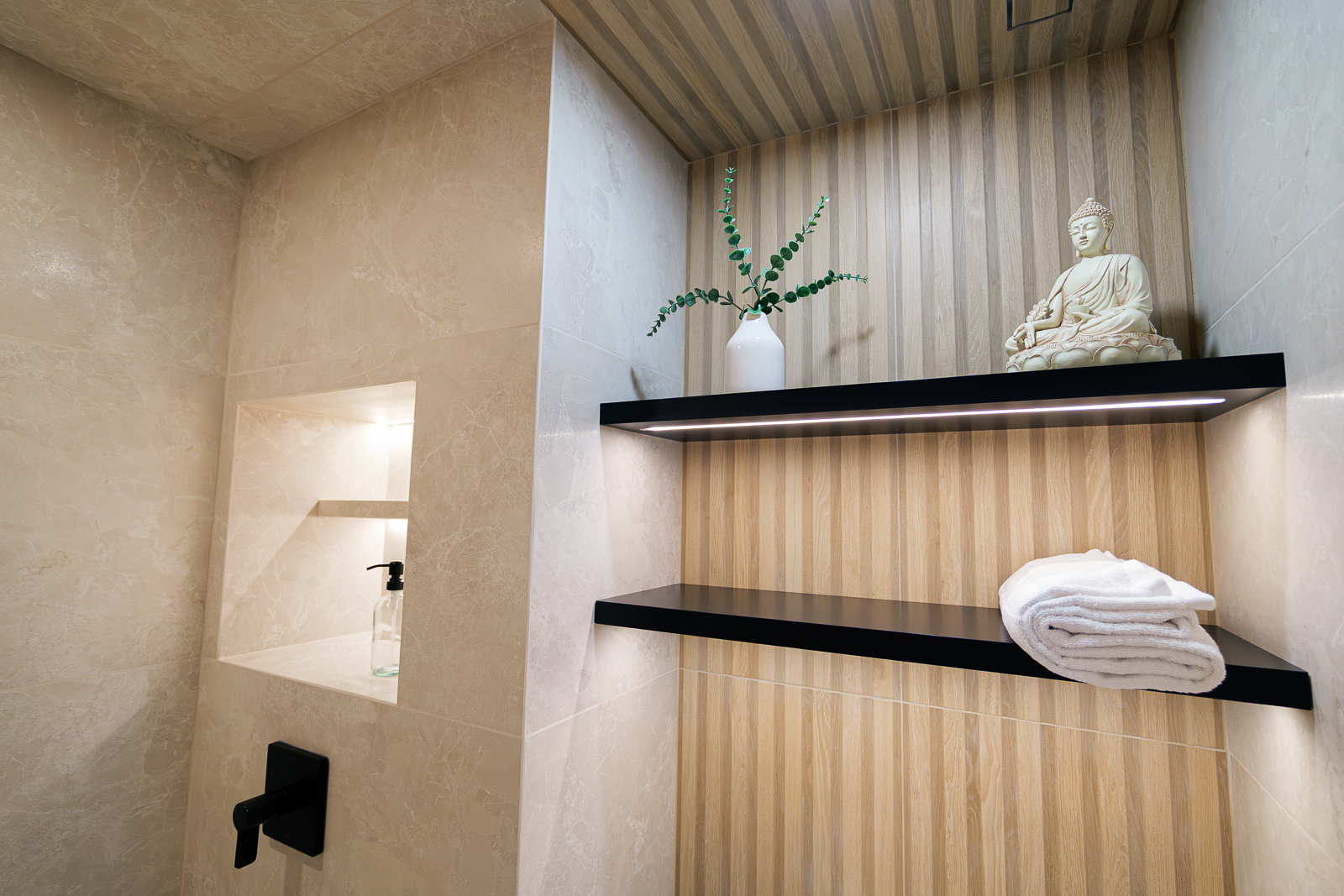
Wood-look tile brings warmth to a shower without the moisture problems of real wood. It works best as one wall or a feature band.
Shower Tile Patterns and Layouts
The pattern you choose changes how the shower feels. These are the layouts we see most:
- Straight stack. Tiles line up in clean rows and columns. It looks modern and shows off the tile.
- Running bond (brick). Each row is offset by half a tile. It is the classic subway look.
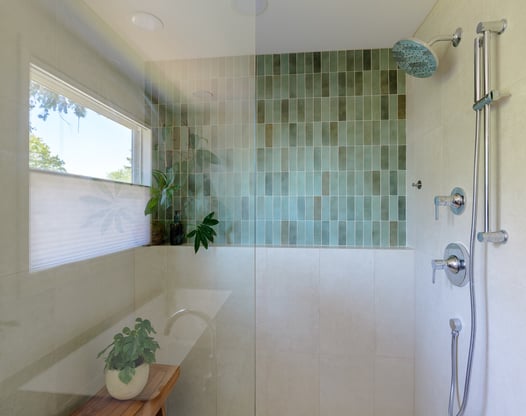
- Vertical stack. Tile runs up the wall and makes a low ceiling feel taller.
- Herringbone and chevron. Angled tiles add movement and suit an accent wall or a niche.
- Accent band or feature wall. One wall or a horizontal strip in a different tile gives the shower a focal point.
Layout is also a planning detail. Tile joints should line up with niches, benches and the edges of the glass, and the drain and valve location affect where the cuts fall. Good installers plan this before the first tile goes on the wall.
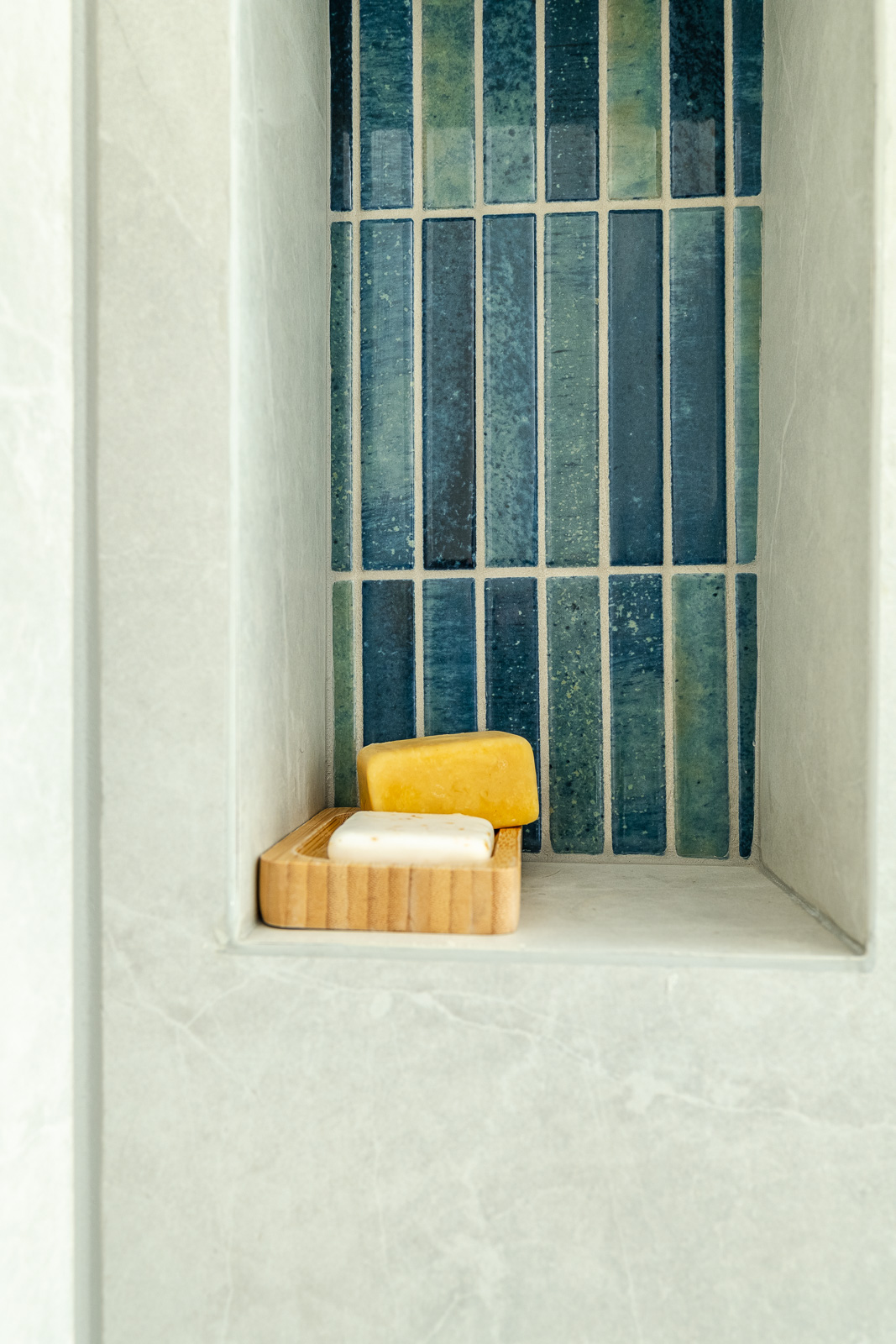
Take a closer look at this Foster-Powell primary suite remodel and its stacked green tile.
Shower Tile Ideas for a Small Bathroom
In a small bathroom, simple choices make the shower look bigger. Use the same light tile on the walls and ceiling line, run the tile in one direction, and pick a clear glass panel instead of a framed door. Large tile with a matching or close grout color keeps the surface unbroken. A curbless entry that carries the bathroom floor tile into the shower also makes a tight room feel more open. If you want a bolder look, save it for one wall, a niche or the floor.
Grout, Slip Resistance and Waterproofing
These details decide whether a shower still looks good in ten years. Tile is not what makes a shower waterproof. A waterproofing system behind and under the tile does that, and it has to extend through the pan, corners, niches and any bench. If you suspect hidden moisture damage in an older shower, here is how to identify dry rot.
- Grout color. Matching grout keeps the surface calm. Contrasting grout draws attention to the pattern. Dark grout hides stains, and light grout shows them.
- Grout type. Standard cement grout needs sealing. Epoxy and other stain-resistant grouts cost more but stay cleaner. Your installer can recommend what fits your tile.
- Slip resistance. For shower floors, look for tile with a wet slip rating. A common benchmark is a wet DCOF of 0.42 or higher. Smaller tile also adds grout lines and traction.
- Niches and benches. Plan them early so they are built into the wall and waterproofed with it, and so the tile layout lines up around them.
Tile or Slab for a Shower?
Tile gives you the most choice and is easier to repair. A slab, such as gauged porcelain panels, quartz or granite, gives you very few grout lines and a continuous look. Slab needs flat walls, careful planning for niches and plumbing, and a way to get large panels into the house. Our guide to choosing slab shower material covers the tradeoffs. Large-format tile is a middle option that reduces grout lines while keeping a tiled shower's flexibility.
What Does a Tile Shower Cost?
A tile shower's cost depends on the pan, the tile, the glass and the fixtures more than on any one tile. In Lamont's good, better and best breakdown, a tile shower averages about $27,000 at the good tier, about $37,000 at the better tier and about $45,000 at the best tier. The good tier uses an acrylic pan, porcelain tile and a standard glass enclosure. The better tier adds a tile pan, large-format tile, a tile niche and a glass door and panel. The best tier adds a no-threshold pan with a linear drain, custom tile design and a partial-height glass wall. See the full breakdown in how much a tile shower costs.
To see how it fits into a full bathroom budget, try the bathroom remodel cost calculator.
Shower Tile in Portland-Area Homes
Many Portland-area bathrooms are small and sit in older homes, so the shower tile has to work with the room's size, the framing and any moisture history. Lamont Bros. designs and builds tile showers for homeowners in Portland, Lake Oswego, West Linn, Beaverton and Oregon City, with one cohesive team handling each project from start to finish. Learn more about the bathroom remodels we do in Portland.
Is a Tiled Shower Right for Your Remodel?
A tiled shower is the right choice if you want a custom look, plan to stay in your home for years and want a shower that can be repaired and updated over time. If your goal is the lowest cost, a prefabricated panel or surround is a simpler option, though it limits the design. We walk through both with you during design and explain what each means for budget, look and long-term value.
Lamont Bros. works with homeowners who want a bathroom designed and built well, with fixed-price contracts and one cohesive team from design through construction.

Shower Tile FAQ
What is the best tile for a shower floor?
The best tile for a shower floor is a small, slip-resistant porcelain or stone mosaic, because the added grout lines give traction and the small size follows the slope to the drain. A shower with no threshold and a linear drain can use larger tile with a textured finish.
Are large or small tiles better in a shower?
Large tiles work best on shower walls because they mean fewer grout lines to clean, while small tiles work best on shower floors because they grip better and follow the slope. Many showers use both: large tile on the walls and a mosaic on the floor.
Is porcelain or ceramic tile better for a shower?
Porcelain is the better choice for most showers because it is denser, resists water and stains, and suits both walls and floors. Ceramic is a good budget option for shower walls.
How much does it cost to tile a shower?
The tile is only part of the cost of a tile shower. In Lamont's breakdown, a tile shower averages about $27,000, $37,000 or $45,000 at the good, better and best tiers, depending on the pan, tile, glass and fixtures. The cost section above breaks down what drives the price.
Does Lamont Bros. install tile showers?
Yes, Lamont Bros. designs and builds tile showers as part of bathroom remodels in Portland, Lake Oswego, West Linn, Beaverton and Oregon City. One cohesive team handles each project from start to finish, including design, waterproofing, tile and glass.